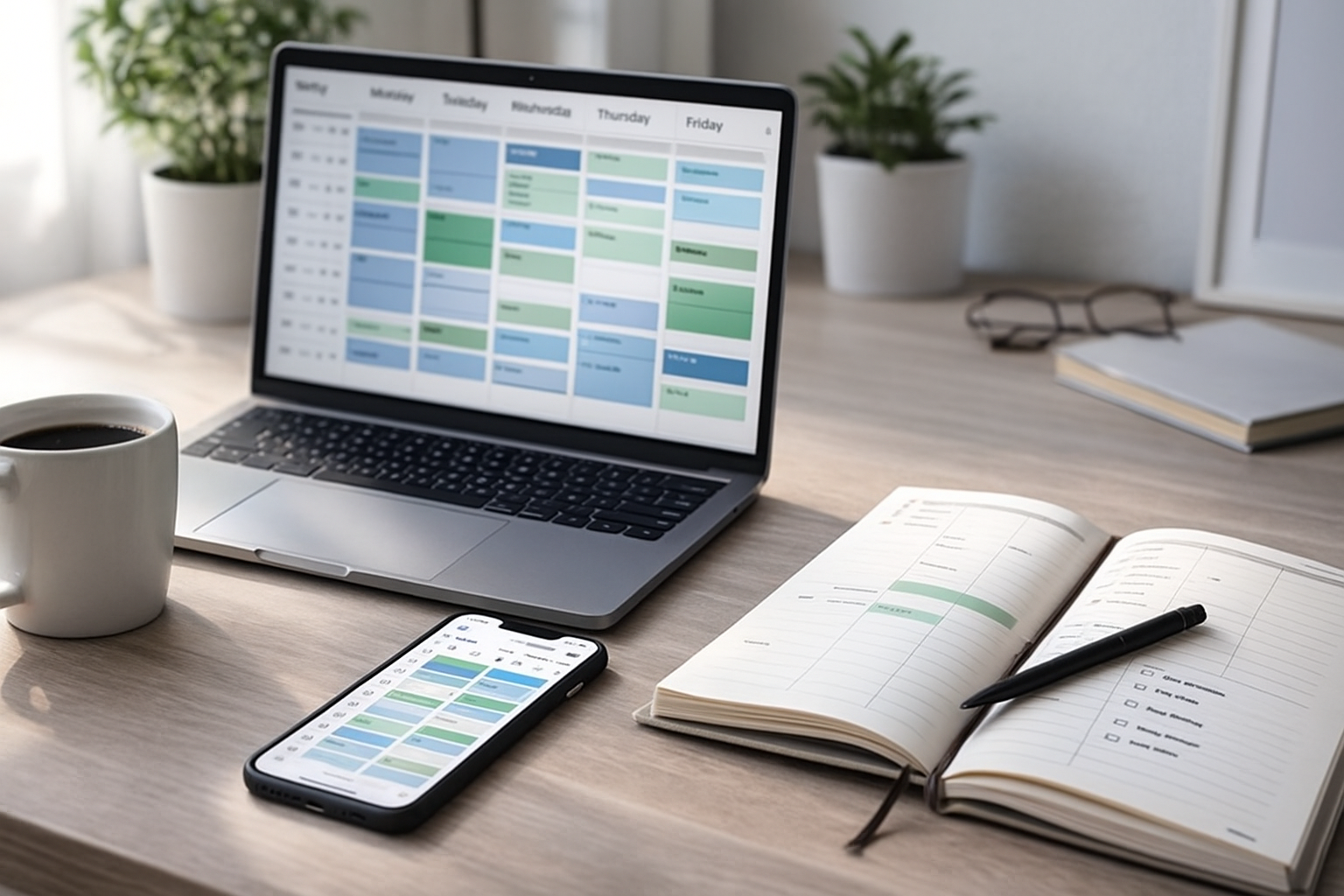



Learn the Productivity Hacks for Busy People in 2026 that actually work: weekly previews, daily top-3, AI automations, meeting makeovers, deep-work blocks, and energy resets you can use today.
Modern work moves fast. Messages, meetings, and micro-tasks compete for your attention every minute. Good news: with the right systems, you can cut noise, ship meaningful work, and still have energy left for life. This guide shares the most reliable Productivity Hacks for Busy People in 2026, built around a simple 4-step framework and powered by light, practical tools.
Why Productivity Looks Different in 2026
Hybrid work, AI assistants, and always-on notifications
We juggle multiple channels (email, chat, docs, project tools) across office and home. AI copilots now draft, summarize, and schedule, but they also create more stuff to read. Winning in 2026 means curating inputs and systemizing outputs.
Focus economics: energy, attention, and time
Time is fixed. Attention and energy are variables. Protect them with short, high-quality focus blocks, recovery breaks, and clear priorities. That’s the real productivity math.
The 10x Framework: Plan, Focus, Execute, Recover
Step 1 — Plan: weekly preview + daily top 3
- Run a 30-minute weekly preview every Friday or Sunday.
- Pick your 3 weekly outcomes (not tasks).
- Each morning, choose your Daily Top 3 that move those outcomes.
Step 2 — Focus: distraction-proof work blocks
- Schedule 2× 50-minute deep-work blocks for your most important tasks.
- Silence notifications, full-screen the doc, and keep a scrap note for “later” thoughts.
Step 3 — Execute: tiny starts, fast finishes
- Use the 2-minute rule to begin.
- Ship a first pass quickly, then iterate. Momentum beats perfection.
Step 4 — Recover: sleep, movement, and resets
- Protect a consistent bedtime.
- Walk 5–10 minutes between blocks.
- Use a 90-second reset (breathing + stretch) before big tasks or meetings.
26 Productivity Hacks for Busy People in 2026
Calendar & Planning Hacks
1) Timebox your priorities. If it’s not on the calendar, it’s not real. Put Deep Work, admin, and breaks on the grid.
2) Theme your days. Example: Mon—Planning, Tue/Thu—Delivery, Wed—Collab, Fri—Review.
3) Protect your golden hour. Do your highest-leverage work in your best energy window (often morning).
4) Create buffer blocks. Add 10 minutes between meetings to jot actions and reset.
5) Friday “done list.” Log what shipped. It fuels morale and accurate planning.
Email & Messaging Hacks
6) Two inbox windows/day. Process email at 11:30 and 4:30. Everything else stays closed.
7) Triage with the 4 D’s. Do (≤2 min), Defer, Delegate, Delete.
8) Write subject lines like headlines. Clear subjects reduce back-and-forth.
9) Canned replies & snippets. Save answers to FAQs and reuse.
10) Channel rules. Agree with your team: urgent = chat, non-urgent = email, collaborative = doc/task.
AI & Automation Hacks
11) Co-write, don’t ghost-write. Ask your AI to draft outlines, bullets, or summaries; you add judgment and tone.
12) Meeting notes on autopilot. Use AI transcription to capture action items and deadlines.
13) Turn emails into tasks automatically. Route starred messages to your task app with a rule or integration.
14) Build a personal “answer hub.” Store polished responses, SOPs, and checklists your AI can reference.
15) Calendar copilot. Let AI propose meeting times, then you approve—saves dozens of micro-decisions.
Meeting & Collaboration Hacks
16) Make meetings the last resort. Try a decision doc first. If you must meet, include purpose, inputs, and desired output.
17) 25-minute stand-ups, 50-minute hour. Shorten by default; end when the outcome is reached.
18) Start with outcomes, end with owners. Who does what by when—written in the chat before leaving.
19) One deck to rule them all. Keep a rolling quarterly deck; no fresh slides for every update.
Deep Work & Attention Hacks
20) Single-tasking by design. Close all tabs but one. Use full-screen.
21) Noise budget. Choose 1–2 times/day for news/social, total ≤20 minutes.
22) Paper parking lot. Keep a sticky note to capture random ideas without opening new tabs.
23) Visual progress bars. Use checkboxes or a progress counter to gamify momentum.
Health, Energy & Environment Hacks
24) Posture + light + water. Upright chair, bright daylight (or 5000K lamp), water bottle within reach.
25) Micro-movement. 10 squats, 10 desk pushups, or a stair lap between calls.
26) Evening shutdown routine. 10 minutes: clear desk, write tomorrow’s Top 3, close loops. Your future self says thanks.
Productivity Hacks for Busy People in 2026 Stack 2026: Pick the Lightest Effective Setup
Notes, tasks, calendar, storage, AI copilot
Pick one app per layer:
- Notes/Docs: any tool you’ll open daily.
- Tasks: simple list + due dates + repeating tasks.
- Calendar: shared + color-coded.
- Storage: single cloud drive with a clean folder tree.
- AI Copilot: for drafting, summarizing, and meeting notes.
Sync rules and naming standards that save hours
- Folders:
Area › Project › Artifact(e.g., Marketing › Launch Q2 › Brief.md). - File names:
YYYY-MM-DD Topic v1. - Weekly: archive or delete old drafts. Clutter taxes focus.
Templates: Your 30-Minute Weekly Preview & 10-Minute Daily Setup
One-page weekly preview template
- Top 3 outcomes: …
- Key deadlines: …
- Capacity map (hrs): Deep __, Meetings __, Admin __
- Big rocks (calendar’d): …
- Risks & blocks: … → mitigation steps
- Learning from last week: ship/not ship, why, fix
Daily setup checklist (AM/PM)
AM (10 min):
- Review weekly outcomes → pick Daily Top 3
- Timebox two 50-min focus blocks
- Scan inbox for 2-min actions only
- Set phone to Focus Mode
PM (10 min):
- Log wins + 1 improvement
- Prep tomorrow’s first task (open doc, outline bullets)
- Clear desk, close loops, shut down
Productivity Hacks for Busy People in 2026 Metrics That Matter: Output > Hours
Track a tiny personal KPI dashboard weekly:
- Shipped outputs: (# docs, features, clients served)
- Deep-work blocks completed: target ≥8/week
- Meeting hours: target ↓ over time or keep constant with ↑ outputs
- Energy score: 1–5 daily (sleep/mood)
- Recovery actions: walks, workouts, bedtime consistency
What gets measured gets managed—without micromanaging yourself.
FAQs: Productivity Hacks for Busy People in 2026
1) What’s the single best hack if I’m overwhelmed?
Do a 10-minute daily setup and pick a Daily Top 3. It kills decision fatigue.
2) How many deep-work blocks should I aim for?
Start with one 50-minute block daily. Level up to two most days.
3) How do I keep email from taking over?
Batch it twice a day and convert action emails into tasks with deadlines.
4) Can AI really save time—or does it add work?
Used well, AI drafts and summarizes so you spend time deciding and refining, not starting from zero.
5) Meetings are my whole calendar. Help?
Move status to docs. Keep meetings for decisions. End each with owners and deadlines in writing.
6) What if I have kids or an irregular schedule?
Anchor one non-negotiable focus block to a reliable cue (post-school drop-off, nap time, or early morning).
7) How do I avoid burnout?
Plan recovery as seriously as work: bedtime, movement, sunlight, and short resets.
8) I fall off routines when traveling—tips?
Pack a micro-kit (charger, earbuds, resistance band). Keep the same cues and run shorter blocks.
Conclusion
The best Productivity Hacks for Busy People in 2026 are simple, repeatable, and kind to your energy. Plan weekly, pick a Daily Top 3, protect two deep-work blocks, and let AI handle drafts and summaries. Close each day with a 10-minute shutdown, and guard your sleep like a project. Do this for two weeks and you’ll feel the difference; do it for two months and others will notice, too.
Helpful resource: For timeless, research-backed tips on attention and time, see the American Psychological Association’s productivity overview: https://www.apa.org/topics/productivity
- OpenAI — Research & Tools
- Google Workspace — Productivity Blog
- Microsoft 365 — Productivity Blog
- Notion AI — Official Page
- Zapier — Automation Guides
- Asana — Productivity Resources
- Trello — User Guides
- Slack — Productivity Articles
- IBM AI — Tools & Research
- FutureTools — AI Tool Directory
All Rights Reserved © 2026