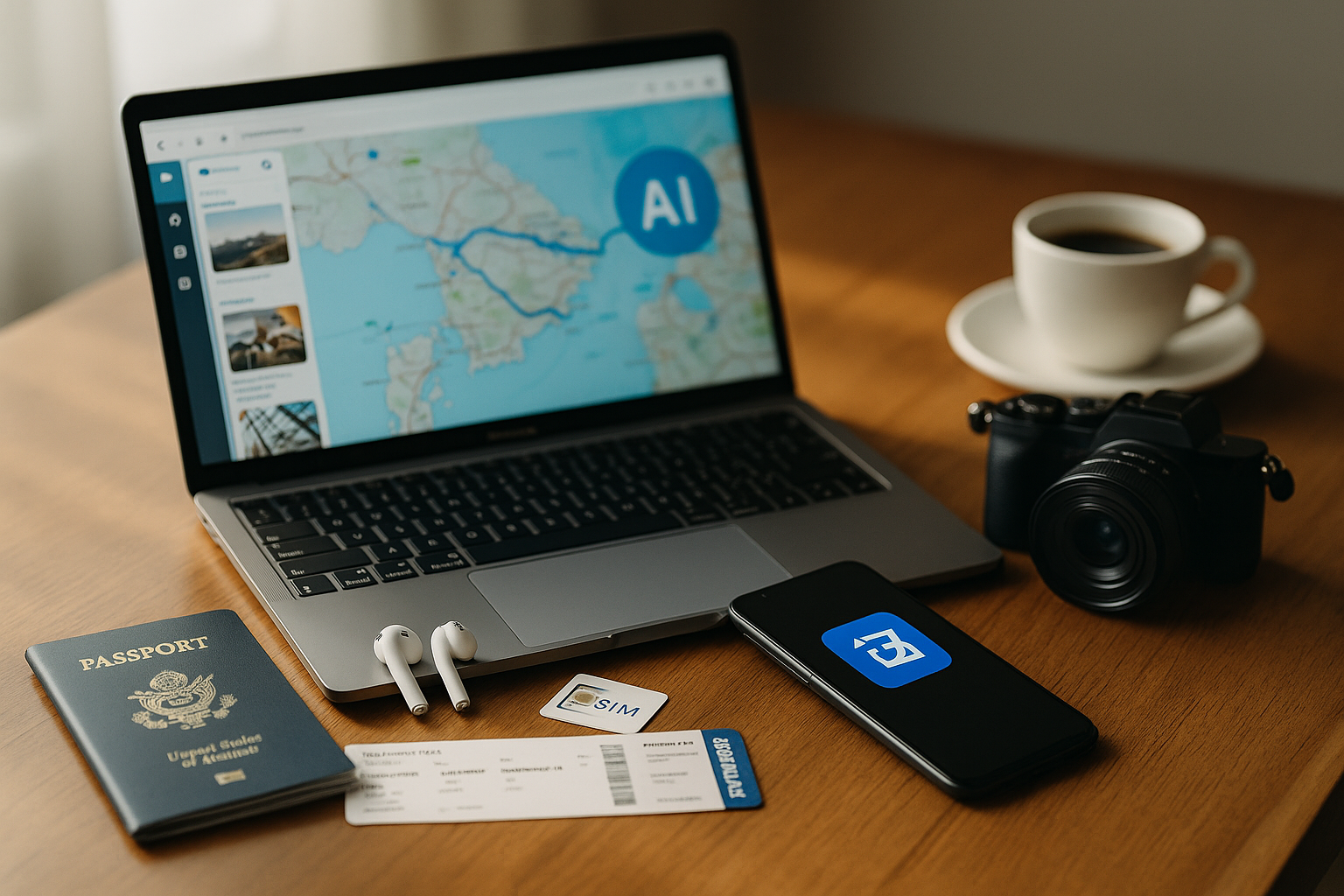



Why The Best AI-Powered Travel Tools You Need for 2025 matter now
Travel moves fast, and so do prices. The Best AI-Powered Travel Tools You Need for 2025 compress hours of research into a few prompts: they watch fares while you sleep, turn flight emails into tidy timelines, translate menus live, and even estimate Uber vs. metro vs. train in your destination. Used together, they save money, slash friction, and keep you safer on unfamiliar networks and streets.
Best AI-Powered Travel Tools: How to pick AI travel tools (quick checklist)
- Accuracy over flash: Does the tool cite sources (airlines, rail operators, maps)?
- Live data hooks: Real alerts beat static summaries.
- Offline mode: Downloaded maps, passes, and translations are non-negotiable.
- Privacy: Clear data policy; on-device processing where possible.
- Interoperability: Gmail/Outlook parsing, calendar sync, and exportable PDFs.
- Price & tiers: Start free, then upgrade the one feature that saves you real time or cash.
Best AI-Powered Travel Tools: Flight finders & fare predictors
Google Flights + Price Graph & AI summaries
Use AI-assisted insights to see when to fly and which airports cut costs. The Price Graph and Date Grid show cheaper windows at a glance, while summaries explain if a fare is low, typical, or high for that route. (External resource: Google Flights)
Skyscanner’s Everywhere + alerts
Not sure where to go? “Everywhere” ranks destinations by price from your airport, then AI-grouped filters refine by stops, bags, and times. Set alerts and let the bot ping you when prices dip. (External resource: Skyscanner)
Hopper-style price prediction & freeze features
Prediction models flag whether to buy now or wait, and “price freeze” can lock a fare for a small fee—handy if you need approval time.
Lodging & neighborhood intelligence
Booking platforms with AI filters
Search “quiet room with desk near metro under $90” and let the AI narrow thousands of listings. Watch for “work-friendly” tags (desk, chair, fast Wi-Fi).
Airbnb-style stays + map heatmaps
Neighborhood heatmaps visualize average prices, nightlife, transit hubs, and grocery clusters—perfect for balancing vibe and budget.
Safety, noise & walkability layers
Third-party layers estimate night noise, walk scores, and lighting density so you don’t book next to a club or highway by accident.
Trip planning & smart itineraries
TripIt/Tripsy auto-parsing + timeline
Forward confirmations and let the app build a master itinerary with gates, PNRs, hotel check-ins, and reminders. Share a view-only link with travel buddies. (External resource: TripIt)
AI day planners (time blocks, travel time, weather)
Paste your must-sees; AI clusters by area, adds transit time, and shuffles stops around opening hours and weather windows.
Route & transfer optimizers (multi-city)
For 3–6 city trips, multi-city optimizers reduce backtracking and reveal cheaper open-jaw options (fly into A, out of B).
Ground transport & multimodal routing
Rome2Rio-style door-to-door comparisons
See plane vs. train vs. bus vs. rideshare with timings, prices, and transfer points. Great for Europe and SE Asia hub-to-hub hops. (External resource: Rome2Rio)
Rail & coach helpers (seat maps, passes)
AI assistants explain whether a Eurail or JR Pass pays off based on your draft route and parse seat-map reviews to avoid backwards seats or no-window rows.
Best AI-Powered Travel Tools: Language, culture & receipts
Live translation & transcription
On-device models translate menus, signs, and conversations offline; some apps transcribe taxi quotes or clinic instructions so nothing gets lost.
Currency, tips & digital receipts
Rate-aware converters add FX fees and split bills for groups; receipt scanners categorize expenses for taxes or reimbursements.
Safety, health & travel admin
eSIMs, VPNs, and offline maps
Buy an eSIM before you land, download city maps, and connect through a VPN to protect logins on café/hotel Wi-Fi. (Internal read: Best VPNs for Streaming While Traveling in 2025 → /best-vpns-for-streaming-while-traveling-2025/)
Alerts, advisories & document vaults
Set push alerts for gate changes and local advisories; keep passports, policies, and vaccine cards in an encrypted vault with offline copies.
Packing, points & productivity
Smart packing lists & weather-aware reminders
AI generates lists from your destination, activities, laundry access, and 10-day forecast—no more forgotten adapters.
Points/loyalty optimizers
Get recommendations for which card/airline earns or saves most on a route; track upgrade odds and sweet spots.
Creator tools (AI photo/video helpers)
Auto-edit vertical clips, remove noise from street interviews, and batch-caption travel reels in minutes.
Mini buying guide: free vs. paid tiers
- Free works for discovery (Google Flights, Skyscanner alerts, offline maps, basic translators).
- Pay if it saves real money/time: price freezes, lounge finders, advanced seat selection, eSIM data packs, VPN, and itinerary sharing for teams.
Comparison table (at a glance)
| Need | Tool Type | Why it helps | Good starting pick |
|---|---|---|---|
| Cheapest dates | Flight meta + AI insight | See low fare windows | Google Flights |
| Inspiration by price | Meta search | Price-ranked destinations | Skyscanner Everywhere |
| “Buy now or wait?” | Prediction | Avoid overpaying | Hopper-style predictors |
| Itinerary hub | Parser + timeline | All bookings in one view | TripIt/Tripsy |
| Door-to-door | Multimodal router | Plane/train/bus compared | Rome2Rio |
| Translation offline | On-device LLM | Menus & chats sans data | Leading translate apps |
| Safer Wi-Fi | VPN | Encrypts logins, streams | Express/Nord/Surfshark |
| eSIM/data | eSIM marketplace | Land online, no queue | Major eSIM apps |
FAQs
1) Are AI price predictions always right?
No—treat them as probabilities. Use alerts and book when a fare fits your budget and schedule.
2) Can AI plan my whole trip door to door?
It can propose routes and time blocks, but you should verify times, visas, and holiday schedules.
3) Do I need a VPN if I only check email?
Yes. Public Wi-Fi is easy to snoop; a VPN encrypts traffic and helps streaming work abroad.
4) Which translator is best for offline use?
Pick one that downloads languages for on-device translation and supports camera + conversation modes.
5) How do I keep everything available offline?
Download tickets, maps, and hotel details; export your itinerary to PDF and save it in a notes app.
6) Will an AI itinerary replace travel insurance or an emergency fund?
No. Use planning tools alongside insurance and an emergency buffer. (Internal read: Emergency Fund for Travelers → /emergency-fund-for-travelers/)
7) What about privacy?
Prefer tools with clear data policies, on-device options, and the ability to delete your account history.
Conclusion & next steps
If you’re choosing among The Best AI-Powered Travel Tools You Need for 2025, start with this stack: Google Flights + Skyscanner alerts for prices, an AI itinerary app to parse emails, offline maps & translator, an eSIM for instant data, and a VPN for safe logins and streaming. Add multimodal routing for complex trips and a points optimizer if you fly often. Test the free tiers this week, then upgrade only what proves it saves you real time or money.
All Rights Reserved © 2026