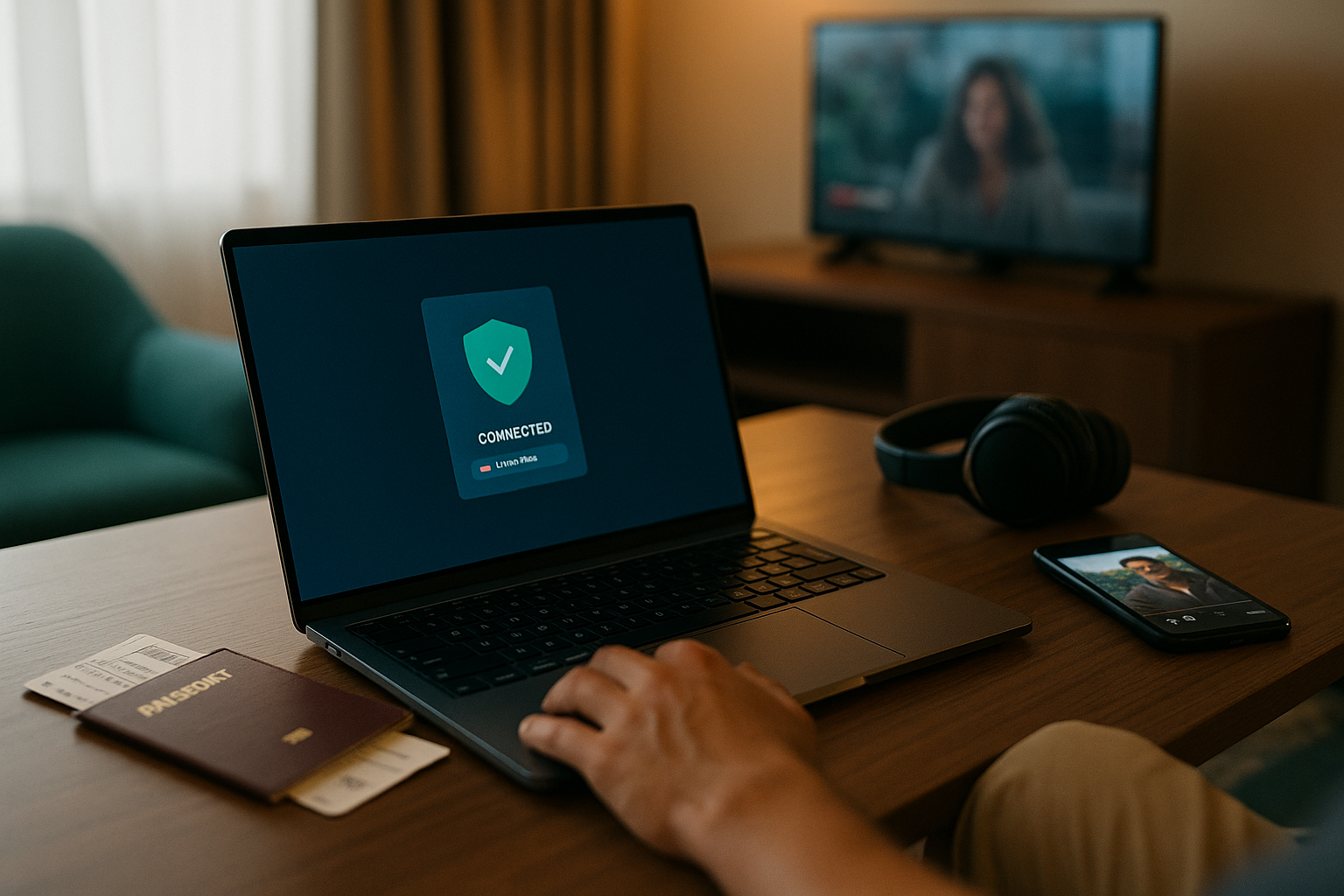



Why you need the best VPNs for streaming while traveling in 2025
When you hit the road, your favorite shows don’t always come with you. Platforms serve different libraries by country, public Wi-Fi can throttle or block video, and some networks flag unfamiliar logins. The best VPNs for streaming while traveling solve all three:
- Stable, fast connections so 4K doesn’t buffer on hotel Wi-Fi.
- Smart server networks that refresh IPs regularly.
- Obfuscation to look like normal HTTPS traffic on restrictive networks.
- Privacy: encryption keeps your browsing safe on public hotspots.
Used correctly, a good VPN becomes a “play button” wherever you land.
How to choose: the 9-point checklist
- Speed first: Look for consistently high download/upload on servers near you.
- Large server footprint: Many locations = more routing options if a server is blocked.
- Streaming reliability: Providers that actively maintain streaming-friendly endpoints.
- Obfuscation/stealth modes: Helps on hotel, airport, or café networks that block VPNs.
- Device coverage: Apps for iOS/Android, Windows/macOS, smart TVs, and browser extensions.
- Simultaneous connections: Enough for your phone, laptop, tablet, and travel partner.
- Privacy stance: No-logs policy, RAM-only servers, audited where possible.
- Support & refunds: 24/7 live chat and a 30-day money-back guarantee are ideal.
- Price/value: Multi-year plans are cheaper; monthly plans for short trips.
Note: Streaming availability changes often. Always test during the refund window.
The Best VPNs for Streaming While Traveling (2025 shortlist)
ExpressVPN
- Why travelers like it: Fast, reliable across many regions, and known for strong obfuscation that works well on hotel/airport Wi-Fi.
- Good for: Frequent flyers who want the most “plug-and-play” option.
NordVPN
- Why travelers like it: Big server network, speedy WireGuard-based protocol (NordLynx), extras like Meshnet and threat protection.
- Good for: Power users who want speed + security in one dashboard.
Surfshark
- Why travelers like it: Unlimited devices per account, excellent value, and useful features like NoBorders (bypass) and rotating IP.
- Good for: Couples/teams traveling with lots of gadgets.
Proton VPN
- Why travelers like it: Privacy-first reputation, audited no-logs policy, Secure Core routing, and strong streaming performance on paid plans.
- Good for: Privacy-conscious travelers who still want great speeds.
Private Internet Access (PIA)
- Why travelers like it: Massive server list, granular controls (port forwarding, encryption tweaks), competitive pricing.
- Good for: Tinkerers who like to fine-tune.
CyberGhost
- Why travelers like it: User-friendly apps and streaming-labeled servers that make selection simple.
- Good for: Beginners who want a guided experience.
Mullvad (privacy purist pick)
- Why travelers like it: Anonymous account numbers, flat pricing, extremely transparent privacy posture.
- Caveat: Not aimed at streaming; pick if privacy > streaming.
Windscribe (generous free tier)
- Why travelers like it: A usable free plan with bandwidth cap, clever features like “R.O.B.E.R.T.” filtering.
- Good for: Casual use or a backup when your main VPN struggles.
⚠️ Heads-up: Specific platforms change policies often. If one server doesn’t work, switch locations, clear app/browser cache, and try again.
Best VPNs for Streaming While Traveling: Comparison at a glance (speed, devices, extras)
| VPN | Speed* | Devices | Notable extras |
|---|---|---|---|
| ExpressVPN | Excellent | High | Obfuscation, Threat Manager, router app |
| NordVPN | Excellent | High | NordLynx protocol, Meshnet, dark web monitor |
| Surfshark | Very good | Unlimited | NoBorders, Rotating IP, CleanWeb |
| Proton VPN | Very good | High | Secure Core, audited no-logs, NetShield |
| PIA | Good–Very good | High | Advanced settings, port forwarding |
| CyberGhost | Good–Very good | High | Streaming-labeled servers, easy UI |
| Mullvad | Good | Moderate | Privacy-only focus, cash payments |
| Windscribe | Good | High | R.O.B.E.R.T. filter, flexible plans |
*Speed varies by location and network; test with your hotel/café Wi-Fi.
Streaming tips that actually work abroad
- Pick the nearest fast server in the region you need; speed beats distance.
- Use the modern protocol (WireGuard/NordLynx/Lightway) for stability.
- Clear app/browser cache after changing regions so platforms refresh libraries.
- Try another city within the same country if one endpoint is congested.
- Use a mobile hotspot if hotel Wi-Fi blocks VPNs; obfuscation can also help.
- Keep a backup provider (e.g., a month of a second VPN) for tricky regions.
- Download for offline when your platform allows it before long flights.
Is it legal to stream with a VPN? (quick clarity)
Using a VPN is legal in most countries, but platform Terms of Service may restrict region-shifting. Respect local laws and the services you use. Your VPN is also a security tool on public Wi-Fi—encrypting traffic and protecting accounts.
Frequently Asked Questions
Q1: Which VPN is the fastest for 4K streaming?
Speed changes by city and hotel network. ExpressVPN and NordVPN are consistently quick; Surfshark and Proton VPN are strong runners-up. Always test during the refund period.
Q2: Can I use one account on all my devices?
Yes—most allow many simultaneous connections; Surfshark even supports unlimited devices.
Q3: My streaming app still shows my old country. Now what?
Clear the app/browser cache, sign out/in, switch to another city server, and ensure your device location services are off (if your app uses them).
Q4: Are free VPNs OK for streaming?
Free plans can be slow or capped. Windscribe offers a decent free tier for light use, but for reliable HD/4K on trips, paid providers are far better.
Q5: Do I need a VPN on smart TVs?
If your TV doesn’t support VPN apps, try router-level VPN, a smart DNS from your provider, or cast from a phone/tablet connected through the VPN.
Conclusion: your 2025 travel streaming setup
If you want the best VPNs for streaming while traveling, start by pairing one premium provider (ExpressVPN/NordVPN/Surfshark/Proton VPN) with smart habits: modern protocol, cache clears, and a backup server list. For privacy-first trips, add Mullvad; for a safety net on a budget, keep Windscribe as a spare. Test before your flight, download offline episodes, and you’ll watch in peace from airports, hostels, and hotels around the world.
All Rights Reserved © 2026