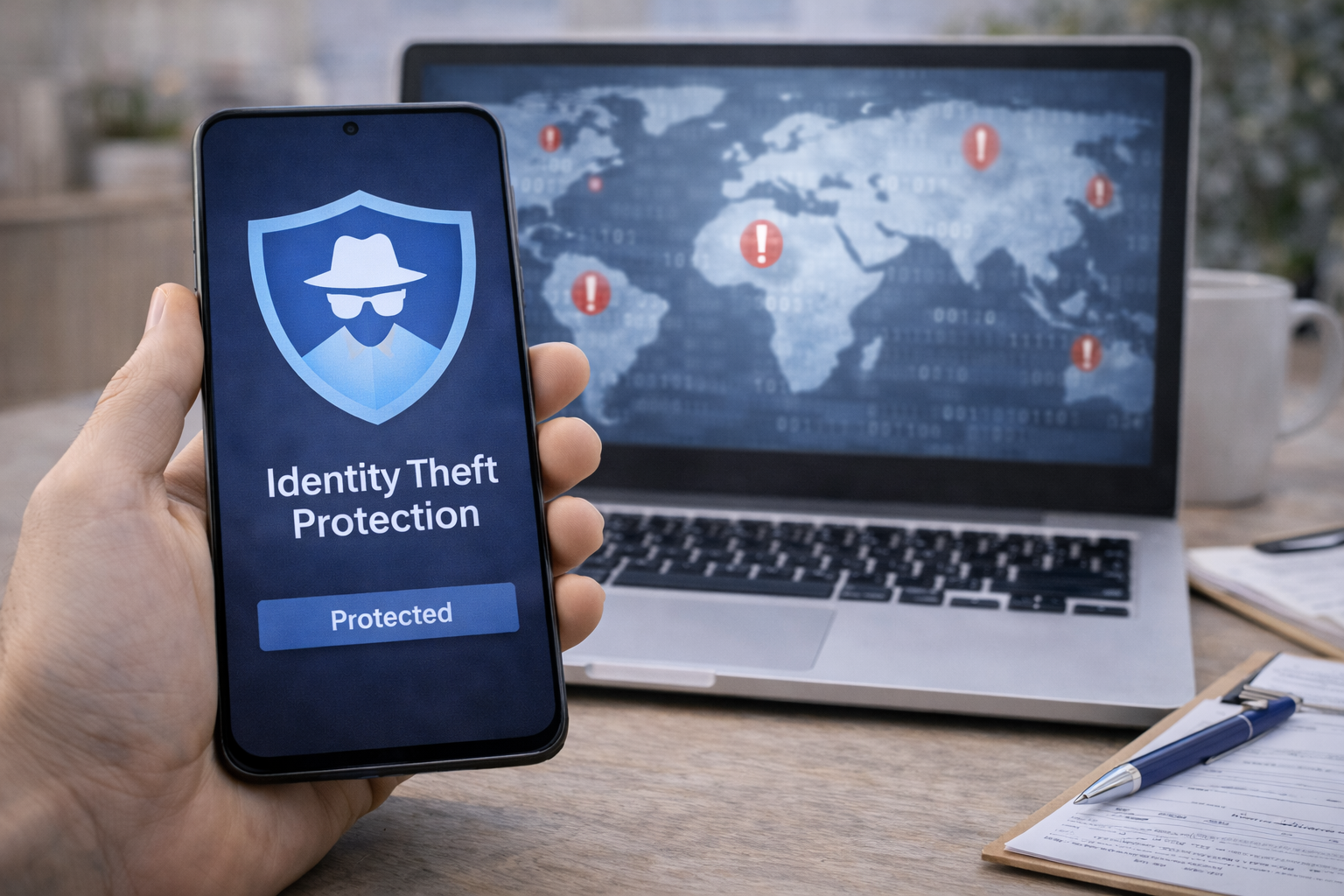



Is identity theft protection worth it in 2026? We break down what these services actually do, who should use them, and when they’re not necessary.
Identity Theft Protection Is Popular—but Is It Actually Useful?
Identity theft protection services are everywhere.
They promise:
- Peace of mind
- Early warnings
- Help if something goes wrong
But many people wonder the same thing before paying a monthly fee:
is identity theft protection worth it, or is it just expensive reassurance?
In 2026, these services are more common—and more misunderstood—than ever.
This guide gives you a clear, honest answer:
- What identity theft protection actually does
- What it doesn’t do
- Who benefits most
- When it’s unnecessary
- How it compares to free alternatives
No fear-based marketing. Just reality.
What Identity Theft Protection Services Actually Do
Most identity theft protection services offer three core functions.
1. Monitoring
They monitor for signs of misuse, such as:
- New credit accounts
- Changes to credit reports
- Data appearing in known breaches
- Suspicious activity linked to your identity
Monitoring is about detection, not prevention.
2. Alerts
When something looks wrong, you get notified:
- Email alerts
- App notifications
- Text messages (sometimes)
Early alerts matter—but only if you act on them.
3. Recovery Assistance
If identity theft occurs, services often provide:
- Step-by-step guidance
- Help contacting creditors
- Assistance with paperwork
- Case managers in premium plans
This is where most of the real value lives.
What Identity Theft Protection Does Not Do
This is where expectations often break.
Identity theft protection services do not:
- Stop breaches from happening
- Prevent account takeovers
- Replace strong passwords or 2FA
- Block new credit by default
- Secure your devices or email
They are reactive, not preventative.
The Most Common Identity Theft Scenarios in 2026
Understanding real risk helps answer whether these services are worth it.
The most common forms of identity theft today include:
- New credit opened fraudulently
- Account takeovers using leaked credentials
- Tax or benefit fraud
- SIM swap-related fraud
- Synthetic identity creation (harder to detect)
Not all of these are equally preventable by monitoring alone.
Identity Theft Protection vs Credit Freezes (Important Difference)
These two are often confused—but they do very different things.
Credit Freeze
- Blocks new credit entirely
- Prevents most financial identity theft
- Free in many countries
- Requires action to lift temporarily
Identity Theft Protection
- Alerts you after suspicious activity
- Helps with recovery
- Usually costs money
- Does not block credit by itself
In many cases, a credit freeze does more to prevent damage than monitoring alone.
Who Identity Theft Protection Is Worth It For
So—is identity theft protection worth it for some people?
Yes. Especially if one or more of these apply.
1. You’ve Already Experienced Identity Theft
If you’ve dealt with identity theft before:
- Monitoring reduces anxiety
- Recovery help saves time
- Alerts catch repeat attempts faster
Past victims are more likely to be targeted again.
2. You Don’t Want to Manage Security Yourself
Some people don’t want to:
- Monitor credit reports
- Set up alerts
- Track breaches
- Deal with paperwork alone
For them, paying for assistance makes sense.
3. You Have High Financial or Personal Exposure
This includes:
- High credit limits
- Multiple properties
- Business ownership
- Public-facing roles
- Frequent data exposure
The more complex your financial life, the more valuable guided recovery becomes.
Who Probably Doesn’t Need It
Identity theft protection may not be worth it if:
- Your credit is frozen
- You monitor accounts regularly
- You’re comfortable handling issues yourself
- You have limited credit exposure
- You prefer free tools and alerts
In these cases, paid services may offer minimal additional benefit.
Popular Identity Theft Protection Services in 2026
Here are examples people often compare (not endorsements):
- LifeLock
- Aura
- Experian IdentityWorks
They differ in:
- Price
- Credit bureau coverage
- Insurance limits
- Level of recovery support
What matters most is recovery quality, not flashy dashboards.
Are Free Alternatives Enough?
Many protections are available without paying.
Free or low-cost options include:
- Credit freezes
- Fraud alerts
- Bank transaction alerts
- Free credit reports
- Breach notification services
For disciplined users, these cover most risks.
Paid services mainly add convenience and support, not magic protection.
Insurance: The Most Misunderstood Feature
Many services advertise identity theft insurance.
Important clarification:
- It does not cover stolen money
- It often covers recovery costs
- Coverage varies by plan
- Claims require documentation
Insurance is helpful—but rarely the main reason to subscribe.
Common Myths About Identity Theft Protection
“It prevents identity theft.”
False. It detects and assists.
“Everyone needs it.”
False. Risk varies.
“It replaces credit freezes.”
False. Freezes are preventative; monitoring is reactive.
“It’s useless.”
Also false—for the right users.
How to Decide (Simple Framework)
Ask yourself:
- Do I already freeze my credit?
- Would I handle recovery confidently?
- Is my financial life complex?
- Do I value assistance over cost?
If you value help and peace of mind, it may be worth it.
If you value control and prevention, free tools may be enough.
FAQs: Is Identity Theft Protection Worth It
1. Is identity theft protection worth it in 2026?
For some people—yes. For others—no.
2. Does it prevent identity theft?
No. It helps detect and recover.
3. Is it better than freezing credit?
No. They serve different purposes.
4. Are free tools enough?
Often yes, if used consistently.
5. Can I cancel anytime?
Most services allow monthly cancellation.
6. Should I use it after a breach?
It can be helpful for monitoring and support.
Conclusion: It’s About Support, Not Security
So—is identity theft protection worth it?
In 2026, the honest answer is:
- It’s not essential
- It’s not useless
- It’s situational
These services don’t replace good security habits.
They replace stress, time, and confusion when something goes wrong.
If you want help handling the worst-case scenario, it may be worth the cost.
If you’re comfortable managing things yourself, prevention tools may be enough.
Good security is about choices, not checklists.
FTC guidance on identity theft recovery: IdentityTheft.gov
All Rights Reserved © 2026