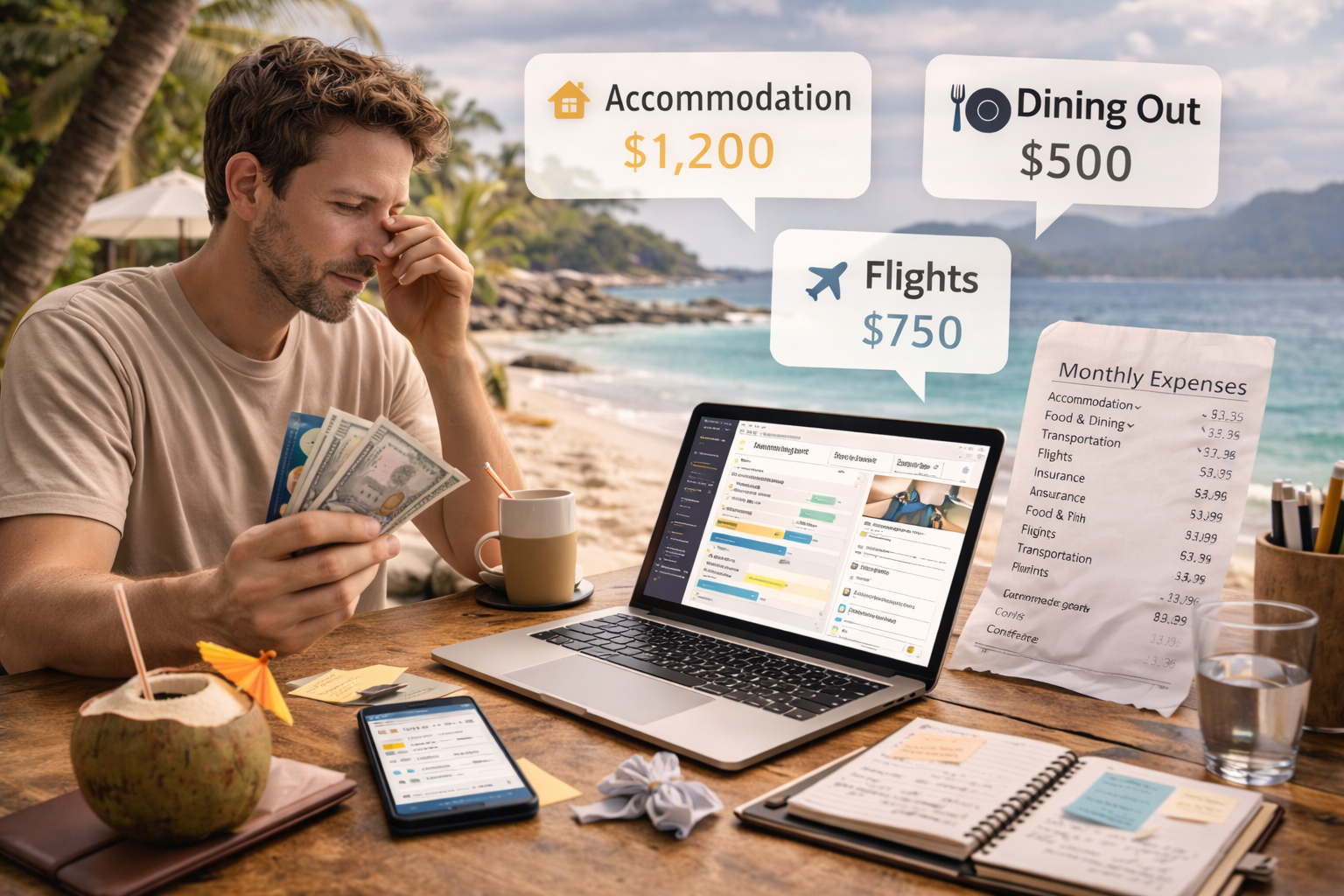



How much does digital nomad life really cost? Discover 17 shocking truths about the digital nomad cost of living, including housing, visas, travel, insurance, and hidden expenses most people underestimate.
Travel Essentials & Remote Work
- Best Digital Nomad Cities 2026 (Budget-Friendly, Safe & Fast WiFi)
- Top Digital Nomad Cities to Live in 2026
- Best Cities for Digital Nomads in 2026 (Budget Edition): 17 Affordable, Internet-Ready Places to Live & Work
- Best Premium Cities for Digital Nomads in 2026 (Premium / Comfort Edition): Where High Performance Meets High Quality of Life
- Cheapest Digital Nomad-Friendly Countries in 2026: 17 Incredible Places to Live Well on a Budget
- Best Countries for Remote Workers in 2026 (Visas + Internet): 19 Top Destinations for Fast Wi-Fi & Easy Legal Stays
- Digital Nomad Packing List for 2026: 27 Essential Categories to Travel Smart, Light, and Stress-Free
- Best Travel Insurance for Digital Nomads 2026
- Travel Insurance for Digital Nomads in 2025: Full Guide to Staying Protected Abroad
- Digital Nomad Freedom Myths: What Digital Nomads Get Wrong About Freedom
- Best Countries for Expats in 2026 (Easy Settling): 21 Proven Destinations Where Life Abroad Feels Simple
- 10 Best Countries to Move to in 2026 (Visas + Cost-of-Living Guide)
To see why budgeting has become such a major part of location-independent living, start with the rise of digital nomad visas in 2026, which explores the expanding appeal of this lifestyle around the world.
If you’re trying to stretch your budget further, start with our guide to the cheapest digital nomad-friendly countries in 2026 to compare low-cost destinations that still work well for remote professionals.
For Europe-focused planning, our article on the cheapest places to live in Europe in 2026 can help you identify realistic bases with lower monthly expenses.
Before building your financial plan around social media expectations, it also helps to read about common digital nomad freedom myths that often hide the true cost of this lifestyle.
Digital nomad life is often marketed as cheaper, freer, and simpler than traditional living.
“Live anywhere for $1,000 a month.”
“Work from the beach.”
“Escape high costs forever.”
But once people actually hit the road, a different question quickly appears:
How Much Does Digital Nomad Life Really Cost—month after month, in real life?
This guide gives a clear, honest breakdown of the digital nomad cost of living, based on how people actually live—not extreme budget backpacking or luxury influencer lifestyles.
No hype.
No cherry-picked numbers.
Just reality.
🧠 Why Digital Nomad Costs Are Often Misrepresented
Most cost estimates fail because they:
- Use short-term travel budgets
- Ignore visa and legal costs
- Skip insurance and healthcare
- Assume constant movement or constant cheap countries
- Exclude lifestyle inflation
The truth is simple:
Digital nomad life isn’t automatically cheap—it’s flexible.
Flexibility can lower costs or raise them dramatically.
⚖️ The Two Biggest Cost Drivers
Before numbers, understand this:
The digital nomad cost of living depends mostly on two things:
1. Where You Spend Most of Your Time
- Southeast Asia ≠ Western Europe
- Latin America ≠ North America
2. How Fast You Move
- Fast travel = higher costs
- Slow travel = lower costs
Everything else is secondary.
💰 Average Monthly Digital Nomad Cost of Living (Realistic Ranges)
Here are realistic monthly averages, not extremes:
| Lifestyle | Monthly Cost (USD) |
|---|---|
| Budget Nomad | $1,200 – $1,800 |
| Comfortable Nomad | $2,000 – $3,000 |
| Premium Nomad | $3,500 – $5,000+ |
These ranges include:
- Rent
- Food
- Transport
- Insurance
- Basic lifestyle expenses
They do not include major emergencies or luxury splurges.
🏠 Housing Costs (The Biggest Variable)
Housing is usually 30–50% of total spending.
Monthly Housing Estimates
- Southeast Asia: $400 – $900
- Latin America: $600 – $1,200
- Eastern Europe: $700 – $1,300
- Western Europe: $1,200 – $2,500+
- North America: $1,500 – $3,000+
Short-term rentals cost more than local leases.
Slow nomads save more.
🍽️ Food & Daily Expenses
Food costs depend more on habits than location.
Typical Monthly Food Costs
- Cooking often: $200 – $400
- Mixed eating out: $300 – $600
- Frequent dining out: $600 – $1,000+
Coffee, alcohol, and imported food quietly inflate budgets.
✈️ Transportation & Flights
Flights are often underestimated.
Annual Flight Costs (Averaged Monthly)
- Slow travel (2–4 flights/year): $100 – $250/month
- Fast travel (monthly flights): $300 – $600/month
Local transport adds:
- $30 – $150/month depending on city
Constant movement = constant spending.
🛂 Visas, Legal & Residency Costs
Often ignored—but unavoidable.
Common expenses:
- Tourist visa runs
- Digital nomad visas
- Extensions & paperwork
- Immigration lawyers (sometimes)
Average Monthly Visa Cost (Averaged Annually)
- $50 – $200/month
Longer stays usually reduce overall cost.
🩺 Insurance & Healthcare
This is not optional.
Typical Costs
- Travel insurance: $40 – $80/month
- Nomad health insurance: $80 – $200/month
- Out-of-pocket care: varies by region
Skipping insurance saves money—until it costs everything.
💻 Work & Tech Expenses
Often overlooked in budget breakdowns.
Typical monthly costs:
- Internet & SIMs: $20 – $80
- Coworking spaces: $0 – $250
- Software tools: $30 – $100
- Equipment replacement fund: $50 – $100
Work stability costs money—but prevents stress.
🧨 Hidden Costs Most Nomads Ignore
These don’t show up in blog posts—but they matter.
Hidden costs include:
- Visa mistakes
- Rebooking flights
- Short-term rental premiums
- Replacing lost or damaged gear
- Burnout recovery (hotels, rest, healthcare)
- Currency exchange fees
These costs are why many budgets fail after 6–12 months.
🏷️ Budget vs Comfortable vs Premium Nomad Life
Budget Nomad ($1,200–$1,800)
- Shared housing
- Limited travel
- Strict spending
- Higher stress
Comfortable Nomad ($2,000–$3,000)
- Private apartment
- Slow travel
- Eating out regularly
- Insurance and stability
Premium Nomad ($3,500+)
- Central locations
- Frequent flights
- Coworking + gyms
- High flexibility
Most long-term nomads aim for comfortable, not extreme.
💡 How to Lower Digital Nomad Costs Without Misery
Effective cost control strategies:
- Stay longer (30–90 days minimum)
- Avoid constant visa runs
- Rent monthly, not weekly
- Cook some meals
- Choose fewer base cities
- Budget for rest, not just travel
Cheap living isn’t freedom if it’s exhausting.
❓ Frequently Asked Questions
Is digital nomad life cheaper than living at home?
Sometimes—but not always. It depends on lifestyle and movement speed.
Can you live as a digital nomad for $1,000/month?
Possible short-term in limited locations, but rarely sustainable long-term.
What’s the biggest unexpected cost?
Housing premiums and travel logistics.
Does digital nomad life get cheaper over time?
Often yes—as people slow down and optimize.
Is it worth the cost?
That depends on what you value more: stability or flexibility.
🏁 Conclusion
So—How Much Does Digital Nomad Life Really Cost?
The honest answer:
Digital nomad life costs as much as the stability, comfort, and pace you choose.
The digital nomad cost of living isn’t fixed.
It’s a sliding scale between:
- Freedom and fatigue
- Cheap and comfortable
- Movement and stability
The happiest long-term nomads aren’t the cheapest.
They’re the ones who budget for:
- Rest
- Health
- Time
- Sustainability
That’s the real cost—and the real value—of nomad life.
All Rights Reserved © 2026