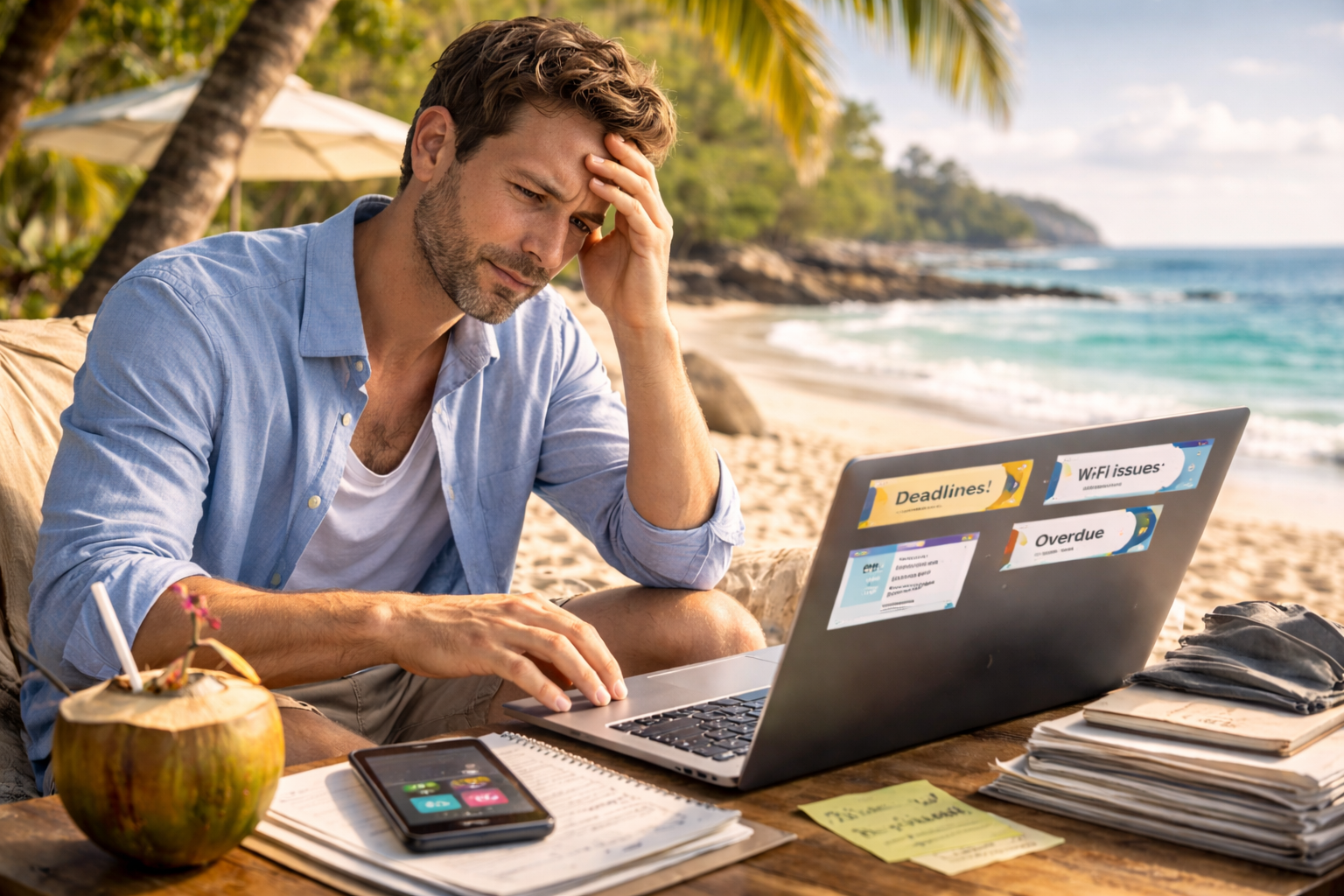



Digital nomad freedom myths explained honestly—why location independence doesn’t automatically create freedom, what nomads often misunderstand, and what real freedom actually looks like in the long run.
Travel Essentials & Remote Work
- Best Digital Nomad Cities 2026 (Budget-Friendly, Safe & Fast WiFi)
- Top Digital Nomad Cities to Live in 2026
- Best Cities for Digital Nomads in 2026 (Budget Edition): 17 Affordable, Internet-Ready Places to Live & Work
- Best Premium Cities for Digital Nomads in 2026 (Premium / Comfort Edition): Where High Performance Meets High Quality of Life
- Cheapest Digital Nomad-Friendly Countries in 2026: 17 Incredible Places to Live Well on a Budget
- Best Countries for Remote Workers in 2026 (Visas + Internet): 19 Top Destinations for Fast Wi-Fi & Easy Legal Stays
- How Much Does Digital Nomad Life Really Cost? (17 Shocking Truths About the Digital Nomad Cost of Living)
- Digital Nomad Packing List for 2026: 27 Essential Categories to Travel Smart, Light, and Stress-Free
- Best Travel Insurance for Digital Nomads 2026
- Travel Insurance for Digital Nomads in 2025: Full Guide to Staying Protected Abroad
- Best Countries for Expats in 2026 (Easy Settling): 21 Proven Destinations Where Life Abroad Feels Simple
- 10 Best Countries to Move to in 2026 (Visas + Cost-of-Living Guide)
If you want the bigger picture behind the hype, the rise of digital nomad visas in 2026 explains why this lifestyle is growing so fast—and why expectations don’t always match reality.
For a more practical look at what this lifestyle actually costs, our guide on how much digital nomad life really costs breaks down the numbers behind the dream.
If you’re serious about making the move, it’s also worth exploring the easiest digital nomad visas to get in 2026 so you can separate inspiration from actionable planning.
And for readers still choosing a destination, our roundup of the best countries for remote workers in 2026 is a strong next step.
Digital nomadism is marketed as the ultimate freedom lifestyle.
Work from anywhere.
Travel endlessly.
Escape the 9–5.
Live on your own terms.
And while parts of that promise are real, many people discover something unexpected after a few months on the road:
They feel just as constrained—sometimes more—than before.
This article breaks down the most common digital nomad freedom myths, why they’re so persuasive online, where they break down in real life, and what actual freedom looks like beyond the Instagram version of nomad life.
This isn’t anti–digital nomadism.
It’s pro–reality.
🌍 Why Digital Nomadism Is Framed as Ultimate Freedom
The idea of digital nomadism emerged as a reaction to:
- Office-bound work
- Rigid schedules
- Geographic limitation
- Traditional career paths
Compared to a fixed-location job, nomad life feels radically free.
But most digital nomad freedom myths come from comparing nomadism only to its worst alternative—not to realistic long-term living.
Freedom gets oversimplified into:
- Movement
- Novelty
- Flexibility
That definition doesn’t hold up forever.
❌ Myth #1: Location Independence Equals Freedom
The most fundamental myth is this:
“If I can live anywhere, I’ll feel free.”
In reality, location independence just changes constraints.
Instead of:
- Office hours
- Commutes
- One city
You now manage:
- Visas
- Internet reliability
- Time zones
- Short-term housing
- Constant logistics
Many nomads discover they traded one set of limits for another—often more complex ones.
Freedom isn’t the absence of constraints.
It’s choosing which constraints you can live with.
⏱️ Myth #2: Freedom Means No Structure
Many new nomads reject structure entirely:
- No routines
- No schedules
- No long-term plans
This feels liberating—briefly.
Then it becomes exhausting.
Without structure:
- Work bleeds into everything
- Decision fatigue skyrockets
- Anxiety increases
- Productivity drops
Ironically, the lack of structure often reduces freedom.
The most sustainable nomads don’t avoid structure.
They design flexible structure.
✈️ Myth #3: Travel Automatically Improves Life
Travel is enriching—but it’s not a cure-all.
Digital nomad freedom myths often assume:
- New places = new happiness
- Movement = growth
- Novelty = fulfillment
But unresolved issues travel with you:
- Burnout
- Loneliness
- Work stress
- Identity confusion
Travel amplifies your internal state—it doesn’t fix it.
That’s why some nomads feel unexpectedly empty in “paradise.”
🌐 Myth #4: Time Zone Freedom Is Effortless
Time zone flexibility is often marketed as a benefit.
In practice, it’s one of the hardest parts.
Common realities:
- Late-night calls
- Early-morning meetings
- Fragmented sleep
- Social isolation
Working asynchronously requires:
- Strong boundaries
- Trust
- Clear communication
Without those, time zone “freedom” becomes time zone captivity.
💸 Myth #5: Income Is Easier Once You’re Nomadic
Another persistent myth:
“Once I go nomadic, money stress will ease.”
For many people, the opposite happens—at least initially.
Why?
- Inconsistent income
- Currency fluctuations
- Lack of safety nets
- Healthcare uncertainty
Nomad life often exposes financial fragility, especially for freelancers and solo workers.
Freedom without financial stability feels fragile, not empowering.
🧳 Myth #6: Freedom Means Escaping Responsibility
Some people pursue nomadism to escape:
- Office politics
- Commitments
- Long-term obligations
But responsibility doesn’t disappear—it shifts.
Nomads still manage:
- Clients
- Deadlines
- Taxes
- Insurance
- Legal compliance
Avoiding responsibility isn’t freedom.
It’s postponement.
Real freedom comes from handling responsibility well, not avoiding it.
🔀 Myth #7: More Options = More Freedom
Nomad life offers endless options:
- Cities
- Countries
- Lifestyles
- Schedules
At first, this feels intoxicating.
Over time, it can become paralyzing.
Too many options create:
- Decision fatigue
- Chronic comparison
- Fear of missing out
- Difficulty committing
Paradoxically, freedom increases when options are intentionally limited.
🔒 The Hidden Constraints of Digital Nomad Life
Beyond the myths, nomads often face constraints rarely discussed online:
- Visa limits dictate movement
- Short-term housing costs more
- Relationships are harder to maintain
- Healthcare is complicated
- Community is temporary
These aren’t reasons to avoid nomadism—but ignoring them creates disillusionment.
Most digital nomad freedom myths collapse when daily reality sets in.
🧠 What Real Freedom Actually Looks Like
After the myths fade, a more grounded definition of freedom emerges.
Real freedom looks like:
- Predictable income
- Chosen routines
- A sense of belonging
- Control over workload
- Enough stability to rest
It’s less about where you are—and more about:
- How you work
- How you recover
- How you decide
Many long-term nomads eventually slow down, stay longer, or adopt semi-nomadic lives for this reason.
🛠️ How to Redesign Nomad Life for Real Freedom
Nomads who feel genuinely free usually do these things:
1. Choose Fewer Places
Staying longer:
- Reduces stress
- Builds community
- Improves productivity
Slow travel often creates more freedom than constant movement.
2. Add Light Structure
Simple routines:
- Work hours
- Rest days
- Planning rituals
Structure creates predictability—which supports freedom.
3. Stabilize Income First
Freedom expands dramatically when:
- Income is predictable
- Savings exist
- Expenses are known
Financial calm matters more than geography.
4. Redefine Freedom Personally
Ask:
“What does freedom mean for me, not online?”
For some, it’s flexibility.
For others, it’s stability.
There’s no universal answer.
❓ Frequently Asked Questions
Are digital nomads actually free?
They’re free in some ways and constrained in others—like everyone else.
Is digital nomadism overrated?
It’s often over-romanticized, not overrated.
Do most nomads quit eventually?
Many transition to slower or hybrid lifestyles rather than quitting entirely.
Is nomad life lonely?
It can be—especially without intentional community-building.
What’s the biggest digital nomad freedom myth?
That freedom comes automatically from movement.
🏁 Conclusion
The biggest digital nomad freedom myths come from confusing mobility with freedom.
Movement can be freeing.
So can stillness.
Freedom isn’t about running away from structure, responsibility, or limits.
It’s about choosing them deliberately.
Digital nomadism can support freedom—but only when it’s designed honestly, lived slowly, and grounded in reality instead of fantasy.
All Rights Reserved © 2026