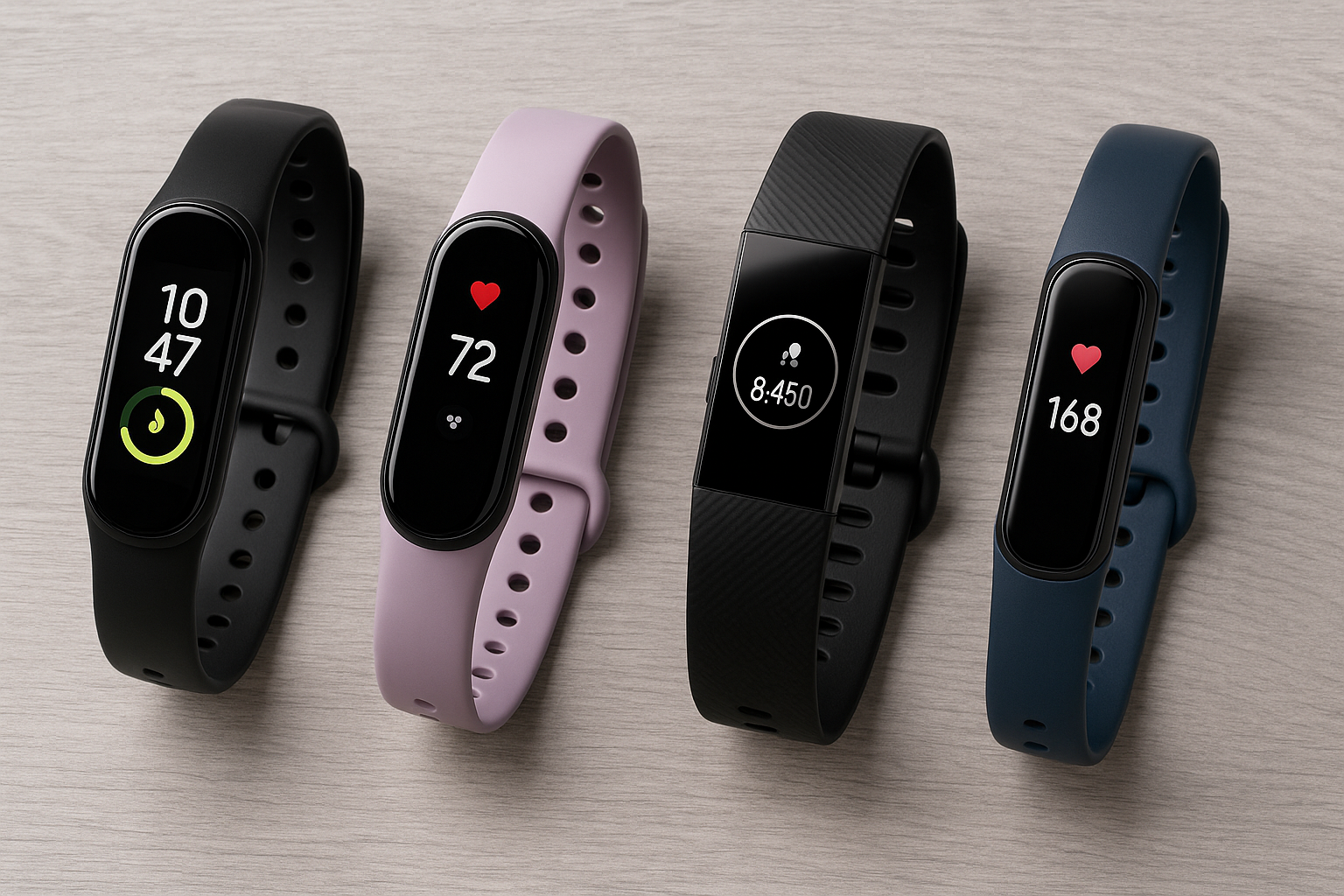



Best Fitness Trackers in 2026 – discover the top bands, watches and rings from Fitbit, Garmin, Xiaomi, Amazfit, Oura, Whoop, Apple, and Google, with comparisons, scenarios, and FAQs.
If you’re searching for the Best Fitness Trackers in 2026, you’re not alone. Fitness wearables have gone from simple step counters to tiny coaching devices that track heart rate, sleep, stress, recovery, and even your running form. The challenge isn’t finding a tracker anymore – it’s picking the right one without drowning in specs.
Recent 2025–2026 guides from sites like Android Central, Stuff, TechGearLab, NextPit, The Verge, and Wired consistently highlight devices such as Fitbit Charge 6, Garmin Vivosmart 5, Xiaomi Smart Band 9/10, Fitbit Inspire 3, Amazfit Band 7, Garmin Vivoactive 5, Google Pixel Watch 4, Apple Watch SE / Series 11, Oura Ring 4, Whoop 4.0, and RingConn smart ring among the best options, each targeting different budgets and needs.
Let’s break down why fitness trackers still matter, how to choose one, and then walk through the top picks.
Why the Best Fitness Trackers in 2026 Still Matter (Even If You Have a Smartphone)
From Step Counters to Training Coaches: How Trackers Evolved
First-gen fitness bands were basically bracelets that counted steps. Now, many of the Best Fitness Trackers in 2026 can:
- Track all-day heart rate and resting HR trends
- Measure sleep stages, HRV, stress, and recovery
- Use multi-satellite GPS to map outdoor runs and rides
- Estimate VO₂ max, training load, and fitness age
- Provide coaching plans for 5K, 10K, or general cardio and strength progress
That means your tracker can help you:
- See when you’re overtraining or under-recovering
- Adjust workouts when your body’s tired
- Turn vague goals (“get fitter”) into measurable progress (HR, pace, distance, sleep)
What Trackers Do Better Than Apps Alone
Your phone can track steps and GPS runs… but:
- It doesn’t sit on your skin – so no heart rate, HRV, or sleep from the wrist or finger.
- It’s easy to forget, especially in the house or at the gym.
- It’s not comfortable to strap a 6-inch slab to your wrist mid-burpee.
Dedicated trackers are:
- Always on you, quietly collecting data
- Designed for exercise comfort
- Better at 24/7 data, which makes trends and recovery metrics much more reliable
That’s why even reviewers who test dozens of wearables keep coming back to a shortlist of serious trackers and watch-style devices.
How to Choose the Right Fitness Tracker in 2026
Bands vs Watches vs Rings: Which Form Factor Fits You?
You’ve got three main shapes in the world of the Best Fitness Trackers in 2026:
- Bands (classic fitness trackers)
- Examples: Fitbit Charge 6, Garmin Vivosmart 5, Xiaomi Smart Band, Amazfit Band 7, Fitbit Inspire 3.
- Light, slim, and comfortable for 24/7 wear.
- Best if you care more about health and sports than apps or big screens.
- Watches (fitness-oriented smartwatches)
- Examples: Garmin Vivoactive 5, Google Pixel Watch 4, Apple Watch SE, some Garmin / Amazfit watches.
- Larger screens, more smart features (notifications, payments, apps).
- Great if you want fitness + smartwatch in one device.
- Rings & straps
- Examples: Oura Ring 4, RingConn, Whoop 4.0 strap.
- Subtle and comfy; best for sleep, recovery, and wellness over flashy screens.
- Often subscription-based (Whoop) or app-focused.
Sensors, Metrics, and Features That Actually Matter
Almost all decent trackers now offer:
- Optical heart rate (24/7)
- Basic sleep tracking
- Step count, calories, move reminders
Differences show up in:
- GPS – built-in vs tethered (using your phone)
- HRV & recovery metrics – “readiness” or “strain” scores (Whoop, Oura, Fitbit, Garmin, Amazfit).
- Training tools – VO₂ max, training load, running form analysis, structured plans.
Think about what you’ll use:
- Just steps + heart rate + sleep? Any decent band will do.
- Serious running / cycling? Look for accurate GPS and training features (Garmin, COROS, serious Fitbit / Pixel Watch combos).
- Stress & recovery? Choose rings/straps or high-end bands with HRV metrics.
Battery Life, Comfort, and Ecosystem (iOS vs Android vs Mixed)
Battery life ranges from:
- 1–3 days on some smartwatch-style trackers (Pixel Watch, Apple Watch).
- 7–14+ days on many bands and watch-style trackers (Xiaomi, Amazfit, Garmin Vivosmart, Vivoactive).
Also consider:
- Platform – Apple Watch only works with iPhone; most others work with both, though some features are Android-only.
- Comfort – if you hate wearing watches in bed, rings or slim bands are better.
Now let’s look at the actual devices.
Best Fitness Trackers in 2026: Quick Comparison Table
| Device | Type | Best For | Key Highlights |
|---|---|---|---|
| Fitbit Charge 6 | Band | Most people, all-round use | Often ranked #1 overall; built-in GPS, HR, stress tools, Google Maps/Wallet support. |
| Garmin Vivosmart 5 | Band | Data-focused users | Advanced health metrics, 7-day battery, deep Garmin Connect ecosystem. |
| Xiaomi Smart Band 9 / 10 | Band | Best cheap tracker | ~150+ sports modes, long battery, great value under $50. |
| Fitbit Inspire 3 | Band | Budget Fitbit | Lightweight, bright OLED, good entry-level tracking. |
| Amazfit Band 7 | Band | Starter tracker | HR, SpO₂, stress, Alexa, long battery at low price. |
| Garmin Vivoactive 5 | Watch | Best watch-style tracker | TechGearLab’s best overall tracker; strong GPS, coaching, and everyday wearability. |
| Google Pixel Watch 4 | Watch | Android users wanting smartwatch + tracker | Wear OS + Fitbit health, AI insights, stylish design. |
| Apple Watch SE / Series 11 | Watch | iPhone owners | Great activity/ring system, strong health tools on watchOS. |
| Oura Ring 4 / RingConn | Ring | Sleep & recovery fans | 24/7 HR, HRV, sleep and readiness scores in a subtle form factor. |
| Whoop 4.0 | Strap | Recovery-obsessed athletes | Subscription tracker with strain & recovery focus. |
| Polar Loop (2025 refresh) | Band | Budget activity tracking | Simple all-day activity tracker with Polar Flow integration. |
Fitbit Charge 6 – Best Overall Fitness Tracker for Most People
Why So Many 2025–2026 Guides Put Charge 6 at the Top
Multiple independent guides – from Android Central to Stuff, Listful, Wired roundups, and other expert lists – call Fitbit Charge 6 the best overall fitness tracker for most people.
Why?
- Form factor: Slim, light band that’s comfortable 24/7.
- Features:
- Built-in GPS, so you can leave your phone at home for runs.
- Continuous heart rate, SpO₂, stress tracking, and advanced sleep metrics.
- Integration with Google Maps, Google Wallet, YouTube Music controls thanks to Google ownership.
- Battery: Around 7 days in typical use.
Reviewers love that it feels like a “mini smartwatch” without the hassle of big screens and short battery life.
Pros, Cons, and Who It’s Best For
Pros
- Great balance of smart features and tracking
- Works on both iOS and Android
- Extensive Fitbit app with community challenges, badges, and Premium insights
Cons
- Some insights and reports are locked behind Fitbit Premium, though basic tracking still works fine.
- Screen is small compared to full smartwatches.
Best for:
Anyone who wants one tracker that does almost everything well – steps, heart rate, sleep, running, gym workouts – without going full smartwatch.
Garmin Vivosmart 5 – Best Premium Fitness Band for Data Nerds
Advanced Metrics in a Slim Band
If you like the idea of a slim band but want deeper training and health data, Garmin Vivosmart 5 is a top pick:
- Android Central and others rank it near the top of the best fitness trackers for people who want Garmin’s serious metrics in a band form.
- Garmin’s product page highlights sleep score, Body Battery energy monitoring, stress, HR, step tracking, intensity minutes, and more.
- It uses your phone’s GPS for outdoor runs (tethered GPS), but still supports built-in sport profiles like walking, running, yoga, cardio, pool swim.
Battery is around 7 days, and Garmin Connect opens the door to detailed training load, VO₂ max estimates (paired with certain profiles), and long-term trends.
Best for:
People who like a Fitbit-style band but want Garmin-level stats, especially runners and walkers who don’t mind bringing a phone for GPS.
Xiaomi Smart Band 10 / 9 – Best Cheap Fitness Tracker Under $50
Tons of Features, Tiny Price
Android Central and Wareable repeatedly highlight Xiaomi’s Smart Band 9 and 10 as some of the best cheap fitness trackers, delivering an absurd amount of features for under $50:
- Huge menu of 150+ sport modes.
- Stress monitoring, HR tracking, basic sleep metrics, and sometimes running form analysis and vitality scores depending on model.
- Battery often rated around 14–21 days, depending on how hard you push it.
If your budget is tight but you still want:
- Steps
- HR
- Sleep
- Basic exercise stats
…Xiaomi’s bands are one of the easiest recommendations.
Fitbit Inspire 3 – Best Budget Fitbit for Everyday Health
Lightweight, Simple, and Great for Beginners
If you like Fitbit but don’t need all the bells and whistles of Charge 6, Fitbit Inspire 3 is a great alternative:
- The Verge’s Fitbit roundup and Android Central’s Fitbit guide both call Inspire 3 the best budget Fitbit, praising its bright OLED screen, light design, and simple interface.
- You still get HR, sleep stages, stress, steps, and notifications, plus up to 10 days of battery life.
It skips built-in GPS and some advanced features, but that’s fine if you:
- Mainly walk, do light workouts, or go to the gym
- Care about daily activity and sleep more than precise pace metrics
Amazfit Band 7 – Best Starter Fitness Tracker with Long Battery
When You Want “Set It and Forget It” Tracking
Both The Verge and Android Central note how Amazfit Band 7 is shockingly capable for the price:
- Continuous HR monitoring, SpO₂, stress, and advanced sleep tracking with scores.
- Built-in Amazon Alexa, basic training metrics like VO₂ max and load, plus tons of watch faces.
- Long battery life (often 10–18 days in real-world use).
If you want something:
- Cheap
- Comfortable
- That you rarely need to charge
…Amazfit Band 7 is one of the Best Fitness Trackers in 2026 for beginners and casual users.
Garmin Vivoactive 5 – Best Watch-Style Fitness Tracker for Mixed Use
Why TechGearLab Calls It the Best Overall Fitness Tracker
If you like the idea of a watch that’s really a fitness tracker, Garmin Vivoactive 5 is a standout:
- TechGearLab’s 2025 roundup names Garmin Vivoactive 5 the best overall fitness tracker, praising its mix of high-performance features, comfort, and tracking accuracy at a reasonable price.
- It offers built-in GPS, multi-sport modes, training metrics, and long battery life, while still looking like a normal smartwatch.
Vivoactive 5 works well if you:
- Do a mix of running, gym, cycling, and everyday activity
- Want something more stylish and readable than a narrow band
- Still care about battery life and Garmin’s training tools
Google Pixel Watch 4 – Best Fitness-First Smartwatch for Android Users
Fitbit + Wear OS = Strong Combo for Health & Smart Features
Several guides now treat Google Pixel Watch 4 as a top-tier fitness tracker for Android, not just a smartwatch:
- Android Central’s Fitbit guide calls it the “best overall Fitbit” in a sense, because it combines Fitbit’s tracking with full Wear OS apps and Google services.
- Wired’s fitness tracker list also highlights Pixel Watch 4 as the best fitness tracker for Android thanks to the Fitbit integration, advanced metrics, and Google ecosystem.
You get:
- Strong health & workout tracking
- Smartwatch functions: calls, notifications, Google Wallet, Maps, and Assistant
- Reasonable battery for a full OS watch (typically a day or so, with optimisations)
If you want one device that acts as both fitness tracker and full smartwatch, this is one of the best picks for Android users.
Apple Watch SE / Apple Watch Series 11 – Best Fitness Trackers for iPhone Users
When a Smartwatch Is Also Your Fitness Tracker
The Verge and other outlets often point out that for many iPhone users, the Apple Watch is effectively their fitness tracker.
- Apple Watch SE is the budget option, giving you:
- Activity rings, Workout app, good HR and GPS
- Sleep tracking, high/low HR alerts, fall detection
- Tight iOS integration, notifications, Apple Pay
- Apple Watch Series 11 (and 10) add:
- More advanced health sensors, always-on display, and extra workout refinements.
If you’re fully in the Apple ecosystem and want something that doubles as:
- Fitness tracker
- Notification center
- Tiny phone on your wrist
…then Apple Watch SE or Series 11 are your most seamless options among the Best Fitness Trackers in 2026.
Oura Ring 4 & RingConn – Best Fitness Trackers for Sleep and Recovery (Rings)
Low-Key Wearables for 24/7 Insights
If you don’t like wearing watches or bands, smart rings are ideal:
- Oura Ring 4 is highlighted by Wareable and other sites as a top sleep and recovery tracker, especially popular among women and wellness-focused users.
- It focuses on:
- Sleep stages, HRV, resting HR, body temperature, and readiness scores.
- Daily “how recovered are you?” insights rather than detailed workout screens.
- RingConn is mentioned in NextPit’s best trackers list as a solid smart ring alternative with a focus on long battery and health metrics.
If your main goals are:
- Better sleep
- Managing stress and recovery
- Tracking health without a screen
…rings are an elegant way to go.
Whoop 4.0 – Best Subscription Fitness Tracker for Recovery Obsessed Athletes
Straps, Strain Scores, and Coaching
NextPit’s 2025 list ranks Whoop 4.0 among the top fitness trackers thanks to its extreme focus on strain and recovery:
Key points:
- You don’t buy the hardware, you pay a monthly subscription, and the strap is included.
- Whoop focuses on:
- Strain score – how hard you worked today
- Recovery score – how ready you are to train, based on HRV, sleep, and more
- It has no screen; you check metrics in the app.
Whoop 4.0 is great for:
- People training seriously who want to avoid overtraining
- Athletes who are happy to wear a strap 24/7 and pay a subscription
Other Notable 2026 Trackers (Polar Loop, CMF Watch, etc.)
Niche Options Worth a Look
A few more devices worth mentioning:
- Polar Loop (2025 India refresh) – a simple activity band with step, calorie, and sleep tracking, plus Polar Flow integration and a competitive price.
- CMF Watch 3 Pro, Amazfit T-Rex 3 Pro, Coros Apex 4, Garmin Fenix 8 Pro – more advanced watches that Wired notes for people leaning into outdoor sports and training, though they’re more “sports watches” than simple trackers.
For live-updated rankings, you can always check:
https://www.androidcentral.com/best-fitness-trackers
https://www.stuff.tv/features/best-fitness-trackers/
https://www.techgearlab.com/topics/health-fitness/best-fitness-tracker
These are updated as new hardware appears.
Which of the Best Fitness Trackers in 2026 Is Right for You? (Scenarios)
If You’re Just Getting Started
- 👉 Fitbit Inspire 3 or Amazfit Band 7
- Light, simple, plenty of battery and solid health basics.
If You Want a Slim Band but Serious Features
- 👉 Fitbit Charge 6 – overall best for most people
- 👉 Garmin Vivosmart 5 – if you love Garmin data and don’t mind phone GPS
If You Want a Watch That’s Also a Tracker
- 👉 Garmin Vivoactive 5 – best mix of training + lifestyle
- 👉 Google Pixel Watch 4 – if you’re on Android and want full smartwatch features
- 👉 Apple Watch SE / Series 11 – for iPhone users who want everything on the wrist
If Sleep and Recovery Are Your Main Focus
- 👉 Oura Ring 4 or RingConn
- 👉 Whoop 4.0 if you don’t mind a subscription and no screen
If Your Budget Is Super Tight
- 👉 Xiaomi Smart Band 9/10 – cheap but surprisingly powerful
- 👉 Entry-level Amazfit bands or inspire-level Fitbits on sale
FAQs About Fitness Trackers in 2026
1. What’s the difference between a fitness tracker and a smartwatch?
A fitness tracker is usually a slim band or ring focusing on health data: steps, HR, sleep, workouts. Smartwatches (Apple, Pixel, Galaxy) are more like mini phones:
- Bigger screens
- Apps, calls, payments, voice assistants
- Usually shorter battery life
Many of the Best Fitness Trackers in 2026 live in the grey zone, like Garmin Vivoactive 5 and Pixel Watch 4 – they’re smart enough to be watches but still very fitness-focused.
2. Are cheap fitness trackers under $50 actually worth it?
Yes – if you set expectations correctly.
- Devices like Xiaomi Smart Band 9/10 and Amazfit Band 7 offer a surprising number of features for little money: HR, basic sleep, notifications, hundreds of sport modes.
- You may see less accurate data during intense exercise or fewer deep training features than on Garmin or Fitbit.
For step tracking, casual workouts, and sleep trends, they’re absolutely fine.
3. Do I need built-in GPS, or is phone GPS enough?
- Built-in GPS is great if you run, hike, or cycle and want accurate maps without carrying your phone. (Fitbit Charge 6, Vivoactive 5, many Garmin/Amazfit watches.)
- Tethered GPS (using your phone) can be okay if you always have your phone anyway, and many bands like Vivosmart 5 work this way.
If you’re serious about outdoor sports, built-in GPS is worth paying for.
4. Are rings like Oura as good as watches for fitness tracking?
They’re great for sleep and recovery, but not ideal for detailed workout display:
- Oura and RingConn track HR, HRV, temperature and movement extremely well, giving strong readiness and sleep scores.
- They usually don’t show real-time pace or workout screens – you’d pair them with a phone or watch during exercise.
If you want live pace, splits, or workout guidance, a band or watch is better. If you want to understand your overall recovery and lifestyle, rings shine.
5. How important are HRV, readiness, and “strain” scores?
They can be very helpful, especially if you:
- Train hard frequently
- Feel tired but aren’t sure if you’re overdoing it
Trackers like Whoop 4.0, Oura Ring, Fitbit Charge 6 (Premium), Garmin and Amazfit watches all turn HRV + sleep + activity into simple scores.
They’re not medical-grade, but they can:
- Nudge you to take it easier on days you’re under-recovered
- Help you see how sleep, stress, and alcohol affect your body
6. Do I need a subscription to use a fitness tracker properly?
Usually no:
- Fitbit, Garmin, Amazfit, Xiaomi, Polar: work well without subscriptions; subs just add extra insights or coaching.
- Whoop 4.0 is the exception – the whole model is a subscription.
If you hate subscriptions, stick to brands where the core features are free.
7. Are fitness trackers accurate enough to replace lab tests or medical devices?
No – they’re consumer devices, not clinical tools:
- They’re great for trends (e.g., your resting HR is going down over months, which is good).
- They can highlight unusual changes, but you should always talk to a doctor about anything worrying.
Think of them as coaching assistants, not diagnostic machines.
Conclusion: Pick the Tracker That Matches Your Lifestyle
The Best Fitness Trackers in 2026 range from $30 bands to serious sports watches and recovery straps. The “best” one isn’t the one with the most sensors – it’s the one you’ll actually wear and check every day.
Quick recap:
- Fitbit Charge 6 – best overall band for most people
- Garmin Vivosmart 5 – best advanced band for data lovers
- Xiaomi Smart Band & Amazfit Band 7 – best for tight budgets
- Garmin Vivoactive 5, Pixel Watch 4, Apple Watch SE/Series 11 – best watch-style trackers for mixed fitness + smart features
- Oura, RingConn, Whoop – best for sleep and recovery focus
Start with:
- Your phone ecosystem (iPhone vs Android vs mixed)
- Your main goal (movement, performance, recovery, or all of the above)
- Your preferred form factor (band, watch, or ring)
Match those three, and you’ll end up with a fitness tracker that doesn’t just count steps – it actually helps you become fitter, healthier, and more consistent.
- CNET — Best Fitness Trackers
- Tom’s Guide — Fitness Trackers
- TechRadar — Fitness Trackers
- Healthline — Fitness Trackers
- Fitbit Support
- Garmin Official
- WHOOP Official
- Apple Watch Official
- Samsung Wearables
- Polar Official
All Rights Reserved © 2026