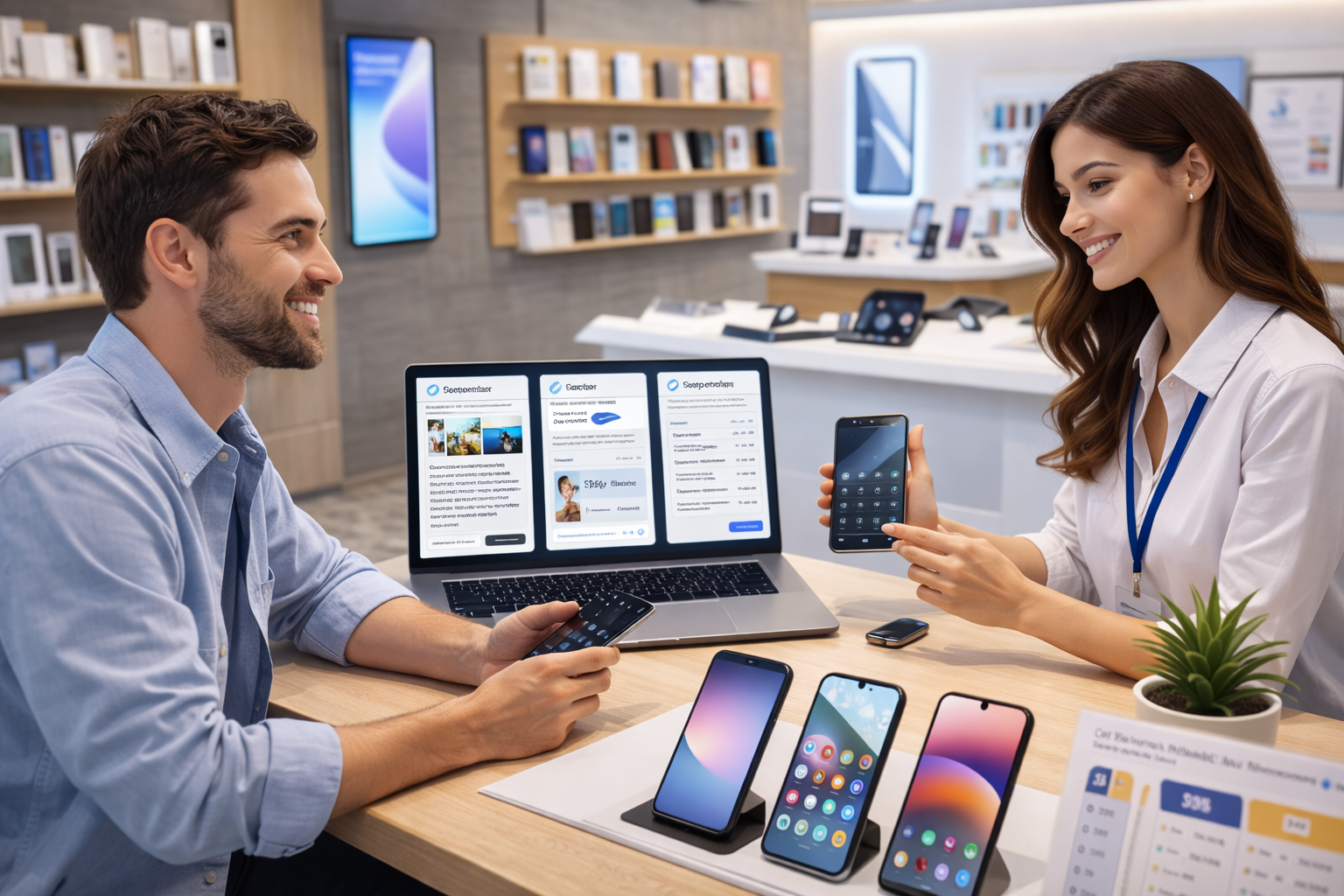



This smartphone buying guide for 2026 explains how to choose the right phone, plan, and setup without overpaying—battery, budget, SIMs, and more.
The Smartphone Buying Guide in 2026: How to Choose the Right Phone, Plan, and Setup Without Overpaying
Why Buying a Smartphone Is More Confusing Than Ever
Buying a smartphone used to be simple.
You picked a brand, chose a size, signed a plan, and moved on.
In 2026, the process feels overwhelming. Dozens of models launch every year. Prices range from under $200 to well over $1,000. Battery claims sound impressive but rarely match reality. Phone plans are filled with fine print. SIM cards are suddenly optional.
This smartphone buying guide 2026 exists for one reason:
to help you make a good decision — not an expensive one.
Too Many Models, Too Little Clarity
Manufacturers release:
- Minor refreshes
- Region-specific variants
- Slightly renamed models
- Feature-overloaded “flagships”
Most people don’t need 80% of what’s advertised — but they’re often forced to pay for it.
- Smartphone Buying Guide: What Actually Matters Before You Upgrade
- Best Android Phones for Battery Life in 2026
- How to Make Your Phone Battery Last Longer
- Best Cheap Phone Plans in 2026
- eSIM vs Physical SIM for Travel
- Best eSIM for Europe in 2026
Marketing vs Real-World Use
Smartphone marketing focuses on:
- Peak performance
- Ideal conditions
- Lab-tested numbers
Real-world use is different:
- Scrolling
- Messaging
- Video calls
- Navigation
- Battery drain over time
The gap between marketing and reality is where most overpaying happens.
How People Actually Use Their Phones in 2026
Before choosing a phone, it helps to understand how phones are actually used today.
Everyday Use vs Power Use
Most people fall into the “everyday use” category:
- Messaging
- Social media
- Streaming
- Navigation
- Light photography
Only a small percentage truly need:
- Top-tier processors
- Advanced gaming performance
- Professional-grade cameras
Yet many buyers are pushed toward power-user devices by default.
Why Specs Don’t Tell the Whole Story
Two phones with similar specs can feel completely different.
Why?
- Software optimization
- Battery management
- Thermal control
- Update support
Specs look good on paper. Experience matters more.
What Really Matters When Choosing a Smartphone
Instead of chasing features, focus on outcomes.
Performance vs Perceived Speed
Most modern phones are “fast enough.”
Perceived speed is influenced more by:
- Software smoothness
- App optimization
- Storage speed
For most users, mid-range phones feel just as responsive as flagships.
Camera Reality vs Camera Marketing
Camera marketing highlights:
- Megapixels
- Lens counts
- AI features
Real camera quality depends on:
- Processing
- Consistency
- Low-light performance
- Ease of use
A good camera is one that works every time, not just in demos.
Battery Life (The Feature Everyone Cares About)
Battery life is the #1 complaint — and the #1 reason people upgrade too early.
Yet it’s also the most misunderstood feature.
Battery life depends on:
- Screen efficiency
- Software optimization
- Network usage
- Personal habits
More battery capacity does not automatically mean longer battery life.
Budget vs Value: Avoiding the Upgrade Trap
A cheap phone isn’t always good value.
An expensive phone isn’t always better.
When Cheap Phones Are Actually Good
Budget phones today can handle:
- Daily apps
- Streaming
- Navigation
- Basic photography
For many users, spending under $200–$300 makes sense if expectations are realistic.
When Paying More Makes Sense
Paying more is justified when you care about:
- Long-term software updates
- Better cameras
- Build quality
- Battery longevity
Value comes from how long the phone stays useful, not how premium it feels on day one.
Understanding Phone Battery Life in Real Life
Battery specs are one of the most misleading parts of smartphone buying.
Why Battery Claims Are Misleading
Manufacturers test under:
- Controlled brightness
- Ideal networks
- Minimal background activity
Real life includes:
- Poor signal
- Bright screens
- Constant notifications
- App switching
That’s why advertised battery life rarely matches experience.
Usage Patterns That Kill Battery
The biggest battery drains in 2026:
- High screen brightness
- Weak mobile signal
- Background apps
- Video streaming
- Constant Bluetooth use
Knowing this matters more than battery size alone.
Choosing the Right Phone Plan (Not the Most Popular One)
Phone plans are where many people quietly overpay.
Data Needs vs Data Marketing
Unlimited plans sound attractive.
But most people:
- Don’t use unlimited data
- Spend most time on Wi-Fi
- Pay for speed they don’t need
Matching plans to actual usage saves money every month.
Hidden Costs in Phone Plans
Watch for:
- Activation fees
- “Free phone” trade-offs
- Auto-pay requirements
- International fees
A cheaper phone plan often saves more over time than a cheaper phone.
eSIM vs Physical SIM: What Most People Get Wrong
SIM cards used to be invisible.
You inserted one once, forgot about it, and never thought about it again.
In 2026, SIM choice actually matters — especially if you travel, switch phones often, or want flexibility.
Travel, Flexibility, and Convenience
An eSIM is a digital SIM that:
- Activates instantly
- Doesn’t require a physical card
- Can be switched remotely
- Supports multiple profiles on one device
This makes eSIMs especially useful for:
- International travel
- Temporary data plans
- Avoiding roaming fees
- Dual-line setups
Physical SIMs still matter when:
- Your phone doesn’t support eSIM
- You move SIMs between older devices
- Your carrier limits eSIM options
When eSIM Is Better—and When It Isn’t
eSIM is better if you:
- Travel internationally
- Want quick plan changes
- Use dual SIMs
- Hate carrier stores
Physical SIM is better if you:
- Use older phones
- Switch phones frequently
- Live in regions with limited eSIM support
The mistake most people make is assuming eSIM is automatically better. It’s better when flexibility matters.
Setting Up Your Phone for Longevity
Buying the right phone is only half the equation.
How you set it up determines:
- Battery health
- Performance over time
- How soon you feel the urge to upgrade
Settings That Actually Matter
The most impactful settings in 2026:
- Adaptive brightness (on)
- Background app limits
- Location permissions (restricted)
- Push notifications (reduced)
- Auto-sync (selective)
These don’t ruin the experience — they quietly extend it.
Habits That Extend Phone Lifespan
Longevity isn’t just about settings.
Habits matter:
- Avoid constant fast charging
- Don’t let battery hit 0% regularly
- Keep phones cool
- Update software intentionally, not blindly
Phones fail faster due to habits than hardware.
Common Smartphone Buying Mistakes in 2026
Most people overpay not because they want to — but because they fall into predictable traps.
Mistake 1: Buying for Specs, Not Use
A faster processor won’t improve:
- Messaging
- Social media
- Streaming
Buy for how you actually use your phone.
Mistake 2: Overpaying for Unlimited Plans
Unlimited sounds safe — but unused data is wasted money.
Many users could downgrade without noticing.
Mistake 3: Upgrading Too Early
Phones don’t “slow down” overnight.
Often:
- Battery degradation
- Storage clutter
- Software bloat
These are fixable without buying a new device.
Mistake 4: Ignoring Total Cost
The phone price is not the full cost.
You also pay for:
- Monthly plans
- Insurance
- Accessories
- Trade-in losses
Cheaper monthly costs often matter more than phone price.
How to Buy a Phone Without Overpaying
This is the core takeaway of this smartphone buying guide 2026.
Step 1: Define Your Real Use
Ask:
- What do I use my phone for daily?
- What annoys me about my current phone?
- What doesn’t matter to me?
Clarity saves money.
Step 2: Separate Needs From Nice-to-Haves
Needs:
- Reliable battery
- Smooth performance
- Good enough camera
Nice-to-haves:
- Premium materials
- Extreme zoom
- Cutting-edge features
Most overpaying happens here.
Step 3: Optimize the Plan First
Lowering your monthly bill:
- Saves more over time
- Reduces upgrade pressure
- Increases flexibility
A cheaper plan often beats a cheaper phone.
Step 4: Buy for Longevity, Not Hype
The best phone is the one you don’t replace for years.
That comes from:
- Stable software
- Solid battery life
- Realistic expectations
Final Thoughts: Buy for Use, Not Hype
Smartphones in 2026 are powerful, mature, and capable.
The problem isn’t technology.
It’s buying decisions driven by:
- Marketing
- Fear of missing out
- Specs that don’t matter
This smartphone buying guide 2026 exists to help you step back, choose intentionally, and avoid overpaying.
When you buy for use, not hype:
- You save money
- You upgrade less
- You’re more satisfied
That’s the real upgrade.
Frequently Asked Questions (FAQs)
1. How long should a smartphone last in 2026?
For most users, 3–5 years with proper care.
2. Are budget phones worth buying now?
Yes, if expectations match use.
3. Is battery life more important than performance?
For most people, yes.
4. Should I buy unlocked phones?
Unlocked phones offer more flexibility.
5. Is eSIM safe to use?
Yes — it’s widely supported and secure.
6. When is the best time to buy a phone?
After major launches, when prices drop.
Consumer Reports explains how long smartphones actually last: How Long Do Smartphones Really Last?
GSMA provides insight into mobile technology trends: The Mobile Economy Report
All Rights Reserved © 2026