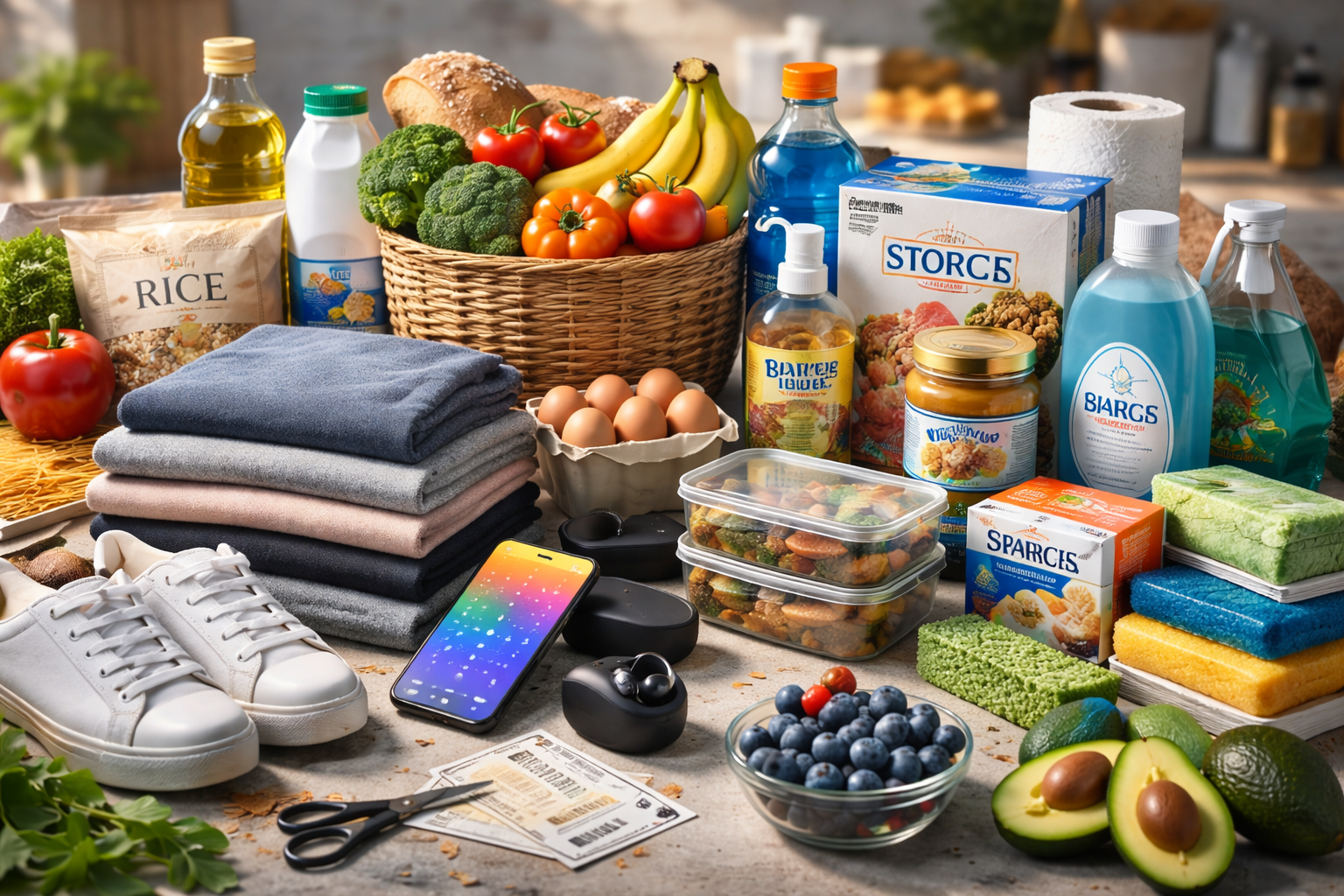



In 2026, the best budget everyday essentials are not the cheapest items you can find — they are the products that deliver real value over time, last longer than expected, and quietly save money by not needing constant replacement.
Buying on a budget used to mean sacrificing quality.
Today, it means something very different.
This guide exists for one simple reason:
Most people don’t overspend because they want luxury.
They overspend because they buy the wrong cheap things.
What “Best Budget” Really Means in 2026
The word budget has changed.
It no longer means:
- lowest price
- disposable quality
- “good enough for now”
Today, best budget means:
- affordable upfront
- durable over time
- functional without gimmicks
- optimized for everyday use
The best budget everyday essentials are items you:
- buy once
- use daily
- forget about because they just work
Those are the smartest purchases you can make.
Why Everyday Essentials Matter More Than Big Purchases
Most people obsess over big buys:
- phones
- laptops
- TVs
But daily expenses are driven by small, repeated purchases.
Replacing a bad item:
- every 6 months
- every year
- every move
costs more than buying the right budget option once.
That’s why everyday essentials quietly determine:
- monthly spending
- long-term savings
- daily comfort
The Hidden Cost of “Cheap” Products
Cheap products are expensive when they:
- break early
- work poorly
- create frustration
- require replacement
A $10 item replaced 5 times is not budget-friendly.
A $25 item that lasts 5 years is.
Best budget everyday essentials sit in that sweet spot:
affordable + reliable + boring (in a good way)
How We Define “Everyday Essentials” in This Guide
For this pillar, everyday essentials means products that:
- are used weekly or daily
- support normal life (home, work, health)
- don’t rely on trend cycles
- have clear buyer intent
This includes:
- home essentials
- office essentials
- kitchen essentials
- fitness basics
- personal care essentials
It does not include:
- phones
- laptops
- gadgets you already covered heavily
This keeps the cluster clean and non-overlapping.
How to Spot Real Budget Value (Before Buying)
Before we get into categories, here’s a quick framework you can apply to any budget purchase.
1. Fewer Features = Better Budget Value
Budget products fail when they try to do too much.
Look for:
- one clear purpose
- simple design
- minimal modes
Complexity is where cheap products break first.
2. Materials Matter More Than Branding
Ignore logos.
Pay attention to:
- metal vs plastic
- thickness
- weight
- stitching
- joints and hinges
Materials reveal longevity better than reviews.
3. “Boring” Is a Good Sign
The best budget everyday essentials are often:
- not trendy
- not viral
- not flashy
They sell steadily because they work.
4. Avoid Subscription-Dependent Essentials
If an everyday item requires:
- apps
- subscriptions
- constant updates
it’s probably not budget-friendly long-term.
Simplicity saves money.
Best Budget Everyday Essentials by Category
This pillar works as a hub.
Each section below links to a full support article where we go deep, compare options, and recommend specific picks.
Best Budget Home Essentials That Actually Last
Your home is where budget decisions compound the fastest.
The best budget home essentials are items that:
- reduce friction
- simplify routines
- last through moves and daily use
Examples include:
- durable storage solutions
- reliable cleaning tools
- simple lighting upgrades
- basic organization systems
These are not exciting purchases — but they are some of the highest ROI items you’ll ever buy.
Best Budget Office Essentials for Working From Home
Working from home made one thing clear:
You don’t need expensive gear —
you need the right essentials.
The best budget office essentials focus on:
- posture
- comfort
- organization
- focus
This includes:
- chairs (not smart chairs)
- desks
- lighting
- cable management
- desk accessories
Good office essentials reduce fatigue — which saves money indirectly by protecting health and productivity.
Best Budget Kitchen Essentials Every Home Should Have
Kitchens are one of the biggest budget traps.
People either:
- overbuy gadgets
- or underbuy essentials
The best budget kitchen essentials are:
- durable
- easy to clean
- multipurpose
Think:
- cookware that doesn’t warp
- knives that stay sharp
- storage that doesn’t crack
- tools you reach for daily
Good kitchen essentials reduce takeout, waste, and replacement costs.
Best Budget Fitness Essentials for Home Workouts
Fitness is an area where “budget” is often misunderstood.
You don’t need:
- machines
- subscriptions
- smart gear
The best budget fitness essentials are simple, versatile, and durable:
- resistance tools
- mats
- recovery basics
These items support consistency — which matters more than equipment.
Best Budget Personal Care Essentials That Are Worth It
Personal care is full of overpriced products.
The best budget personal care essentials focus on:
- function
- safety
- reliability
This includes:
- grooming tools
- hygiene basics
- wellness items you replace regularly
Spending wisely here saves money every single month.
Why Budget Essentials Save More Money Than “Deals”
Deals feel good.
Essentials save money.
Flash sales encourage:
- impulse buying
- poor fit
- unused items
Essentials:
- are used daily
- justify their cost quickly
- reduce repeat spending
This is why focusing on best budget everyday essentials is one of the smartest financial habits you can build.
Common Budget Mistakes That Cost More Long-Term
Let’s address the most common traps.
Buying Ultra-Cheap Versions First
Many people buy:
- cheap → replace → upgrade
Skipping the first step saves money.
Overbuying “Just in Case”
Essentials should be:
- used
- not stored
Unused budget items are wasted money.
Confusing Minimalism With Cheapness
Minimalism is intentional.
Cheapness is accidental.
The two are not the same.
How to Build a Smart Budget Essentials System
Think in systems, not items.
- Buy fewer things
- Buy better budget versions
- Replace only when necessary
- Avoid trend-driven upgrades
This mindset compounds savings.
Who This Guide Is For
This pillar is ideal for:
- students
- renters
- remote workers
- first apartments
- anyone rebuilding routines
If you value:
- practicality
- longevity
- low mental load
this guide was written for you.
Frequently Asked Questions (Early Section)
Are budget essentials lower quality by default?
No. Many budget essentials outperform expensive alternatives.
How often should I replace everyday essentials?
Only when function degrades — not because of trends.
Is it better to buy sets or individual items?
Individual items usually offer better value.
Do budget essentials really save money long-term?
Yes — replacement cycles matter more than price.
What Makes This Guide Different
This is not:
- a deal list
- a discount roundup
- a trend article
This is a buyer-intent, value-focused guide designed to help you:
- spend less
- replace less
- stress less
The Long-Term Value Math Behind Budget Essentials
Most people evaluate purchases using price alone.
That’s the mistake.
Smart budget buyers evaluate cost over time.
Let’s break it down simply.
Price vs Cost (Why They’re Not the Same)
- Price = what you pay today
- Cost = what it costs you over months or years
A $15 item that lasts 6 months costs more than a $30 item that lasts 3 years.
The best budget everyday essentials win because:
- they reduce replacement cycles
- they reduce decision fatigue
- they quietly disappear into your routine
Those invisible savings add up faster than any “deal.”
Replacement Cycles: The Silent Budget Killer
Every replacement has hidden costs:
- time spent researching again
- time spent ordering
- time spent adapting
- frustration
Budget essentials that last longer:
- save time
- save energy
- save money
Time is part of your budget—even if it doesn’t show up on your bank statement.
Why Familiarity Is Underrated Value
When an item works reliably:
- you stop thinking about it
- you trust it
- you build routines around it
That familiarity has value.
Constantly replacing items forces your brain to:
- re-evaluate
- re-learn
- re-decide
Good budget essentials reduce mental overhead.
The Psychology of “Good Enough” (And Why It Works)
“Good enough” today does not mean low standards.
It means:
- function over hype
- reliability over novelty
- alignment with real needs
The best budget everyday essentials are quietly good enough:
- no drama
- no learning curve
- no regret
That’s exactly why they work.
How Marketing Pushes You Away From Smart Budget Buys
Marketing thrives on:
- novelty
- fear of missing out
- artificial upgrades
Budget essentials don’t upgrade often—because they don’t need to.
That makes them boring for marketers…
and perfect for buyers.
Budget Essentials vs “Premium” Traps
Premium products often promise:
- more features
- better experience
- longer lifespan
Sometimes that’s true.
Often, it isn’t.
Common premium traps:
- features you never use
- materials that look nice but age poorly
- complexity that breaks sooner
Budget essentials avoid these traps by staying simple.
How to Choose Budget Essentials Without Regret
Before buying any everyday item, ask yourself:
1. Will I use this weekly?
If not, it’s probably not an essential.
2. Does it solve a real problem I already have?
If the problem is theoretical, skip it.
3. Is there a simpler version that does the same job?
Simpler almost always lasts longer.
4. Can I see myself using this for years?
If not, it’s likely trend-driven.
Why Essentials Beat Upgrades
Upgrades feel productive.
Essentials are productive.
Upgrades chase marginal gains.
Essentials improve daily life.
That’s why focusing on best budget everyday essentials leads to:
- lower spending
- fewer regrets
- better routines
How to Avoid “Budget Clutter”
Budget clutter happens when:
- items are cheap
- but unnecessary
- and accumulate quietly
Avoid it by:
- limiting duplicates
- choosing multi-purpose items
- removing unused items regularly
Budget discipline is about less, not more.
Budget Essentials for Different Life Stages
One reason this approach works so well is flexibility.
Students
- durability
- portability
- space efficiency
Renters
- non-permanent solutions
- modular items
- easy storage
Remote Workers
- comfort
- organization
- focus support
Families
- reliability
- safety
- ease of replacement
The principles stay the same—the context changes.
Why This Cluster Belongs in the Tech Category
Even though these are not gadgets, they:
- support modern, tech-heavy lifestyles
- complement work-from-home setups
- reduce friction created by digital life
They sit naturally alongside:
- productivity tech
- home office gear
- modern living tools
From an SEO standpoint, this strengthens your Tech category authority instead of diluting it.
How This Pillar Connects to the Support Articles
Each support article goes deeper into:
- comparisons
- specific picks
- buying mistakes
- best-for-X scenarios
This pillar:
- sets the mindset
- defines value
- filters noise
The support articles:
- execute on that framework
Together, they form a clean buyer-intent cluster.
Expanded Frequently Asked Questions
Are budget essentials always better than premium ones?
Not always—but they often deliver better value for everyday use.
How do I know if something is truly an essential?
If it supports a routine you already have, it likely is.
Should I replace essentials proactively?
Only when performance degrades—not because of trends.
Do brand names matter for budget essentials?
Less than materials, construction, and simplicity.
Is it better to buy essentials online or in-store?
Online offers better comparison; in-store helps assess build quality.
How often should I review my everyday items?
Once or twice a year is enough.
The Quiet Power of Smart Budget Choices
Most financial advice focuses on:
- cutting expenses
- tracking spending
- extreme saving
Smart budget buying works differently.
It:
- reduces future decisions
- prevents waste
- stabilizes routines
That stability is powerful.
Final Buying Principles to Remember
If you remember nothing else, remember this:
- Price is temporary
- Cost is ongoing
- Simplicity lasts
- Familiarity saves money
- Essentials beat upgrades
The best budget everyday essentials don’t impress people.
They support your life quietly—and that’s exactly what makes them valuable.
Final Conclusion: Budget Is a Strategy, Not a Sacrifice
Buying on a budget is not about restriction.
It’s about:
- intention
- longevity
- clarity
When you choose the right everyday essentials:
- you buy less
- you replace less
- you stress less
And over time, that approach saves more money than any deal ever will.
All Rights Reserved © 2026