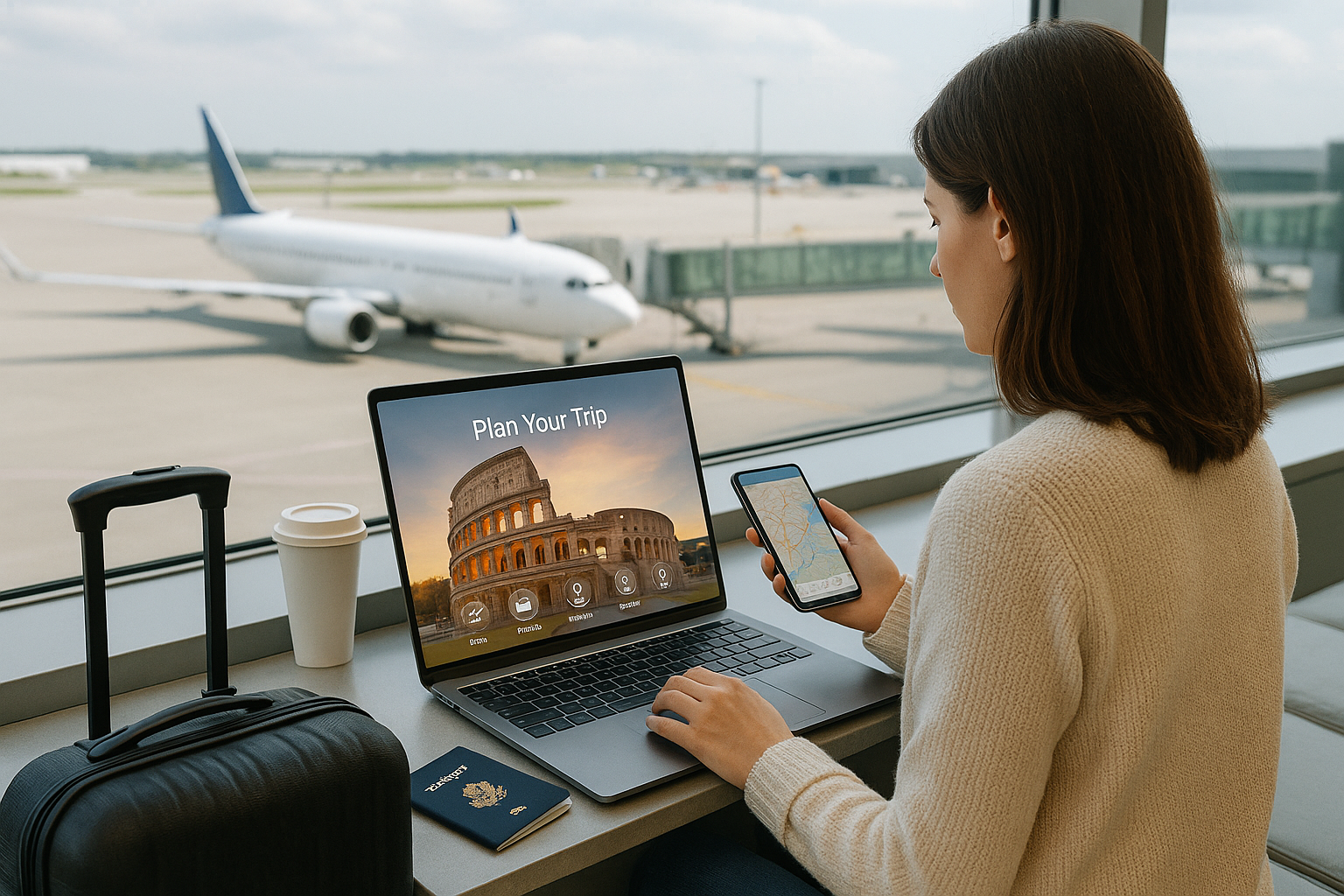



Top AI-Powered Travel Tools You Should Be Using in 2025 Introduction: Why AI is Transforming Travel in 2025
Travel in 2025 is smarter, faster, and more personalized than ever before. From booking flights at the best possible prices to translating foreign languages in real time, AI-powered travel tools are making journeys easier for tourists, backpackers, and digital nomads alike.
Artificial intelligence doesn’t just save you time — it saves you money, helps you avoid mistakes, and gives you unique recommendations that traditional travel planning can’t. Whether you’re planning a gap year, a business trip, or a family vacation, AI tools can guide your decisions, optimize your budget, and even improve your safety.
In this guide, we’ll explore the top AI-powered travel tools you should be using in 2025, covering everything from flight booking apps to AI itinerary planners and digital nomad productivity boosters.
Flight Planning & Booking Made Smarter
Flying is usually the most expensive part of travel, but thanks to AI, finding cheaper, faster, and more efficient flights is no longer a headache.
Skyscanner AI Recommendations
Skyscanner continues to lead the way in AI-driven search. In 2025, its AI tool doesn’t just show flights — it analyzes historical pricing data, predicts fare fluctuations, and suggests the cheapest days to fly. Travelers can even ask Skyscanner AI for “the best value trip to Europe next month” and receive customized itineraries with flights and hotels bundled.
Google Flights Smart Predictions
Google Flights remains a game-changer. Its AI-powered predictive pricing tool helps you decide whether to book now or wait. With machine learning algorithms that scan millions of flights daily, it can predict with 95% accuracy when ticket prices are likely to increase. For budget-conscious travelers, this tool is essential.
Hopper Price Drop Alerts
Hopper uses AI to track billions of flight prices daily. The app sends push notifications with personalized buy-now or wait advice, ensuring you never overspend. Hopper has also expanded to hotels and car rentals, making it a one-stop AI-powered booking assistant.
AI-Powered Travel Itinerary Builders
Planning a trip often takes hours of research. In 2025, AI travel planners build personalized itineraries for you in seconds.
TripIt AI Planner
TripIt’s AI organizes all your bookings — flights, hotels, trains, and activities — into a single smart itinerary. The app now provides predictive traffic updates, gate change alerts, and local event recommendations based on your travel history.
Roam Around AI
A newer tool, Roam Around, creates AI-powered travel itineraries tailored to your personality. Instead of generic “Top 10 things to do,” it suggests offbeat local gems. Example: ask “What’s a 3-day foodie itinerary in Bangkok?” and it’ll give you a full schedule of street food tours, hidden restaurants, and cooking classes.
Notion AI for Travel Planning
Digital nomads love Notion AI. With its AI-powered databases, travelers can build custom itineraries, budget trackers, and packing lists. For long-term travelers or remote workers, it’s a versatile tool that blends productivity with travel planning.
Language Translation & Cultural Tools
Language barriers used to be one of the biggest challenges of travel. In 2025, AI has made cross-cultural communication almost seamless.
Google Translate AI Upgrades
Google Translate now features real-time speech translation with natural accents. Just hold up your phone, and it instantly converts conversations into your language. AI has improved contextual accuracy, making it much more reliable for business or casual use.
DeepL & AI Voice Assistants
DeepL remains one of the most accurate text translation apps. In 2025, it has integrated AI voice features, allowing you to converse naturally in foreign languages. Pair it with voice assistants like Alexa or Google Assistant, and you have a powerful cultural companion.
AI for Accommodation & Local Stays
Finding the perfect place to stay is easier with AI suggesting personalized options based on your travel style.
Airbnb Smart Suggestions
Airbnb now uses AI to recommend listings tailored to your needs — whether you want a cozy artist’s loft in Paris or a beachside villa in Bali. AI evaluates your budget, trip length, and even your past reviews to suggest better options.
Booking.com AI Filters
Booking.com’s AI filters go beyond “price” and “star rating.” In 2025, it uses predictive personalization, recommending hotels based on your travel patterns, eco-friendly preferences, or even proximity to public transport.
AI Safety & Navigation Tools
Safety is a top priority for travelers, and AI is stepping up.
Google Maps AI Updates
Google Maps now provides AI-powered safety alerts. For example, if you’re walking late at night, it can suggest safer routes with better lighting and more foot traffic. AI also integrates live transport updates, helping travelers avoid delays.
SafetyWing & AI Travel Insurance
SafetyWing has incorporated AI into its insurance policies. Instead of generic coverage, AI adapts to your trip in real time. For example, if you extend your stay in Thailand by two weeks, your insurance automatically adjusts.
Productivity on the Go: AI Apps for Digital Nomads
For remote workers and digital nomads, productivity apps with AI integration make balancing work and travel much easier.
Notion AI
Beyond trip planning, Notion AI is a work hub for nomads. Create content calendars, manage remote teams, and track expenses all in one place.
Grammarly AI
Grammarly’s latest AI update includes tone adjustment and clarity tools. For digital nomads writing emails, blogs, or proposals while traveling, it ensures your communication stays professional.
Future Trends: How AI Will Redefine Travel by 2030
Looking beyond 2025, AI is expected to make travel even more immersive:
- AI concierges in hotels that know your preferences before check-in.
- Augmented reality (AR) city tours guided by AI.
- Personal AI travel assistants that handle everything from bookings to budgeting.
Travel won’t just be about destinations — it will be about personalized experiences designed by AI.
FAQs
Q1: Are AI-powered travel tools free to use?
Many have free versions, but premium features (like advanced alerts or unlimited itineraries) often require subscriptions.
Q2: Can AI tools really save me money?
Yes — apps like Hopper and Skyscanner AI help predict price drops and optimal booking times.
Q3: Are AI travel tools safe?
Most are safe, especially well-known apps like Google Flights and TripIt. Always ensure you download from official sources.
Q4: Can AI tools work offline?
Some apps like Google Translate now offer offline translation, but most AI features require internet access.
Q5: Which AI tool is best for digital nomads?
Notion AI and Grammarly AI are ideal for managing work while traveling.
Q6: Will AI replace human travel agents?
AI won’t fully replace them, but it offers faster, cheaper, and more personalized solutions for independent travelers.
Conclusion: Why You Should Use AI-Powered Travel Tools in 2025
The future of travel is here, and it’s powered by artificial intelligence. From smarter booking systems and AI-driven itineraries to enhanced safety tools and productivity apps, these technologies are revolutionizing how we explore the world.
By using the top AI-powered travel tools in 2025, you’ll travel cheaper, safer, and smarter — while enjoying personalized experiences that traditional planning could never offer.
Whether you’re a solo backpacker, a family traveler, or a remote worker, AI is your ultimate travel companion in 2025.
Real-Life Examples: How Travelers Save with AI
AI isn’t just a buzzword — real travelers are already saving money and time with these tools.
- Case Study 1: Budget Flights with Hopper
A digital nomad traveling from New York to Bangkok used Hopper’s AI price prediction alerts and booked a round-trip ticket for $620. Without AI, booking last-minute would have cost $1,050. That’s a $430 saving, thanks to predictive algorithms. - Case Study 2: AI-Personalized Itinerary in Rome
A couple on a honeymoon in Italy used Roam Around AI to design a 5-day personalized itinerary. Instead of the usual tourist-heavy spots, the AI recommended local trattorias, lesser-known piazzas, and a cooking class with a local chef. They reported the experience felt “authentic and off the beaten path.” - Case Study 3: Digital Nomad Workflow
A remote marketing consultant working in Bali integrated Notion AI + Grammarly AI + Google Translate. Together, these apps streamlined her workflow, allowing her to save 10 hours per week on project management, content editing, and client communication.
These case studies highlight how AI travel tools directly impact budgets, experiences, and productivity.
Top AI-Powered Travel Tools You Should Be Using in 2025 Comparisons: Which AI Travel Tool Should You Choose?
Not all AI travel apps are created equal. Let’s compare some popular options side by side:
| Category | Tool | Strengths | Best For |
|---|---|---|---|
| Flights | Hopper | Price prediction alerts | Budget travelers |
| Google Flights | Historical pricing + flexible date searches | Frequent fliers | |
| Skyscanner AI | Personalized trip suggestions | Long-term travelers | |
| Itineraries | TripIt AI | Organizes bookings in one app | Business travelers |
| Roam Around AI | Tailored itineraries based on preferences | Cultural explorers | |
| Notion AI | Custom databases & planning | Digital nomads | |
| Language | Google Translate | Real-time speech & text | All travelers |
| DeepL AI | Highly accurate translations | Business travelers | |
| Stays | Airbnb AI | Personalized accommodation picks | Families & couples |
| Booking.com AI | Predictive personalization | Solo travelers | |
| Safety | Google Maps AI | Safer routes & transport updates | Urban travelers |
| SafetyWing AI | Adaptive travel insurance | Digital nomads |
Top AI-Powered Travel Tools You Should Be Using in 2025 Pro tip: Use a combination of AI tools instead of relying on just one. For example: Hopper for flights + Roam Around AI for itinerary + SafetyWing AI for insurance = a fully AI-optimized trip.
Eco-Friendly AI Travel Tools in 2025
As sustainability becomes more important, AI is helping travelers reduce their carbon footprint while still enjoying global exploration.
Ecolytiq AI
This tool integrates with your bank card to track the carbon emissions of your travel purchases. It suggests eco-friendly alternatives like train routes over short-haul flights, or stays at green-certified hotels.
GreenStep Travel AI
GreenStep recommends eco-friendly accommodations, restaurants, and activities. For instance, instead of suggesting a regular boat tour, it recommends solar-powered eco-cruises or community-led cultural tours.
Google Maps Sustainable Routes
In 2025, Google Maps AI allows users to opt for eco-friendly travel routes, showing bike paths, public transport, and electric vehicle charging stations along your trip.
AI isn’t just about convenience — it’s helping travelers make smarter and greener choices.
Top AI-Powered Travel Tools You Should Be Using in 2025: The Future of AI-Powered Travel (2030 and Beyond)
AI is advancing rapidly, and the travel industry is one of the biggest beneficiaries. By 2030, we can expect:
- AI-Powered AR Tours
Imagine pointing your phone at the Colosseum in Rome and an AI-powered augmented reality guide appears, explaining its history in your language. - Personal AI Travel Agents
Instead of juggling multiple apps, you’ll have one AI travel assistant that knows your preferences, books flights, reserves hotels, suggests itineraries, and manages insurance. - AI Health Monitoring While Traveling
Wearables like Apple Watch or Oura Ring will integrate with AI travel apps to adjust itineraries based on your energy levels, jet lag, or sleep quality. - Hyper-Personalized Experiences
In the future, AI won’t just suggest “restaurants.” It will recommend a specific dish at a certain time of day, matched to your personal tastes and dietary needs.
Top AI-Powered Travel Tools You Should Be Using in 2025 FAQs (Expanded)
Q7: Can AI travel tools help with group trips?
Yes! Tools like TripIt AI and Roam Around AI allow you to share itineraries with friends or family, syncing schedules to avoid confusion.
Q8: Is my data safe with AI travel apps?
Most reputable apps use end-to-end encryption. However, always double-check permissions and avoid unknown apps.
Q9: Do AI tools replace traditional guidebooks?
Not entirely. While AI offers real-time customization, guidebooks provide cultural depth. Using both together gives the best experience.
Q10: Are AI travel tools useful for slow travelers or digital nomads?
Absolutely. Apps like Notion AI and SafetyWing AI are designed with long-term travelers in mind, helping them manage work, lifestyle, and logistics on the go.
Top AI-Powered Travel Tools You Should Be Using in 2025 Conclusion: Why 2025 Is the Year of AI Travel
In 2025, AI-powered travel tools are no longer optional — they’re essential. They help you book smarter, explore deeper, save money, stay safe, and even reduce your carbon footprint.
Whether you’re a casual traveler, a frequent business flyer, or a digital nomad, using AI gives you a competitive edge.
By integrating tools like Hopper, Roam Around AI, Notion AI, Google Translate, and SafetyWing, you’re not just traveling — you’re traveling smarter, cheaper, and more sustainably.
Travel has always been about exploration, but with AI in 2025, it’s also about optimization and personalization. The world is waiting — and AI is ready to help you see it.
Related Reads on DailyLifePulse
- Best AI-Powered Travel Tools
- How to Find Cheap Flights
- Co-Working Spaces for Digital Nomads
- Healthy Meal Prep for Remote Workers
- Best VPNs for Streaming While Traveling
External Resources
- Hopper App – Flight Price Predictions
- Booking.com AI Travel Features
- Google Maps AI Sustainable Routes
- SafetyWing – AI-Enhanced Travel Insurance
- Airbnb Smart Recommendations
One thought on “Top AI-Powered Travel Tools You Should Be Using in 2025”
Leave a Reply
All Rights Reserved © 2026
Good article! Try lupath.ai – skip the endless scrolling and find your next vacation destination faster.