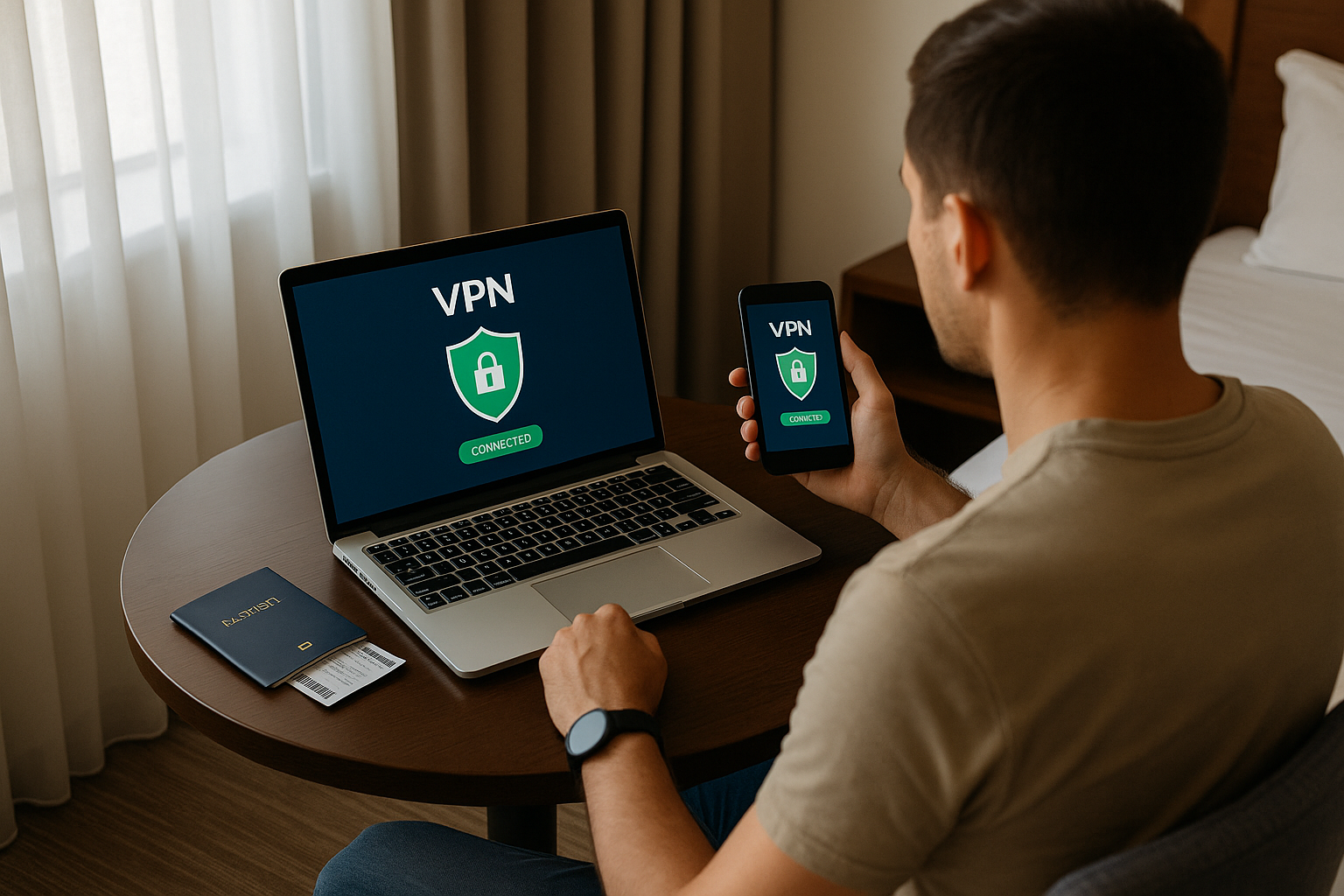



Best VPN for travel to restrictive countries is not just a tech recommendation — it’s a necessity in 2025.
Whether you’re a digital nomad, journalist, student, or business traveler, internet freedom isn’t guaranteed everywhere. In countries like China, Russia, Iran, or the UAE, online activity is often monitored, censored, or blocked entirely. That’s where a reliable VPN (Virtual Private Network) becomes essential.
This guide covers why VPNs matter more than ever, what to look for in 2025, and how to stay digitally safe before and duringyour trip.
A VPN can help protect your data and privacy abroad, but digital safety should always be part of a bigger travel strategy. If you are still deciding where to go, our guide to the top 10 safest countries to visit in 2025 is a useful place to start.
Online privacy matters, but so do your habits on the ground. For more practical advice, read our guide on how to stay safe while traveling alone and these additional solo travel safety tips for independent travelers.
It also helps to combine smart digital tools with the right equipment. Explore our list of essential gear for safe solo travel in 2025 and the best apps for solo travelers in 2026 to prepare more effectively before your trip.
🌍 Why You Need a VPN When Traveling to Restrictive Countries
If you’re heading to a country with government censorship or aggressive surveillance, your online privacy and freedom are at risk.
A VPN protects you by:
- Encrypting your internet traffic, so your data stays private
- Bypassing censorship (e.g., accessing Google, WhatsApp, or news sites)
- Preventing surveillance or tracking
- Allowing access to your home country’s content, such as banking, streaming, or remote work apps
Many restrictive governments block common sites like:
- Gmail
- YouTube
- Facebook / Instagram
- WhatsApp / Signal
- VPN websites themselves
Without a VPN, you might not be able to work, communicate freely, or even check your email.
🔍 What to Look for in a Travel VPN (2025 Edition)
When choosing the best VPN for travel to restrictive countries, not all providers are up to the challenge. Look for features built specifically for high-censorship zones.
✅ 1. Stealth Mode / Obfuscation
This masks VPN traffic to make it look like regular browsing — essential in countries that actively block or throttle VPNs.
✅ 2. No-Log Policy
Choose a provider that keeps no logs of your activity or connection data. Your privacy depends on it.
✅ 3. Reliable Mobile App
You’ll likely use your VPN on your phone or tablet. Ensure the app is intuitive, stable, and doesn’t leak DNS requests.
✅ 4. Multiple Server Locations
You should have access to servers in nearby regions (like Hong Kong, Japan, or Germany) to maintain speed while bypassing local censorship.
✅ 5. Works in Countries Like China or UAE
Check forums or VPN testing blogs to ensure the VPN actually works in your target country. Many popular services don’t.
✅ 6. Kill Switch & Auto-Connect
If your VPN disconnects, your device should immediately block internet access to prevent IP leaks.
✅ 7. Pre-Trip Installation
You must install and test the VPN before entering the country. Some VPN sites are blocked once you’re inside.
🔐 5 VPNs That Often Work in Restrictive Countries (No Affiliate Links)
⚠️ VPN performance in restrictive countries changes often. Always verify current availability through online user reviews or privacy forums.
| VPN Name | Key Feature | Works In | Notes |
|---|---|---|---|
| VPN 1 | Stealth protocol, no-logs | China, UAE | Requires manual config |
| VPN 2 | Auto obfuscation, fast mobile speeds | Russia, Iran | Supports streaming + banking |
| VPN 3 | Great for journalists & expats | Turkey, Egypt | Solid privacy history |
| VPN 4 | Simple UI, great kill switch | Middle East | Ideal for beginners |
| VPN 5 | Lightweight app, frequent server updates | China | Use custom port settings |
External Resources
- RestorePrivacy – VPN Guides
- Comparitech – Internet Censorship by Country
- Access Now – Digital Safety Tips
Final Thoughts: Your Digital Freedom Is Worth Protecting
A VPN is more than just a tool — it’s your first line of defense in a world where digital borders can be as restrictive as physical ones. Whether you’re a remote worker needing access to your business tools, a traveler wanting to stay in touch with family on WhatsApp, or simply someone who values privacy, using the best VPN for travel to restrictive countries is critical.
In 2025, internet surveillance and censorship are becoming more sophisticated, and governments are finding new ways to limit access to free and open content. That’s why relying on a free VPN or waiting until you land is a risk not worth taking.
Before your next international trip:
- Take the time to research and test a reliable VPN
- Install it on every device you’ll be using
- Learn how to use stealth modes, switch servers, and verify you’re protected
- Bookmark VPN support links in case the provider’s main site is blocked
🔐 Remember: A 10-minute setup now can save you days of stress later.
As a digital nomad, content creator, student, or global entrepreneur, you deserve to work and browse freely — no matter where you are. With the right VPN in place, you won’t just stay connected — you’ll stay secure, anonymous, and unrestricted.
All Rights Reserved © 2026