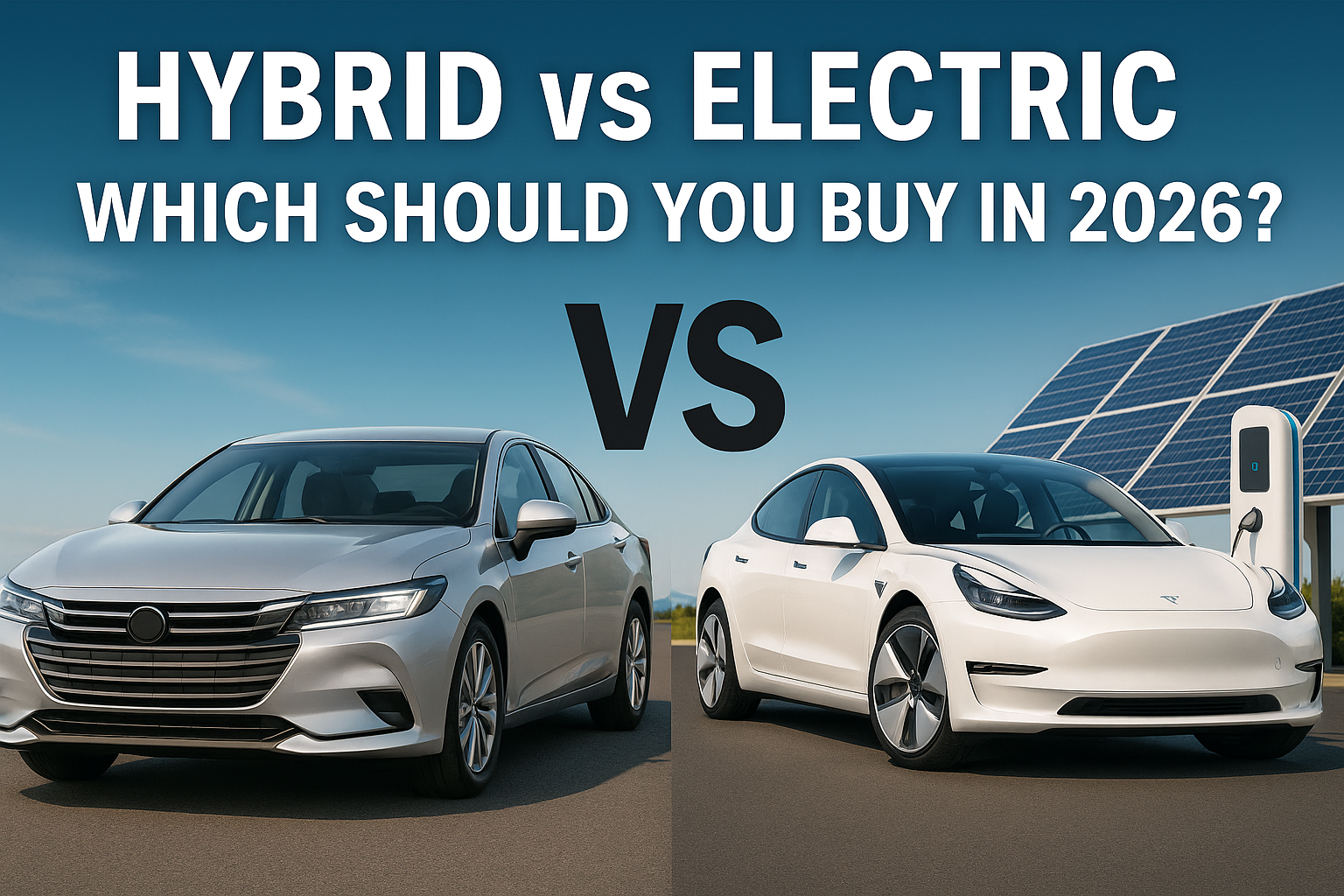



Hybrid vs Electric The auto market is changing faster than ever.
With new models, better batteries, expanded charging networks, and rising gas prices, choosing the right vehicle in 2026 feels more complicated than before. That’s why so many drivers are asking the same question: Hybrid vs Electric: Which Should You Buy in 2026?
This updated guide breaks everything down in simple, clear language so you can make a confident decision this year.
- The Complete Car Buying Guide in 2026: How to Choose the Right Car for Your Budget, Lifestyle, and Driving Needs
- Affordable Electric Cars Under $30k in 2025: Best Budget-Friendly EVs Reviewed
- Best Electric Cars for City Commuters in 2026: 12 Smart, Affordable EVs for Urban Life
- Most Fuel-Efficient Cars in 2026 (Hybrid, Plug-In, EV)
Understanding the Basics of Hybrid & Electric Vehicles
What Is a Hybrid Vehicle?
A hybrid uses both a gasoline engine and an electric motor. The combination helps reduce fuel use and emissions while still offering long driving range.
What Is an Electric Vehicle?
An EV runs entirely on electricity. It has no gas tank, no oil changes, and produces zero tailpipe emissions.
How Hybrids Work in 2026
Hybrid technology has improved a lot over the last few years.
Updated Hybrid Technology
Modern hybrids can now switch between electric and gas power more smoothly, improving fuel savings.
Modern Regenerative Braking
Today’s systems capture more energy when slowing down, adding extra miles of electric assistance.
MHEV vs HEV vs PHEV
- MHEV (Mild Hybrid): Light electric support
- HEV (Full Hybrid): Gas-free driving at low speeds
- PHEV (Plug-in Hybrid): Larger battery and home charging
How EVs Work in 2026
EV technology has made big leaps since 2023.
Battery and Motor Improvements
Batteries last longer and charge faster. Motors are more efficient and powerful.
Charging Speed Advances
More EVs can now add 150–200 miles in under 20 minutes.
Range Factors in 2026
- Temperature
- Driving speed
- Tire type
- Battery size
Hybrid vs Electric: Which Should You Buy in 2026 — Key Differences
Cost
Hybrids are usually cheaper upfront.
EVs save more money long-term.
Range
Hybrids: up to 600–700 miles.
EVs: typically 250–400 miles.
Charging Access
If you can charge at home → EV is ideal.
If you can’t → Hybrid is more practical.
Maintenance
EVs need almost no maintenance.
Hybrids require engine and battery upkeep.
Hybrid vs Electric Cost Breakdown in 2026
Purchase Price
- Hybrids start lower.
- EV prices are dropping thanks to cheaper batteries.
Charging vs Fuel Costs
EV charging is still cheaper than gasoline per mile.
Maintenance
EVs save money with:
- No oil changes
- Fewer moving parts
- Longer-lasting brakes
Hybrid vs Electric Environmental Impact
Carbon Emissions
Hybrids reduce emissions.
EVs eliminate tailpipe emissions completely.
Battery Recycling Improvements
Better recycling programs mean fewer environmental concerns in 2026.
Hybrid vs Electric Performance Comparison
City Driving
EVs offer instant acceleration and smoother rides.
Highway Driving
Hybrids offer longer range for long road trips.
Winter Driving
New EV batteries handle cold better than before, but hybrids still outperform in extreme conditions.
Charging Infrastructure in 2026
Charging availability is one of the biggest deciding factors for buyers comparing hybrids and EVs in 2026. The good news? Charging networks have grown more in the past two years than in the previous decade.
Home Charging
Most EV owners charge at home overnight. With Level 2 home chargers now cheaper and faster, topping up 30–40 miles per hour is common. If you park in a garage or driveway, home charging makes owning an EV incredibly convenient.
Public Fast-Charging Networks
Public charging has improved dramatically thanks to:
- More fast-charging stations along major highways
- Standardized charging plugs (NACS becoming universal)
- Retail stores and parking garages adding chargers
- Better reliability compared to 2023–2024 networks
Many stations now deliver 150–250 kW speeds, meaning a 10-to-80% charge in 20–25 minutes.
Government Expansion Plans
Countries worldwide have introduced new charging rollout goals through 2030, including:
- Tax credits to install home chargers
- Funding for rural charging stations
- Required EV chargers in new commercial buildings
This expansion makes EV ownership easier each year.
Who Should Buy a Hybrid in 2026?
Hybrids still make a lot of sense for many drivers.
Ideal Drivers
Choose a hybrid if you:
- Drive long highway distances
- Don’t have home charging access
- Want great fuel economy without changing driving habits
- Want lower upfront costs
- Live in very cold climates
Ideal Conditions
Hybrids perform best for:
- Long commutes
- Rural driving
- Areas with poor charging infrastructure
They combine the comfort of gas range with electric efficiency.
Who Should Buy an Electric Vehicle in 2026?
For many buyers, EVs are now the smarter long-term choice.
Ideal EV Drivers
Choose an EV if you:
- Can install a home charger
- Mostly drive short or medium trips
- Want lower fueling costs
- Prefer smooth, fast acceleration
- Want the lowest maintenance schedule possible
Who Should Avoid an EV?
Avoid EVs for now if you:
- Can’t install home charging
- Frequently drive 400+ miles in a day
- Live in regions with poor cold-weather EV support
- Depend on towing long distances
Otherwise, EVs offer unmatched long-term savings.
Hybrid vs Electric — 2026 Pros & Cons Table
Hybrid Pros
- Long driving range
- Lower purchase price
- No charging required
- Great fuel economy
- Reliable tech
Hybrid Cons
- Requires gas
- More moving parts → more maintenance
- Lower electric range (except PHEVs)
Electric Pros
- Zero tailpipe emissions
- Very low maintenance
- Fast, smooth performance
- Cheaper “fuel” (electricity)
- New government incentives
Electric Cons
- Higher upfront cost
- Charging required
- Reduced range in extreme cold
- Longer road-trip stops
Hybrid vs Electric 2026 Government Incentives & Tax Credits
Hybrid Incentives
Most countries now focus on plug-in hybrids (PHEVs) rather than regular hybrids. PHEVs may qualify for:
- Local rebates
- Utility company incentives
- Home charger discounts
Electric Vehicle Incentives
EVs get the strongest incentives, including:
- Federal or national tax credits
- Rebates for home charger installation
- Reduced registration fees
- Free or discounted HOV access
- Lower electricity rates during off-peak charging
Top Hybrid Cars of 2026
Toyota Prius Hybrid
Still the most reliable hybrid with excellent MPG and improved electric-only driving.
Honda CR-V Hybrid
Great fuel economy + SUV practicality.
Ford Escape Hybrid
Strong efficiency and improved interior technology for 2026.
Top Electric Cars of 2026
Tesla Model 3 Highland
Smoother ride, upgraded battery efficiency, and fast charging.
Hyundai IONIQ 6
One of the most aerodynamic EVs on the market with excellent range.
Polestar 2 Refresh
Improved motors, better range, and refined Scandinavian design.
FAQs — Hybrid vs Electric Which Should You Buy in 2026
1. Are hybrids still worth buying in 2026?
Yes — if you drive long distances or lack home charging, hybrids remain practical.
2. Do EVs cost more to maintain?
No. EVs cost less to maintain due to fewer moving parts.
3. Which lasts longer: hybrid or electric batteries?
Most modern EV and hybrid batteries last 10–15 years or more.
4. Is public charging reliable in 2026?
Much more reliable than in the past, especially with standardized connectors.
5. Which is cheaper long-term?
EVs are usually cheaper to fuel and maintain, making them less expensive long-term.
6. Which is better for cold climates?
Hybrids perform better in extreme cold, though EV improvements continue each year.
Conclusion — Making the Smartest Choice in 2026
So, Hybrid vs Electric Which Should You Buy in 2026?
Here’s the easiest way to decide:
- Choose a Hybrid if you want convenience, range, low upfront cost, and no charging hassles.
- Choose an Electric Vehicle if you want lower long-term costs, fast performance, zero emissions, and home charging convenience.
Both options are better than traditional gas cars, but the best choice depends on your lifestyle, driving habits, and budget.
All Rights Reserved © 2026