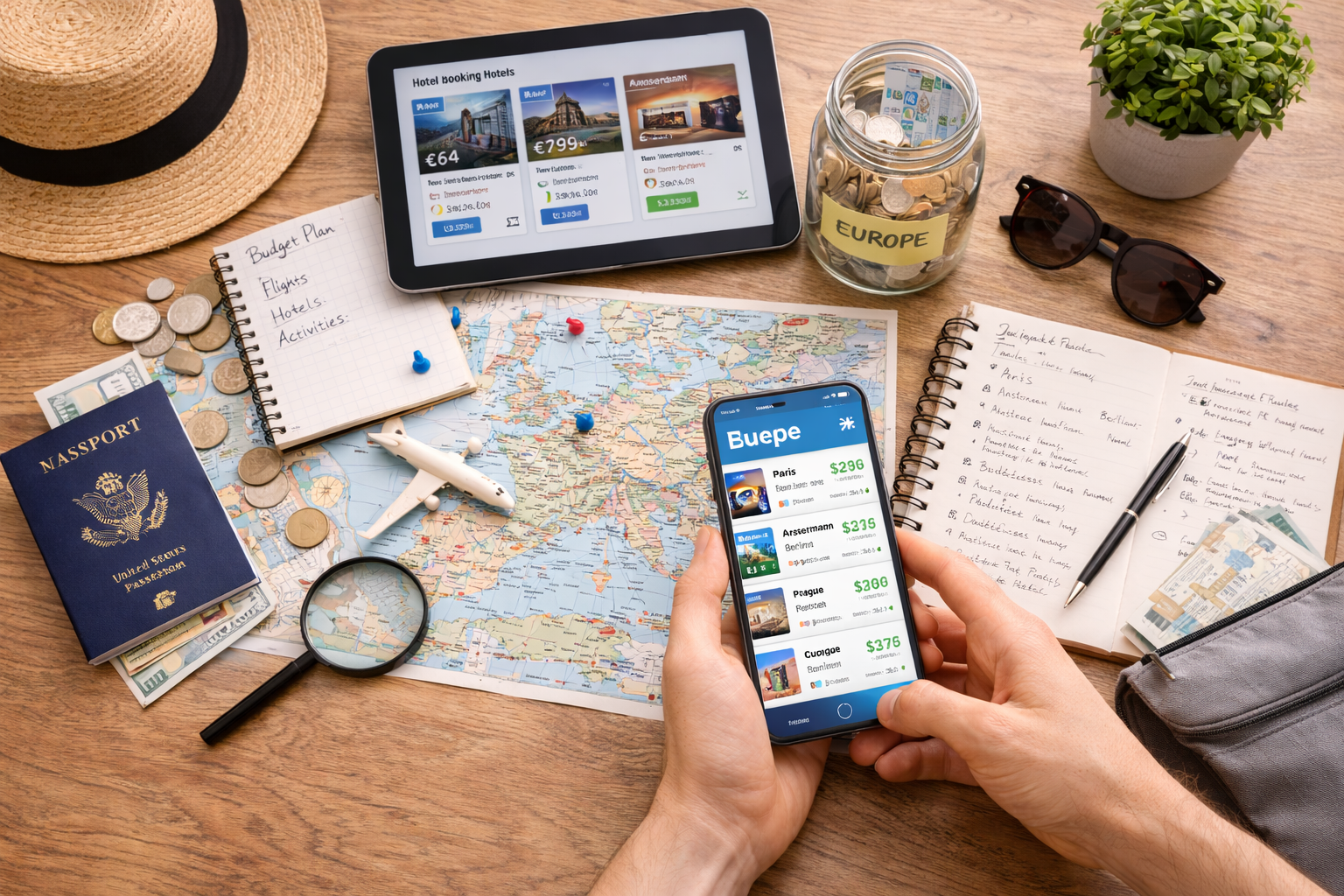



How to Plan a European Trip in 2026 on a Budget – learn how to build a realistic Europe itinerary, find cheaper flights, cut hotel costs, use trains and budget airlines wisely, and avoid common money traps—without sacrificing fun.
Once you are ready to choose destinations, start with our list of underrated European cities to visit on a budget in 2025 for affordable places worth adding to your itinerary.
Set the Budget First (Not the Itinerary)
Most people plan Europe backwards. They pick 6 cities, book flights, then hope the budget works out. That’s how you end up eating “sad sandwiches” on day five and skipping the best museums.
If you want How to Plan a European Trip in 2026 on a Budget to actually work, do this in the correct order:
- Decide your total budget
- Pick the travel window
- Build a route that fits your budget
- Book the big costs (flights + stays)
- Fill in the fun (food + attractions)
The 3 numbers you must decide
You only need three numbers to start:
- Trip length: 7, 10, 14, or 21 days (pick one)
- Comfort level: “basic”, “balanced”, or “comfortable”
- Target daily spend: your realistic daily average
A simple approach:
- Basic: hostel/private room budget, public transit, groceries + cheap eats
- Balanced: mix of hotels + apartments, some paid attractions, occasional splurge
- Comfortable: more central stays, more trains, more sit-down meals
Budget categories that creep up
These are the sneaky ones that blow budgets:
- Local transport (metros, buses, airport transfers)
- Attraction tickets and “just one more museum”
- Baggage fees (especially on budget flights)
- Tourist tax and city fees at hotels
- Last-minute bookings
Set aside a small buffer (even 5–10% of your budget) for surprises. Not glamorous, but it saves trips.
- Best Budget Travel Tips for 2026
- How to Find Cheap Flights in 2026
- Best Travel Apps in 2026
- Best Apps to Create Travel Itineraries
- How to Travel the World on a Tight Budget
- Underrated European Cities on a Budget
- Budget Travel Tips for Europe
- Best Weekend Getaways in Europe
Choose the Right Time to Go
Timing is the easiest “budget hack” that doesn’t feel like a hack.
Best months for value
If you want good weather without peak pricing, aim for shoulder season:
- Spring: April–May
- Fall: September–October
You’ll often get:
- Cheaper flights
- Lower hotel rates
- Fewer crowds
- Better restaurant service (less frantic)
What to avoid
Europe gets expensive fast during:
- Major summer weeks (late June through August)
- Christmas/New Year weeks
- Major festivals and local events
- School holidays (varies by country)
If you must travel peak season, keep the route simpler and book early. Peak season punishes procrastination.
Pick a “Budget-Friendly Route”
Europe looks small on a map… until you start moving every two days. Travel days cost money and energy. Budget trips thrive on fewer moves.
Hub-and-spoke itinerary
Pick one “hub” city and do day trips. Examples:
- Base in Rome and day trip to Tivoli or Ostia Antica
- Base in Barcelona and explore nearby beach towns
- Base in Amsterdam and day trip to Haarlem or Utrecht
Why it saves money:
- Fewer train/flight tickets
- Fewer check-in/check-out logistics
- Better lodging deals for longer stays
- Less “we need a taxi” panic
The 2–4 city rule
For a 10–14 day budget trip, 2–4 cities is ideal. That gives you:
- Enough variety
- Fewer expensive travel days
- Time to explore without rushing
A budget-friendly route also avoids zig-zagging. Try to move in one direction (or make a loop) rather than bouncing around.
- Rome2Rio Transport Planner
- Eurail Pass Official Site
- Skyscanner Europe Flights
- Booking.com Europe Stays
- Lonely Planet Europe Guides
Flights: How to Get Into Europe Cheap
Flights are often the biggest single expense—so you want a strategy that works without obsession.
Use open-jaw flights
Instead of round-trip in/out of the same city:
- Fly into City A
- Fly out of City B
Example:
- Arrive in Paris, depart from Rome
This avoids backtracking and can reduce both time and cost.
Check alternate airports
Sometimes landing in a nearby city and taking a train saves a lot.
Examples:
- Fly into Milan and train to other Northern Italy cities
- Fly into Brussels and use trains to reach nearby regions
- Fly into Frankfurt and connect widely by rail
Price tracking beats guessing
Set price alerts early. When a good price appears, book confidently. If you “wait for a better deal” without data, you’ll usually lose.
Transportation in Europe
Your biggest on-the-ground decision: trains vs buses vs budget airlines. Each is great in the right situation.
When trains win
Trains usually win for:
- Routes under ~4–5 hours
- City-center to city-center travel
- Comfort + reliability + fewer airport hassles
Pro tip: the cheapest train tickets are often the early-bird ones. For popular routes, booking ahead can matter a lot.
When buses win
Long-distance buses can be shockingly cheap. They’re best when:
- You’re not in a rush
- You want the lowest cost
- Trains are expensive or sold out
They’re not glamorous, but they can cut transport costs dramatically.
When budget flights win
Budget flights win on long distances (think Spain to Eastern Europe), but only if you’re strict about:
- Baggage rules
- Seat selection fees
- Airport transfers to/from far airports
- Timing (very early flights can add hidden taxi costs)
If you travel carry-on only, budget flights become far more reliable financially.
How to Plan a European Trip in 2026 on a Budget: to Stay on a Budget
You don’t need luxury hotels to sleep well in Europe. You need a smart strategy.
The “one stop away” rule
The best budget lodging is often:
- One metro stop away from the tourist center
- In a safe, well-connected neighborhood
- Near a grocery store and transit line
If you stay ultra-central, you may pay double for the same comfort.
Choose the right stay type
Here’s a quick rule set:
- Hostels (private rooms): great value, social options, often central
- Apartments: best for 4+ nights (kitchen savings), great for couples/families
- Budget hotels: best for short stays, simple comfort
- Guesthouses/B&Bs: often great value in smaller towns
Booking strategy that works
A calm approach:
- Book refundable stays early if prices are decent
- Re-check prices later
- If prices drop, rebook
- If they rise, you’re protected
This “lock then optimize” method saves money without stress.
How to Plan a European Trip in 2026 on a Budget Food Without Overspending
Eating in Europe can be affordable and delicious if you stop trying to replicate your at-home habits.
The grocery + picnic method
One of the happiest budget meals is:
- Fresh bread
- Local cheese
- Fruit
- A simple snack or spread
Eat in a park or by a scenic spot. You’ll spend less and remember it more than another rushed restaurant meal.
Lunch beats dinner
Many cities have lunch deals or “menu of the day” options that cost far less than dinner for similar quality. If you want one restaurant meal per day, make it lunch.
Your “rule of three” food plan
To keep costs stable:
- 1 cheap breakfast (grocery/café)
- 1 paid meal (lunch)
- 1 flexible meal (snack picnic / casual dinner)
If you eat every meal in tourist centers, your budget will feel like it’s leaking.
How to Plan a European Trip in 2026 on a Budget Attractions & Activities
Budget travel isn’t “skip everything.” It’s “pay for what matters and go free everywhere else.”
Free walking tours
In many European cities, free walking tours are a top-value way to:
- Understand the city fast
- Get local stories
- Learn what’s worth paying for later
Tip what you can afford. You’ll usually get more value than a paid tour.
Use free museum days strategically
Many museums have free days or reduced hours. The trick is planning around them without letting your trip become a schedule prison.
Pay for the “once-in-a-lifetime”
Spend on:
- One major museum you truly care about
- One unforgettable experience (concert, special tour, iconic site)
- One day trip that fits your interests
Skip:
- Generic attractions you don’t care about
- “Tourist trap museums” with inflated prices
- Anything that feels like you’re paying for a photo, not an experience
How to Plan a European Trip in 2026 on a Budget Money & Payments
Europe is easy for card payments, but you can still lose money through small traps.
Always pay in local currency
When a card terminal asks:
- “Pay in USD (or your home currency)?”
Choose NO. Choose local currency.
That “helpful conversion” often includes a bad exchange rate.
Use a simple daily tracking method
Budget travel tracking doesn’t have to be complicated. Try:
- A daily note in your phone: total spent today
- Or a quick budgeting app
- Or a simple “cash envelope” method for daily spending
Knowing your daily average keeps you calm. Otherwise, you spend with anxiety and regret.
How to Plan a European Trip in 2026 on a Budget Packing & Gear
If you want a budget trip, packing isn’t just “packing.” It’s cost control.
Carry-on only saves real money
Carry-on only:
- Avoids checked bag fees
- Reduces budget airline “gotcha” charges
- Makes train/bus transfers easier
- Saves time in airports
Pack a capsule wardrobe and do laundry once. You’ll never go back.
Small gear wins
- Compact power adapter
- Refillable water bottle
- Comfortable walking shoes (the real MVP)
- A light day bag
Don’t overpack tech. Heavy bags create expensive travel decisions (taxis, baggage fees, stress).
How to Plan a European Trip in 2026 on a Budget A Sample 10-Day Budget Europe Plan
Here’s a realistic example that avoids constant moving:
Route: 10 days, 3 stops
- Days 1–4: Lisbon (budget-friendly, great food value)
- Days 5–7: Madrid (great museums + parks + day trips)
- Days 8–10: Barcelona (walkable, beach, architecture)
(Your cities can differ—the structure is what matters.)
Budget structure
A simple budget split:
- Flights: 30–45% (varies a lot)
- Lodging: 30–40%
- Food: 15–25%
- Local transport + attractions: 10–20%
Your exact numbers will vary, but if you keep lodging and transport controlled, Europe stays affordable.
How to Plan a European Trip in 2026 on a Budget FAQs
1) What’s the cheapest month to travel Europe in 2026?
Typically, shoulder season (April–May, September–October) offers the best mix of price and weather. Deep winter can be cheaper too, but daylight and weather can limit what you enjoy.
2) Is it cheaper to book trains in advance or last minute?
Often cheaper in advance for popular routes, especially high-speed trains. For regional trains, prices may be stable. If you’re on a tight budget, booking key long routes early helps.
3) Are hostels safe for solo travelers?
Yes, generally—especially reputable hostels with strong reviews and good security practices. Private rooms in hostels are a great “budget + comfort” compromise.
4) Should I get a Eurail pass in 2026?
Sometimes. It’s usually worth it if you’re doing many long-distance trains within a short time. If you’re doing only a few routes, point-to-point tickets often win. Price it both ways.
5) How do I avoid spending too much on food?
Use the “one paid meal per day” rule, grocery breakfast, and picnic dinners. Also, eat lunch out instead of dinner for better value.
6) What’s the biggest budget mistake people make in Europe?
Moving too often. Every transfer day costs money (tickets, snacks, extra transit) and energy. Fewer moves = cheaper and more enjoyable trips.
7) How much money should I budget per day?
It depends on the countries and comfort level, but a simple way to decide is:
- Pick a daily number you can afford
- Multiply by days
- Add big fixed costs (flights + lodging)
- Add a buffer
If your total feels too high, reduce the number of cities, not the fun.
How to Plan a European Trip in 2026 on a Budget Final Thoughts
How to Plan a European Trip in 2026 on a Budget comes down to building a trip that’s simple, flexible, and realistic. You don’t need “secret hacks.” You need a system:
- Travel in shoulder season
- Choose 2–4 places, not 7
- Use open-jaw flights when possible
- Stay one transit stop away
- Eat one great paid meal a day
- Pack carry-on only
- Pay in local currency
- Track daily spending lightly
Do those consistently, and you’ll have a Europe trip that feels rich in experiences—without draining your bank account.
All Rights Reserved © 2026