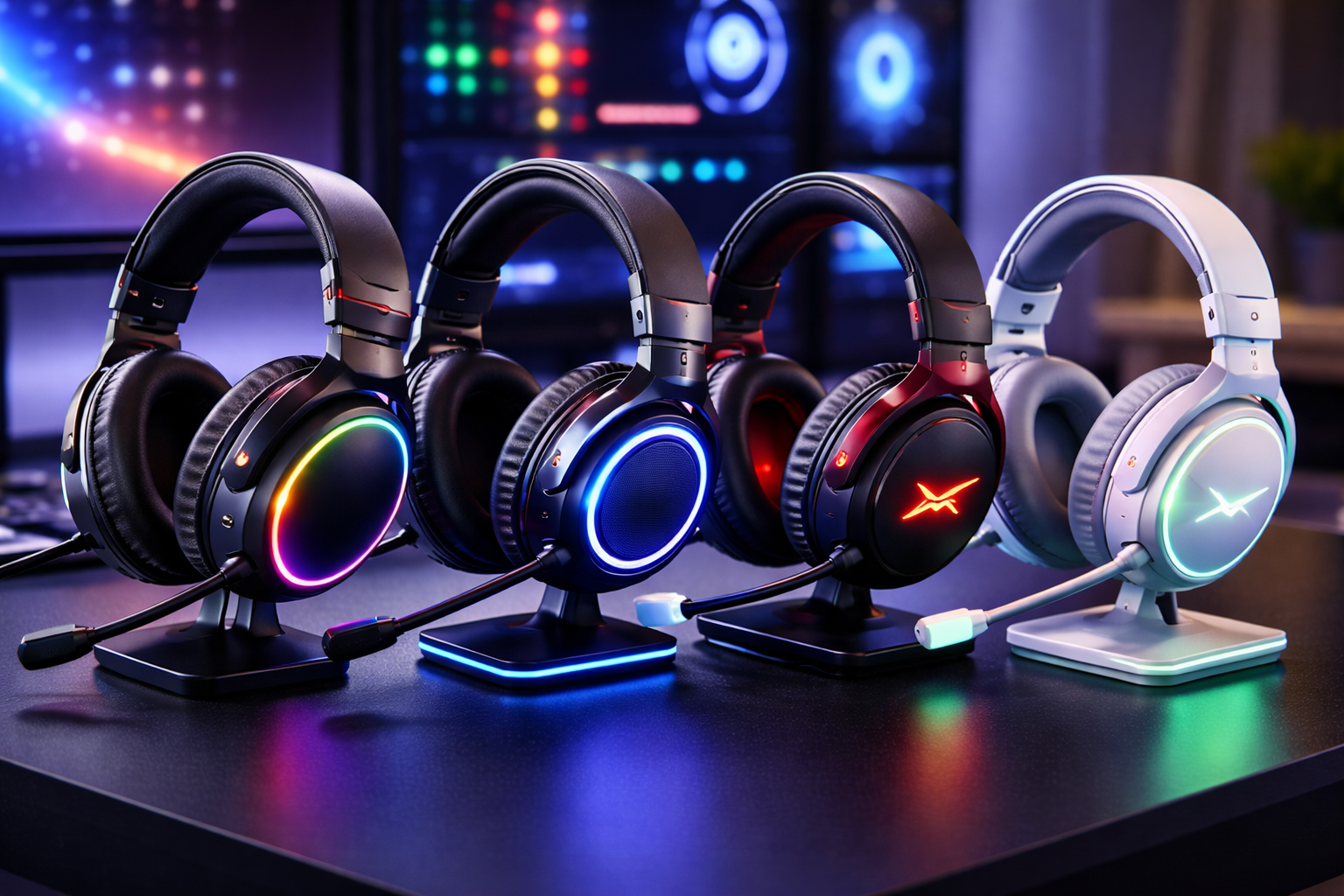



Looking for the best gaming headsets in 2026? We break down the top wired and wireless options for competitive play, immersion, and comfort—without overpaying.
Gaming Headsets Are Better—But Also More Confusing
Gaming headsets have improved dramatically over the past few years.
Better drivers, lighter designs, clearer microphones, and longer battery life have become common—even in mid-range models. At the same time, marketing has become louder, specs have become more confusing, and prices have crept up.
If you’re searching for the best gaming headsets, the real challenge isn’t finding options—it’s figuring out which features actually matter for how you play.
This guide focuses on:
- Real audio performance (not gimmicks)
- Comfort for long sessions
- Mic quality that works in practice
- Value for money in 2026
No hype. Just headsets that make sense.
What Actually Matters in a Gaming Headset (2026 Edition)
Before looking at specific picks, it’s important to understand what separates a good headset from an overpriced one.
Sound Positioning Beats “Surround Sound”
Virtual surround sound is heavily marketed, but:
- Most competitive players disable it
- Good stereo imaging matters more
- Driver tuning > software effects
Comfort Is Not Optional
Weight, clamping force, and ear cup depth matter more than materials or RGB.
A headset that sounds great but hurts after 45 minutes is not a good headset.
Mic Quality Matters More Than You Think
Clear voice communication affects:
- Team coordination
- Stream quality
- Fatigue during long sessions
Boom mic tuning matters more than raw bitrate claims.
Best Gaming Headsets in 2026 (Top Picks)
1. SteelSeries Arctis Nova 7 (Best All-Around Wireless Headset)
SteelSeries continues to dominate the balanced wireless category.
Why It’s a Top Pick
- Clean, well-balanced sound
- Comfortable for long sessions
- Strong wireless stability
- Solid microphone for the price
Best For
- PC and console gamers
- Mixed competitive and casual play
- Users who want wireless without major compromises
2. HyperX Cloud Alpha (Best Value Wired Headset)
HyperX remains a favorite for a reason.
Why It Still Wins on Value
- Excellent comfort
- Reliable, punchy sound
- Durable build
- No software required
Best For
- Competitive FPS players
- Budget-conscious gamers
- Plug-and-play simplicity
3. Logitech G Pro X 2 (Best for Competitive Play)
Logitech designed this with esports in mind.
Strengths
- Accurate positional audio
- Detachable broadcast-style mic
- Lightweight and durable
- Strong passive isolation
Best For
- Competitive FPS
- Players who value clarity over bass
- Tournament-style setups
4. Razer BlackShark V2 Pro (Best Wireless for FPS)
Razer refined one of its most popular designs.
Why It Stands Out
- Excellent mic clarity
- Strong imaging for footsteps
- Very comfortable for long sessions
- Good wireless latency performance
Best For
- Competitive multiplayer
- Voice-heavy games
- Streamers who want a clean mic signal
5. Beyerdynamic MMX 300 (Best Premium Wired Audio)
Beyerdynamic brings studio-grade sound into gaming.
Why It’s Different
- Exceptional sound clarity
- Excellent imaging
- High-quality microphone
- Built for long-term use
Trade-Off
- Expensive
- No wireless option
- Best paired with a good sound source
Best For: Gamers who care about audio quality above all else.
Wireless vs Wired Gaming Headsets (Honest Breakdown)
Wireless Headsets
Pros
- Convenience
- Clean desk setup
- Freedom of movement
Cons
- Battery management
- Higher cost
- Slightly more latency (usually negligible)
Wired Headsets
Pros
- Best value
- No charging
- Consistent audio quality
Cons
- Cables
- Less flexible setups
Smart rule:
Go wireless for convenience, wired for value and simplicity.
Open-Back vs Closed-Back (Rarely Explained Well)
Closed-Back
- Better isolation
- Stronger bass
- Less sound leakage
Open-Back
- Wider soundstage
- More natural audio
- Poor isolation
Open-back headsets are great for quiet rooms and immersion, not noisy environments.
Common Mistakes When Buying Gaming Headsets
- Paying extra for RGB
- Overvaluing surround sound marketing
- Ignoring comfort reviews
- Buying “pro” headsets without pro needs
- Forgetting mic quality
Good audio is subtle. Bad audio is distracting.
How Gaming Headsets Fit Into a Smart Setup
In a smart gaming setup:
- The headset matches your room
- The mic matches your communication needs
- Audio clarity supports your games
- Comfort supports long sessions
A $150 well-chosen headset often beats a $300 mismatched one.
FAQs: Best Gaming Headsets
1. What are the best gaming headsets in 2026?
The SteelSeries Arctis Nova 7 and HyperX Cloud Alpha remain top choices.
2. Are wireless gaming headsets good enough now?
Yes—latency and sound quality have improved significantly.
3. Do gaming headsets improve performance?
They improve awareness and communication, not raw skill.
4. Is surround sound necessary?
No—good stereo imaging matters more.
5. Should I buy a headset or headphones + mic?
Headsets are simpler; separates can sound better.
6. How long should a gaming headset last?
3–5 years with proper care.
Conclusion: The Best Gaming Headset Is the One You Forget You’re Wearing
The best gaming headsets in 2026 aren’t about specs or branding.
They’re about:
- Comfort you don’t notice
- Audio that gives clear information
- A mic your teammates understand
- Value that makes sense for your setup
Choose based on how you play, not what’s trending.
That’s how you get better sound—and a better gaming experience—without overspending.
RTINGS explains gaming headset audio and mic testing: Gaming Headset Test Methodology
All Rights Reserved © 2026