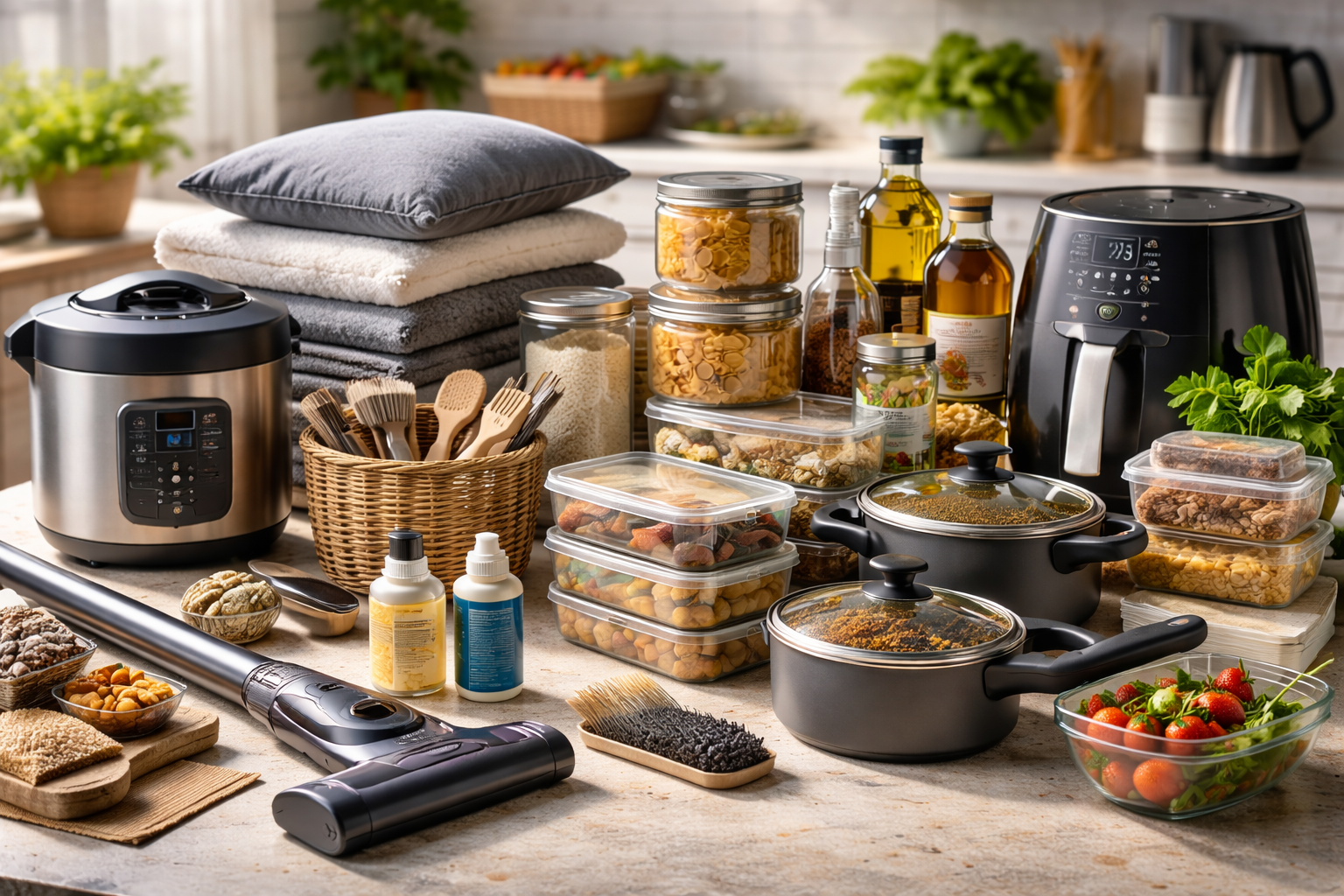



Discover the best budget home essentials that actually last, help you save money long-term, and avoid cheap replacements that cost more over time.
When people think about saving money at home, they usually think about big expenses:
rent, utilities, furniture, appliances.
But most wasted money doesn’t come from big purchases.
It comes from replacing small things over and over again.
That’s why choosing the best budget home essentials matters more than most people realize. These are the everyday items you touch, use, clean with, store things in, and rely on constantly. When they fail early, costs quietly multiply.
This guide focuses on budget-friendly home essentials that actually last — not the cheapest options, not trendy items, but reliable basics that save money long-term.
Best budget home essentials: Why Home Essentials Are Where Budget Choices Matter Most
Home essentials are:
- used frequently
- replaced often
- rarely researched deeply
This combination makes them one of the biggest silent budget drains.
A broken storage bin.
A mop that falls apart.
A trash can that cracks.
A dish rack that rusts.
Each replacement feels small — until you add them up.
Smart budget choices here:
- reduce repeat purchases
- reduce frustration
- reduce decision fatigue
That’s real value.
What “Best Budget Home Essentials” Really Means
In this article, best budget home essentials means items that are:
- affordable without being disposable
- durable enough for daily use
- simple in design
- easy to replace individually (not full sets)
These are products that:
- don’t need upgrades
- don’t rely on trends
- don’t require special care
They exist to quietly do their job.
The Difference Between Cheap and Budget-Friendly
This distinction matters.
Cheap Home Essentials
- lowest price
- thin materials
- short lifespan
- frequent replacement
Budget-Friendly Home Essentials
- reasonable upfront cost
- thicker or sturdier materials
- longer lifespan
- fewer replacements
Budget-friendly products cost less over time, even if they cost slightly more upfront.
Best Budget Cleaning Essentials
Cleaning tools are some of the most frequently replaced items in a home — often unnecessarily.
What to Look For
- reusable components
- replaceable heads
- sturdy handles
- simple mechanisms
Worth Buying (Budget Versions)
- solid broom with replaceable head
- microfiber cloths instead of paper towels
- basic mop with washable pads
- refillable spray bottles
What to Avoid
- ultra-thin plastic handles
- disposable-only systems
- gimmicky “all-in-one” tools
A small investment here can eliminate years of repeat spending.
Tools That Last vs Disposable Supplies
Disposable cleaning supplies feel cheap — until you buy them monthly.
Reusable budget essentials:
- lower long-term cost
- reduce clutter
- simplify routines
This is one of the fastest ways to save money at home.
Best Budget Storage and Organization Essentials
Storage is where cheap materials fail first.
Cracked bins, warped lids, broken handles — all common.
Smart Budget Storage Principles
- thicker plastic or metal
- open bins over hinged lids
- stackable designs
- neutral sizes that fit multiple uses
Best Budget Storage Picks
- open storage bins
- fabric baskets with reinforced frames
- drawer organizers (non-adjustable last longer)
- shelving units with metal frames
Avoid over-customization. Simpler storage adapts better over time.
Avoiding Plastic That Cracks and Warps
If a storage item flexes too easily when squeezed, it won’t last.
Budget doesn’t mean flimsy — it means right material for the job.
Best Budget Kitchen-Adjacent Home Essentials
Not everything in the kitchen is cookware.
Some of the most replaced home essentials live around the kitchen.
Often Overlooked Essentials
- dish drying racks
- trash cans
- food storage containers
- drawer organizers
Budget Buying Tips
- stainless steel beats coated metal
- simple hinges beat spring-loaded parts
- modular containers beat full sets
Replacing one cracked container is cheaper than replacing an entire set.
Best Budget Lighting and Small Home Upgrades
Lighting is one of the cheapest ways to improve a home — and one of the easiest places to overspend.
Best Budget Lighting Essentials
- simple table lamps
- floor lamps with weighted bases
- neutral LED bulbs
- basic under-cabinet lighting
Avoid:
- smart features you won’t use
- ultra-thin shades
- proprietary bulbs
Good lighting reduces eye strain, improves mood, and increases comfort — all without expensive upgrades
Best Budget Laundry and Utility Essentials
Laundry tools are abused regularly — budget choices must be durable.
Worth Buying
- sturdy laundry baskets (vented or reinforced)
- drying racks with metal joints
- basic detergent dispensers
- lint traps and strainers
Avoid
- collapsible items with weak joints
- decorative designs over function
Utility essentials should prioritize strength over aesthetics.
Best Budget Bathroom Essentials
Bathrooms destroy weak materials quickly.
Humidity reveals poor quality fast.
Best Budget Bathroom Essentials
- rust-resistant shower caddies
- simple soap dispensers
- non-slip bath mats
- basic storage shelves
Materials matter more here than in almost any other room.
Common Home Essentials Mistakes That Waste Money
Let’s address the traps.
Buying Sets Instead of Individual Items
Sets force replacement of everything when one piece fails.
Choosing Style Over Structure
Looks fade. Structure matters.
Ignoring Weight and Thickness
Light often means fragile.
Replacing Instead of Repairing
Some budget essentials are designed to be repairable — use that.
How to Build a Budget Home Essentials System
Think in layers:
- Core essentials – used daily
- Support essentials – used weekly
- Occasional essentials – used monthly
Invest most carefully in daily-use items.
That’s where savings compound.
How These Essentials Save Money Over Time
They save money by:
- reducing replacements
- reducing impulse upgrades
- reducing frustration purchases
- reducing clutter
Good essentials stabilize routines.
Stable routines reduce spending.
Frequently Asked Questions
Are budget home essentials lower quality?
No — many outperform premium versions.
How often should home essentials be replaced?
Only when function degrades.
Is it worth paying more for materials?
Yes, especially for daily-use items.
Should I avoid plastic entirely?
No — just avoid thin, brittle plastic.
Are minimalist homes cheaper to maintain?
Usually, yes.
Conclusion: A Better Home Doesn’t Require Expensive Things
A comfortable, functional home isn’t built with luxury items.
It’s built with:
- reliable basics
- smart budget choices
- fewer replacements
The best budget home essentials don’t impress guests.
They support your life quietly — and save money every day they don’t need replacing.
A Simple Buying Checklist for Budget Home Essentials
Before you click “buy” on any home essential, run through this short checklist. It prevents 90% of bad purchases.
Material Check
Ask:
- Is this thicker than average?
- Are stress points reinforced?
- Does it flex too easily?
If the answer is yes, skip it.
Design Simplicity Check
Better budget essentials usually:
- have fewer moving parts
- avoid springs, clips, or complex locks
- use gravity instead of mechanisms
Simplicity = longevity.
Replacement Logic Check
Ask:
- If one part breaks, can I replace just that part?
- Or does the entire item become trash?
Budget-friendly essentials allow partial replacement, not total loss.
Daily Friction Check
Ask:
- Will this make daily tasks easier or harder?
- Will I need to “work around” it?
If an item adds friction, it won’t last in your routine.
Where People Overspend on Home Essentials (Without Realizing)
Some categories are notorious money traps.
Over-Decorated Storage
Woven, decorative, or oddly shaped storage:
- looks good
- stacks poorly
- breaks faster
Neutral, modular storage lasts longer and adapts better.
Ultra-Cheap Trash and Utility Items
Trash cans, bins, and utility containers:
- are used daily
- take physical stress
- fail quietly
These are not the places to go ultra-cheap.
“Multi-Function” Cleaning Tools
If a tool claims to:
- mop
- scrub
- spray
- self-clean
…it usually does none of them well.
Single-purpose tools last longer.
Budget Home Essentials That Scale With Your Life
One overlooked advantage of good budget essentials is scalability.
The right items:
- move with you
- adapt to new spaces
- work in bigger or smaller homes
Examples:
- stackable storage
- neutral organizers
- modular shelving
- adjustable lighting
This reduces the need to rebuy after moves or life changes.
Renters vs Homeowners: Budget Essentials That Work for Both
This matters for your audience.
For Renters
Focus on:
- non-permanent solutions
- freestanding items
- adhesive-free storage
- easy disassembly
For Homeowners
Focus on:
- durability
- long-term wear
- materials over appearance
The best budget home essentials usually satisfy both.
Why “Mid-Range Budget” Is Often the Sweet Spot
In many categories, the best value is not the cheapest option.
The sweet spot is often:
- 20–40% above the cheapest price
- visibly better materials
- fewer compromises
This is where:
- quality jumps
- failure rates drop
- replacements disappear
That’s the zone we target in this guide.
How to Tell If Reviews Are Misleading
Budget home essentials are especially vulnerable to fake or shallow reviews.
Watch for red flags:
- reviews written immediately after purchase
- no mention of long-term use
- vague praise (“works great!”)
Reliable reviews mention:
- months of use
- wear and tear
- specific failure points (or lack of them)
The Long-Term Impact of Better Home Essentials
People underestimate how much home friction affects:
- mood
- energy
- spending behavior
When essentials work well:
- chores feel lighter
- routines stabilize
- impulse purchases decrease
A well-functioning home reduces “retail therapy.”
That’s a real financial benefit.
How This Article Fits Into the Bigger Budget Cluster
This guide supports:
- students setting up first apartments
- renters optimizing small spaces
- remote workers building functional homes
- anyone tired of replacing the same items
It links naturally to:
- office essentials
- kitchen essentials
- everyday budget pillar content
This strengthens topical authority without keyword overlap.
Final Takeaway: Buy Less, Replace Less
The goal of buying the best budget home essentials is not to fill your home.
It’s to stop buying the same things again and again.
When essentials:
- last longer
- work better
- disappear into your routine
you save money without trying.
That’s the best kind of budget win.
All Rights Reserved © 2026