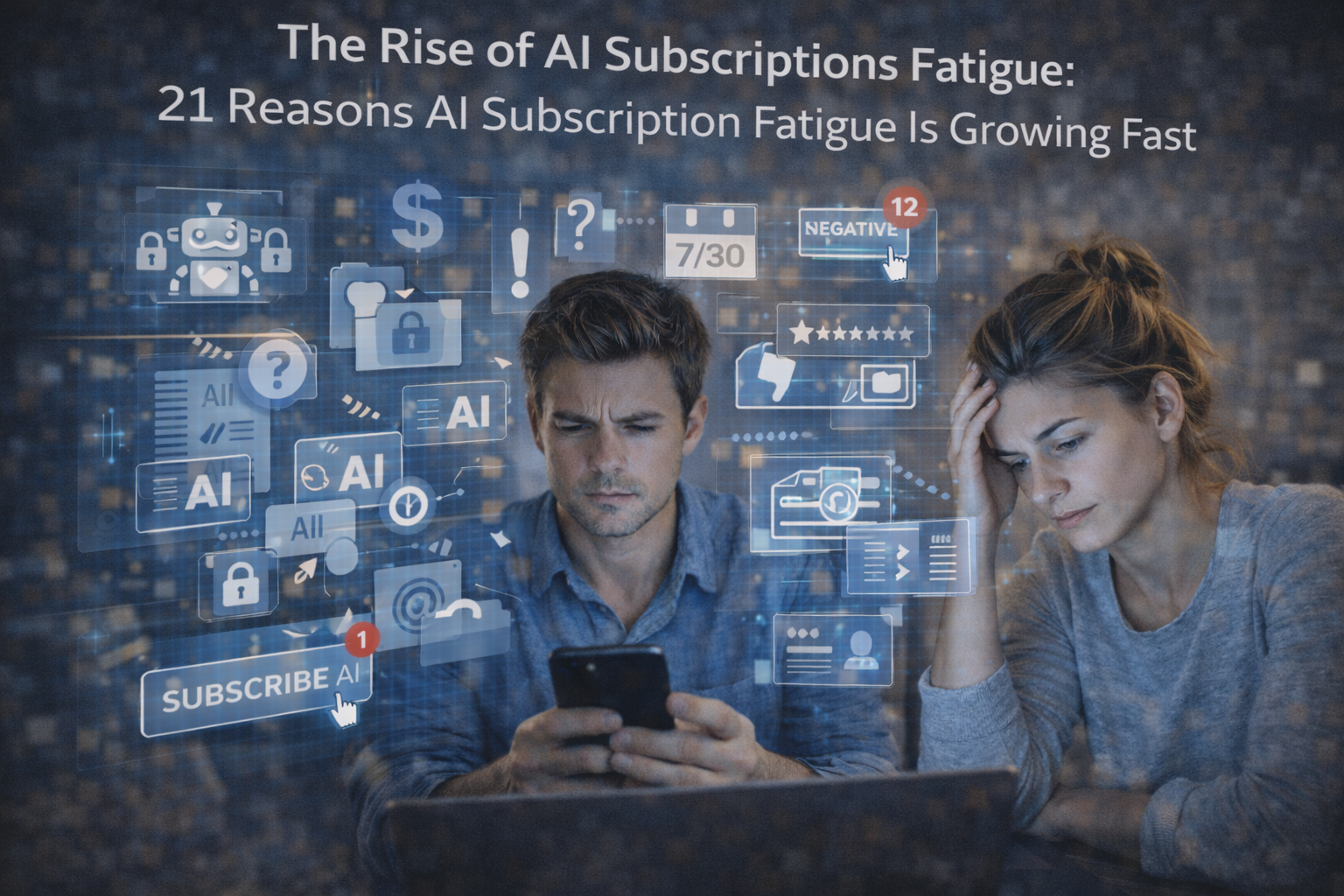



Discover the rise of AI subscriptions fatigue, why AI subscription fatigue is accelerating, how constant AI tools drain focus and budgets, and how to regain clarity without quitting AI.
Analysis of subscription fatigue across digital products, including AI services, is covered by The Wall Street Journal’s report on subscription fatigue.
At first, AI subscriptions feel exciting.
A new tool promises:
- Faster work
- Better output
- A competitive edge
So you subscribe.
Then another tool appears.
Then another update.
Then another monthly charge.
Soon, instead of feeling empowered, you feel tired.
This growing exhaustion has a name: AI subscription fatigue.
Understanding the rise of AI subscriptions fatigue helps explain why more AI does not always mean more productivity—and why clarity matters more than capability.
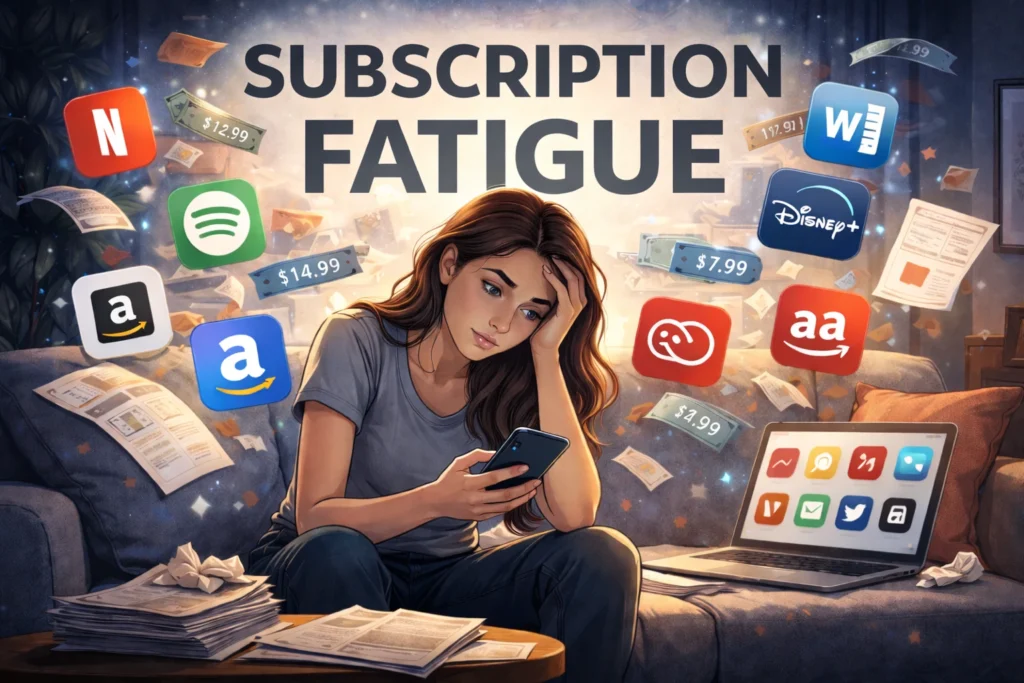
The Quiet Exhaustion Behind “Just One More Tool”
AI fatigue does not arrive suddenly.
It builds slowly through:
- Multiple logins
- Multiple dashboards
- Multiple bills
- Multiple learning curves
Each tool seems useful alone.
Together, they become heavy.
What AI Subscription Fatigue Really Is
AI subscription fatigue is not dislike of AI.
It is exhaustion caused by:
- Too many overlapping tools
- Constant payments
- Ongoing evaluation of value
- Mental overhead of choice
The fatigue is cognitive and financial.
Why AI Subscriptions Exploded So Quickly
Several forces drove the explosion:
- Low barriers to launching SaaS
- Hype-driven adoption
- Freemium → paid conversion models
- Rapid feature iteration
AI tools multiplied faster than users could evaluate them.
From One Tool to a Stack
What starts as:
“I’ll just use this one AI tool”
Quickly becomes:
- One for writing
- One for images
- One for research
- One for meetings
- One for analytics
Stacks grow faster than benefits.
Subscription Overload vs Tool Value
When too many tools compete:
- None feel fully mastered
- Value becomes unclear
- ROI feels ambiguous
Users spend more time managing tools than using them.
Cognitive Load: Managing Tools Becomes the Job
Each subscription adds:
- Settings
- Updates
- New features
- Changed interfaces
This management work is unpaid—and exhausting.
AI was supposed to reduce cognitive load.
Instead, it often increases it.
Notification, Update, and Feature Fatigue
AI tools update constantly.
Each update brings:
- New features
- New prompts
- New workflows
Keeping up becomes a full-time job.
Fatigue follows.
The Fear of Missing Out on “Better AI”
AI evolves fast.
This creates anxiety:
- “What if this tool becomes outdated?”
- “What if a better one appears?”
FOMO drives subscriptions—not needs.
Price Creep and Invisible Spending
Individually, subscriptions feel affordable.
Collectively, they add up.
Monthly fees:
- Hide long-term cost
- Feel less painful than one-time purchases
- Accumulate quietly
AI subscription fatigue often begins with surprise bills.
Why Monthly Fees Feel Heavier Over Time
At first, novelty masks cost.
Over time:
- Value plateaus
- Excitement fades
- Fees remain
What felt like investment begins to feel like obligation.
Overlapping Features and Redundant Tools
Many AI tools offer:
- Similar writing assistance
- Similar summaries
- Similar generators
Redundancy increases confusion and decreases confidence.
Fragmented Workflows and Context Switching
Switching between tools means:
- Different interfaces
- Different logic
- Different limitations
Context switching drains attention and slows work.
AI Subscription Fatigue at Work
Organizations face:
- Multiple department tools
- Shadow subscriptions
- Inconsistent usage
According to insights from Harvard Business Review, uncontrolled tool proliferation reduces productivity and increases burnout.
External reference: https://hbr.org
AI Subscription Fatigue for Individuals
Individuals feel pressure to:
- Keep up
- Stay competitive
- Not fall behind
This pressure leads to over-subscription and under-use.
When AI Stops Saving Time
AI becomes counterproductive when:
- Setup outweighs benefit
- Learning curves never stabilize
- Tools require constant tweaking
Time saved disappears.
The Psychology of “Sunk AI Costs”
Once subscribed, people hesitate to cancel:
- “I might need it later”
- “I already paid for it”
This keeps unused tools alive—and draining.
Why Canceling Feels Risky
Canceling feels like:
- Losing an advantage
- Admitting a mistake
- Falling behind
Fear prolongs fatigue.
How Vendors Encourage Dependency
Some vendors:
- Lock features behind tiers
- Integrate deeply into workflows
- Change pricing frequently
Dependency increases churn resistance—but also fatigue.
Signs You’re Experiencing AI Subscription Fatigue
Common signs include:
- Forgetting what tools you pay for
- Using only a fraction of features
- Feeling stressed by updates
- Avoiding new tools entirely
These are signals, not failures.
How to Reduce AI Subscription Fatigue Without Losing Benefits
Relief comes from intentional reduction—not rejection.
Practical De-Fatigue Strategies
- Audit subscriptions quarterly
- Choose all-in-one tools when possible
- Cancel tools unused for 30+ days
- Prefer depth over novelty
- Align tools to outcomes, not hype
Fewer tools often mean better results.
Frequently Asked Questions
What is AI subscription fatigue?
Exhaustion from managing too many AI subscriptions.
Is AI subscription fatigue common?
Yes—especially among early adopters.
Should I cancel all AI tools?
No. Cancel unused ones intentionally.
Why do AI tools feel overwhelming?
Because they add cognitive load alongside benefits.
Can teams reduce AI subscription fatigue?
Yes—through standardization and clear ownership.
Is this fatigue temporary?
It will ease as ecosystems mature and users become selective.
Conclusion: Fewer AI Tools, Better Results
The rise of AI subscriptions fatigue is not a rejection of AI.
It is a call for clarity.
When tools multiply faster than value, exhaustion follows.
When choice narrows intentionally, benefits return.
AI subscription fatigue fades when:
- Fewer tools are used deeply
- Costs are visible
- Purpose guides adoption
The future of AI is not “more.”
It is better chosen.
All Rights Reserved © 2026