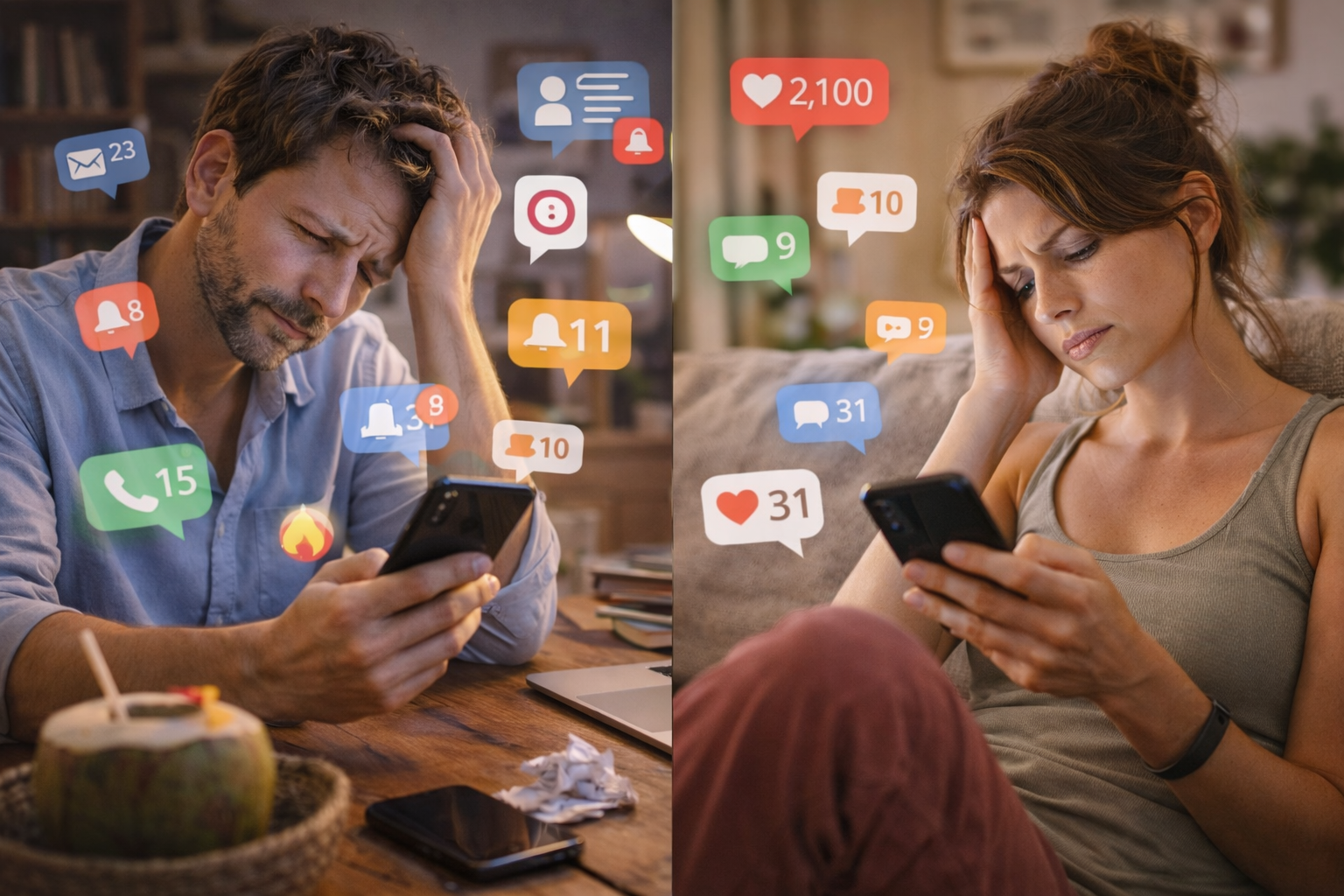



The always online culture explained—why constant connectivity is exhausting, how it reshapes work and life, and why more people are quietly pushing back against being available all the time.
Being reachable used to feel convenient.
Now it feels heavy.
Messages arrive instantly.
Replies are expected quickly.
Silence feels suspicious.
Being offline feels irresponsible.
Many people can’t quite explain it—but they feel it deeply:
They’re tired of always online culture, even when they like technology.
This article breaks down why always online culture is draining, why it feels harder now than before, and why this fatigue is becoming one of the defining experiences of modern work and life.
🌐 What “Always Online” Culture Really Means
Always online culture doesn’t just mean using the internet a lot.
It means:
- Being reachable at all times
- Responding quickly being seen as professionalism
- Silence being interpreted as disengagement
- Presence being measured digitally
It’s not about how much you use technology.
It’s about how much access others have to you.
⏰ How Constant Availability Became the Default
Always online culture didn’t happen overnight.
It emerged from:
- Smartphones in every pocket
- Remote and hybrid work
- Global teams across time zones
- Messaging apps replacing slower communication
What started as convenience quietly became expectation.
Now:
- “I didn’t see it” feels like an excuse
- Delayed replies feel rude
- Being offline requires explanation
Availability became invisible labor.
🧠 The Psychological Cost of Being Reachable
Being constantly reachable creates a background mental state psychologists call continuous partial attention.
You’re never fully working.
Never fully resting.
Never fully offline.
This state:
- Keeps the nervous system activated
- Prevents full mental recovery
- Creates low-level anxiety
Always online culture doesn’t exhaust people through intensity—it exhausts them through constancy.
🚧 Why Work and Life No Longer Feel Separate
One of the biggest costs of always online culture is boundary erosion.
Work messages arrive:
- During meals
- At night
- On weekends
- During vacations
Even if you don’t respond, the awareness alone:
- Pulls attention away
- Disrupts presence
- Prevents true rest
The brain doesn’t fully shut off when work is always a tap away.
📲 The Pressure to Respond (Even When Nothing Is Urgent)
Most messages aren’t urgent.
But they feel urgent because:
- They arrive instantly
- Others are watching response times
- Read receipts exist
- “Seen” implies obligation
Always online culture turns communication into performance:
- Fast replies = commitment
- Slow replies = risk
This pressure drains energy—especially when multiplied across platforms.
🧠 Always Online Culture and Mental Fatigue
Mental fatigue isn’t just about workload.
It’s about unresolved attention.
Always online culture creates:
- Unfinished conversations
- Lingering expectations
- Cognitive clutter
Your brain holds:
“I need to reply to that later.”
Multiply that by dozens of messages, and mental space disappears.
⚖️ Why Flexibility Turned Into Obligation
Remote work promised flexibility.
Always online culture turned it into permanent availability.
Instead of:
- Flexible hours
- Autonomous work
Many people experience:
- Longer days
- Fragmented schedules
- Fewer true breaks
Flexibility without boundaries becomes obligation.
That’s why people feel busier even when working from home.
🧍 The Social Side of Online Exhaustion
Always online culture doesn’t just affect work—it affects relationships.
People feel pressure to:
- Reply immediately to friends
- Keep up with group chats
- React to posts
- Stay visible
Social connection turns into maintenance.
Silence becomes awkward instead of normal.
This creates social fatigue—especially for introverts and overstimulated people.
🧠 How Always Online Culture Affects Focus
Deep focus requires:
- Uninterrupted time
- Predictable silence
- Mental safety
Always online culture removes all three.
When interruptions are expected:
- Focus becomes shallow
- Thinking becomes reactive
- Creativity declines
This is why people work longer but feel less effective.
🛑 Why People Are Quietly Resisting
Not everyone is announcing a digital detox.
But many are quietly:
- Turning off notifications
- Responding more slowly
- Creating offline windows
- Choosing fewer platforms
- Protecting personal time
This resistance isn’t laziness.
It’s self-preservation.
People aren’t rejecting technology—they’re rejecting constant access.
🧭 What People Actually Want Instead
Most people don’t want to be offline forever.
They want:
- Predictable availability
- Permission to disconnect
- Fewer platforms
- Clear expectations
They want technology to support life—not dominate attention.
❓ Frequently Asked Questions
Is always online culture unavoidable now?
No—but it requires intentional boundaries to push back.
Why does being online feel more tiring than before?
Because availability expectations increased while recovery time decreased.
Is this just burnout?
It’s often a precursor to burnout—not the same thing.
Can always online culture be healthy?
Only with clear limits and shared expectations.
Why do people feel guilty going offline?
Because constant availability became normalized and moralized.
🏁 Conclusion
People are tired of always online culture because it asks for something unnatural:
Permanent availability without permanent energy.
Humans need:
- Disconnection
- Silence
- Mental boundaries
- Time that belongs to no one else
Always online culture erodes those quietly—until exhaustion becomes the default.
The pushback isn’t about nostalgia or rejecting progress.
It’s about reclaiming attention, rest, and autonomy in a world that forgot they matter.
- Digital Minimalism (Hub)
- Why Smartphones Feel More Distracting Than Ever
- How Social Media Changes Attention Span
- How Constant Notifications Affect Mental Focus
- How to Improve Your Focus
- How to Deal With Overthinking
- How to Avoid Burnout
- Pew Research: Views on Technology & Society
- The Atlantic: Always-Online Burnout
All Rights Reserved © 2026