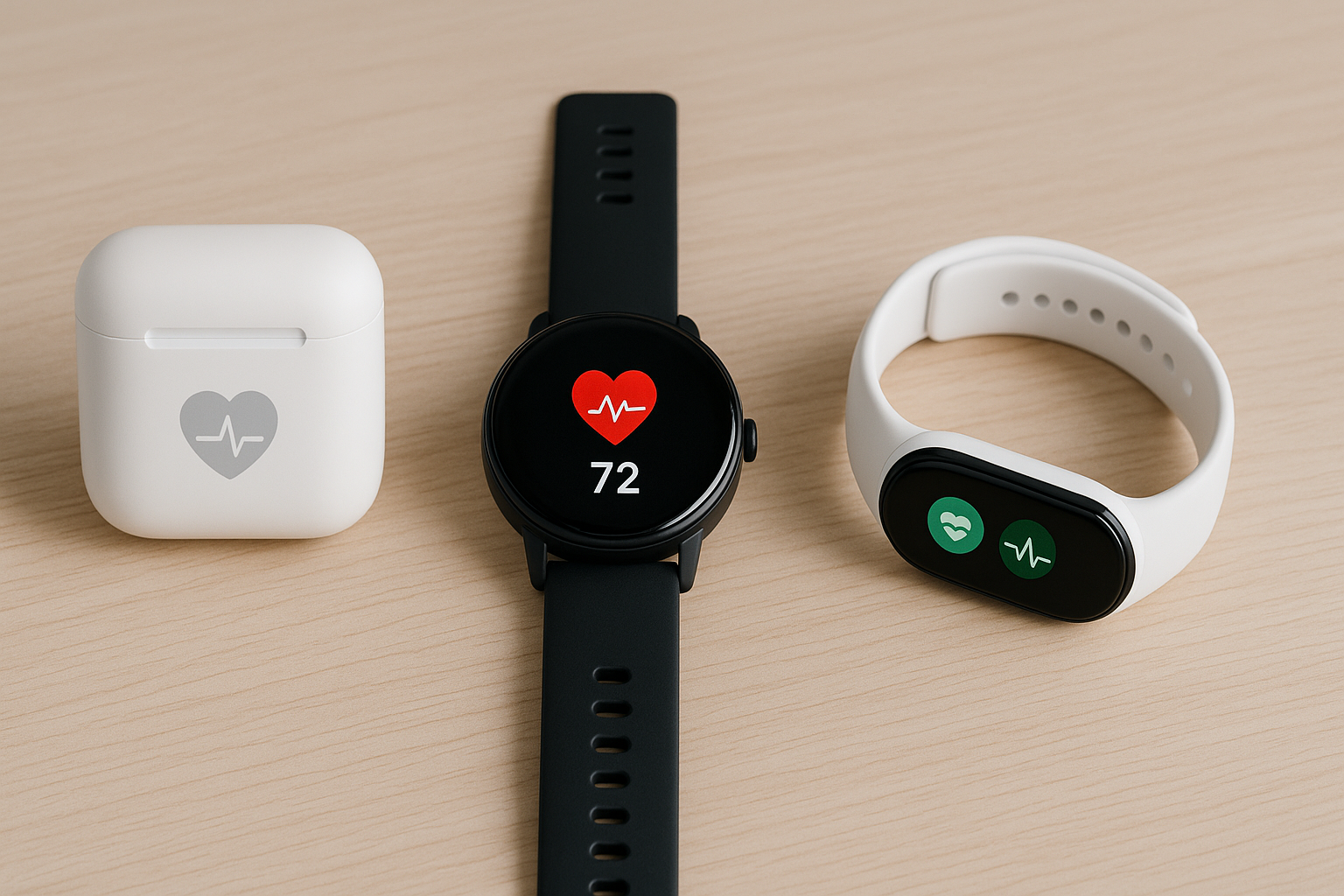



Best Health Wearables in 2026 – explore the smartest watches, rings, bands, and innovative sensors that track your heart, sleep, stress, and more so you can stay healthier, stronger, and more aware.
What Sleep Trackers Really Do in 2026
Best Sleep Trackers in 2026 aren’t just step counters with a “sleep score” slapped on top. They’re small health labs on your wrist or finger, combining motion sensors, heart-rate data, and clever algorithms to paint a picture of your night.
How modern sleep trackers measure your night
Most consumer sleep trackers use a mix of:
- Accelerometers – detect movement to spot when you’re likely awake or asleep
- Optical heart-rate sensors (PPG) – track pulse and heart-rate variability (HRV)
- Skin temperature sensors – pick up nightly temperature shifts
- SpO₂ sensors – estimate blood oxygen drops that can hint at breathing issues
- Microphones or respiratory sensors (on some devices) – detect snoring or breathing patterns
Research over the last few years shows that many modern trackers can now rival or even outperform older “actigraphy” devices that were once the clinical standard for tracking sleep at home. Sleep Foundation+2PMC+2
They’re still not as precise as a full sleep lab test (polysomnography), but for everyday trends, they’ve become impressively useful.
What sleep trackers are good at (and not so good at)
Good at:
- Tracking bedtime and wake time trends
- Comparing good vs bad nights over weeks
- Estimating total sleep time and sleep efficiency
- Showing how habits (late dinners, workouts, screens) affect your sleep
- Giving coaching tips to nudge your routine
Not so good at:
- Exact sleep stages (light, deep, REM) – they estimate, and can be off
- Detecting short awakenings in the night (they often think you’re asleep) AASM+1
- Diagnosing sleep disorders like sleep apnea or insomnia
Some smartwatches can now screen for sleep apnea risk and breathing disturbances, especially from Apple and Samsung, but even those are not stand-alone medical tests. AASM+1
Who actually benefits most from sleep tracking
Sleep tech in 2026 is especially helpful if:
- You feel tired but don’t know why
- You’re an athlete or heavy exerciser trying to balance training and recovery
- You work shifts or travel a lot and want to manage jet lag
- You love data and habit tracking and want to gamify better sleep
If you have major symptoms (very loud snoring, choking at night, gasping, or extreme daytime sleepiness), a tracker can be a helpful companion, but you still need to talk to a doctor or sleep specialist.
Best Sleep Trackers in 2026: Quick Comparison Table
Here’s a simple overview of some of the Best Sleep Trackers in 2026 across rings, watches, bands, and non-wearables.
How to read this comparison table
- Type – Ring, watch, band, or non-wearable
- Ecosystem – Works best with iPhone, Android, or both
- Subscription – Ongoing monthly fee required for full features
- Best For – The type of person most likely to love it
| Device | Type | Ecosystem | Subscription? | Best For |
|---|---|---|---|---|
| Oura Ring 4 | Smart ring | iOS & Android | Optional/limited | Overall best sleep-first tracker |
| Samsung Galaxy Ring | Smart ring | Android (Samsung-first) | No / limited | Samsung and Android fans |
| WHOOP (4.0 / MG) | Band/strap | iOS & Android | Yes (membership-based) | Athletes & data lovers |
| Apple Watch Series 11 | Smartwatch | iOS only | No, but services optional | iPhone users who want “do everything” device |
| Apple Watch SE 3 | Smartwatch | iOS only | No | Budget-friendlier Apple sleep + fitness The Verge+1 |
| Samsung Galaxy Watch 8 / Ultra | Smartwatch | Android (Samsung-best) | No | Android users, especially Samsung owners AASM+1 |
| Garmin Venu 4 | Smartwatch | iOS & Android | No | Runners and multi-sport users who care about sleep Android Authority |
| Fitbit Charge 6 | Fitness band | iOS & Android | Some features behind Premium | Simple, light, long-battery sleep tracking Android Central+1 |
| Fitbit Versa 4 | Smartwatch | iOS & Android | Some features behind Premium | Smartwatch feel with solid sleep data Android Central+1 |
| Withings Sleep | Under-mattress mat | Works with most phones | No required | People who hate wearing devices to bed Sleep Foundation+1 |
Top Smart Rings for Sleep in 2026
Oura Ring 4 – the gold standard for sleep insight
The Oura Ring 4 appears on almost every “best sleep tracker” list for 2025, and it’s still a top pick heading into 2026. Multiple independent reviews place it at or near the top thanks to strong sleep accuracy, rich recovery metrics, and a polished app. Accio+5Wareable+5Sleep Foundation+5
Key strengths:
- Detailed sleep staging, HRV, resting heart rate, and temperature trends
- Clear readiness scores that turn data into simple advice
- Very comfortable – feels like a regular ring once you’re used to it
- Works with both iOS and Android
Things to know:
- You’ll pay a subscription for premium long-term insights (check current pricing in the app)
- Sleep stages are estimates, not lab-grade measurements
- If you hate rings, you won’t magically love this one
Best for: people who want sleep and recovery first, and don’t care much about having a screen.
Samsung Galaxy Ring – best for Samsung and Android fans
Samsung’s Galaxy Ring is the natural pick if you’re deep in the Galaxy ecosystem. It taps into the same Samsung Health platform as Galaxy Watches, offering:
- Sleep scoring and sleep coaching
- Stress and HRV-based insights
- Tight integration with Galaxy phones and watches Tom’s Guide+1
It’s ideal if you want a discreet sleep tracker that plays nicely with your phone, and you’re already using other Samsung devices.
Other notable rings: Ultrahuman, SleepOn, and more
If you like the idea of a ring but don’t want Oura or Samsung, there are growing alternatives:
- Ultrahuman Ring – emphasizes metabolism and performance markers, alongside sleep data Accio
- SleepOn-style rings – focus heavily on oxygen tracking and breathing patterns during sleep Nature
These can be great if you care about specific metrics (like blood oxygen drops) or want a different design or pricing model.
- CNET — Best Health Trackers
- Healthline — Wearable Health Devices
- Sleep Foundation — Sleep Trackers
- WHOOP — Health & Recovery Wearable
- Apple Watch Health Monitoring
- Fitbit — Official Site
- Garmin Health Wearables
- Polar — Fitness & Heart-Rate Devices
- Samsung Wearables
- CDC — Physical Activity Guidelines
Best Sleep Bands & Screenless Wearables
WHOOP (4.0 / MG) – for athletes and data nerds
WHOOP has become a favorite among athletes, trainers, and serious lifters. Reviews and independent testers consistently highlight WHOOP as one of the most detailed tools for tracking sleep, strain, and recovery. Sleep Foundation+2karpathy+2
Why people love WHOOP:
- Tracks sleep debt, time in bed vs time asleep, and consistency
- Deep recovery scoring based on HRV, resting heart rate, and more
- Worn as a band, but also compatible with bicep sleeves or clothing
- App gives specific suggestions (go to bed at X, adjust strain, etc.)
Trade-offs:
- WHOOP is membership-based – you pay a monthly or yearly fee instead of buying the hardware outright
- There’s no screen, so everything lives in the app
- It’s most valuable if you’re already training regularly and want to adjust your workload based on recovery
Budget-friendly bands and smaller brands
There are also cheaper strap-style trackers from various brands, often sold on marketplaces:
- Pros: Low upfront cost, basic sleep duration estimates, simple apps
- Cons: Less reliable validation, sparse updates, and weak long-term support
If you go this route, look for brands that:
- Offer regular app updates
- Have clear privacy policies
- Provide at least some documentation or support
Best Smartwatches for Sleep Tracking in 2026
Smartwatches are a strong choice if you want one device that covers sleep, fitness, notifications, and everyday use.
Apple Watch (Series 11 & SE 3) – best for iPhone users
For iPhone owners, the Apple Watch line remains a top choice for overall health and sleep tracking. Recent models add:
- Sleep tracking with bedtime schedules and sleep stages
- Breathing disturbance detection, which can hint at possible sleep apnea risk The Verge+1
- Tight integration with Health app, shortcuts, and iOS notifications
The Apple Watch Series 11 is the flagship, while the Apple Watch SE 3 keeps the essentials at a lower price, including sleep tracking, a temperature sensor helpful for certain trends, and strong app support. The Verge+1
If you want the Best Sleep Trackers in 2026 that also handle calls, messages, payments, and workouts in one device, Apple Watch is hard to beat—as long as you’re on iPhone.
Samsung Galaxy Watch 8 / Ultra – powerhouse for Android users
On the Android side, especially for Samsung phones, the Galaxy Watch 8 and Galaxy Watch Ultra stand out. They offer:
- Advanced sleep coaching and guidance
- Tracking of sleep timing, consistency, and overnight heart rate
- Screening features related to sleep apnea risk in some regions AASM+1
They also handle:
- GPS workouts
- Notifications
- Tap-to-pay and voice assistants
If you’re already using a Samsung phone and maybe a Galaxy Ring, this combo gives you a full Samsung Health experience from wrist to ring.
Garmin Venu 4 – balance of sleep and training
Garmin is often seen as “the runner’s brand,” but devices like the Garmin Venu 4 bring surprisingly strong sleep tracking plus Garmin’s famous training tools.
Highlights include:
- Automatic nap detection and detailed overnight data
- Sleep scores and body-battery style energy tracking
- Full Garmin training features: GPS, workout plans, and more Android Authority
This is perfect if you’re serious about running or multi-sport training but still want one of the Best Sleep Trackers in 2026 on your wrist.
Fitbit Charge 6 / Versa 4 – simple, focused sleep tracking
Fitbit has been a sleep-tracking pioneer for years, and that hasn’t changed. In guides to the best Fitbits, the Charge 6 and Versa 4 are still recommended for people who want a simple, battery-friendly device with good sleep insights. Android Central+2Android Central+2
You get:
- Sleep scores and stages
- Long battery life (often several days)
- Stress tracking, mindfulness tools, and heart-rate monitoring
Some advanced insights sit behind Fitbit Premium, but the free tier is enough for most people to get started.
Non-Wearable Sleep Trackers: Mats, Masks & More
Not everyone wants to wear something on their body all night. That’s where non-wearable trackers come in.
Withings Sleep and similar bed sensors
Devices like Withings Sleep slip under your mattress and track sleep using pressure and movement sensors. They estimate:
- Sleep duration and stages
- Heart rate trends
- Breathing disturbances and snoring patterns Sleep Foundation+1
These are ideal if:
- You hate wearing a ring, watch, or band
- You share a bed but want minimal disruption
- You want automatic tracking without remembering to put something on
Just note: if your mattress is very thick or you move a lot in your sleep, data can occasionally be less accurate.
Smart masks and headbands for power sleepers
Newer devices, such as smart sleep masks and EEG headbands, go even deeper by measuring brainwaves, not just movement. Some of these (like advanced smart masks mentioned in expert sleep tracker guides) aim to: Sleep Foundation
- Detect more accurate sleep stages
- Play sounds to encourage deep sleep
- Wake you during lighter sleep phases
These tend to be more expensive and slightly bulkier, so they’re best for people who:
- Are highly motivated to improve sleep
- Don’t mind wearing something on their face or head
- Want more experimental tech and can handle a bit of fiddling
How to Choose the Right Sleep Tracker for You
Start with your goals and your phone
A simple decision tree:
- Want maximum comfort and all-day wear? → Consider a ring
- Want one device for everything (fitness, calls, notifications)? → Get a smartwatch
- Hate wearing things but still want data? → Try an under-mattress mat
- Training hard and obsessed with recovery? → Try WHOOP or similar bands
Also, think about your phone:
- iPhone → Apple Watch, Oura Ring, WHOOP, Garmin, Fitbit all work well
- Android → Samsung Galaxy Watch, Galaxy Ring, Oura, WHOOP, Garmin, Fitbit
Budget, subscriptions, and hidden costs
Look beyond the sticker price:
- One-time purchase: most watches, rings, and mats
- Subscription-heavy: WHOOP (membership-only), plus optional subs for Oura, Fitbit, and some others Sleep Foundation+2Accio+2
Ask yourself:
- Will I still use this in 12 months?
- Am I okay paying every month for extra insights?
- Would a slightly cheaper, no-subscription device keep me just as engaged?
Comfort, style, and battery life
It doesn’t matter how “smart” a tracker is if you don’t actually wear it.
- RING: Great if you’re fine with jewelry and want something small
- WATCH: Great if you want a screen and all-day use
- BAND: Great if you prefer a lighter, sporty look
- MAT: Great if you don’t want anything on your body
Battery life also matters: some trackers last days or weeks, while full-power smartwatches may need daily charging.
The Accuracy Question: What Science Really Says
What studies show about modern sleep trackers
Recent research has compared consumer sleep trackers (rings, watches, under-mattress sensors) with lab-grade polysomnography:
- Many devices now perform similarly to or better than traditional actigraphy for total sleep time and sleep timing. Sleep Foundation
- Validation studies on multiple popular trackers show reasonable accuracy for sleep vs wake, though they still tend to overestimate total sleep and underestimate brief awakenings. AASM+4PMC+4MDPI+4
- Studies on smart rings like Oura and SleepOn show promising performance but also highlight that accuracy can drop in people with complex sleep disorders. Nature+1
Bottom line: the Best Sleep Trackers in 2026 are good enough for trends, habit tracking, and coaching—but not good enough to replace a full medical sleep study when one is needed.
When you should see a sleep specialist instead
Use a sleep tracker as a starting point, not a final answer. Talk to a professional if you notice:
- Very loud snoring, choking, or gasping during sleep
- Waking up with headaches or a very dry mouth
- Extreme daytime sleepiness, even after full nights
- Your tracker repeatedly flags low oxygen or severe irregularities
Organizations like the World Sleep Society and clinical experts recommend combining consumer tech with professional evaluation, not choosing one instead of the other. ScienceDirect+1
FAQs About Sleep Trackers in 2026
1. Are sleep trackers accurate enough to trust?
They’re accurate enough to trust for trends, like whether you’re going to bed later, sleeping longer on weekends, or improving your consistency. They’re not perfect for exact minutes of deep or REM sleep and cannot diagnose conditions like sleep apnea on their own.
2. Can a sleep tracker diagnose sleep apnea?
No. Some devices can screen for risk by spotting breathing disturbances or oxygen drops, but only a doctor-ordered sleep study can diagnose sleep apnea. If your device keeps warning about breathing issues or very low oxygen, use that as a reason to see a sleep specialist.
3. Is it better to get a ring, watch, band, or mat?
- Choose a ring if comfort and subtle style matter most.
- Choose a watch if you want health + notifications + fitness in one device.
- Choose a band if you want fitness and sleep with a smaller screen.
- Choose a mat if you never want to wear anything to bed.
The “best” choice is whatever you’ll consistently use.
4. Do I really need a subscription for good sleep tracking?
Not always. Many devices give basic sleep tracking for free, including Apple Watch, most Garmin devices, and Withings Sleep. Subscriptions usually unlock more detailed trends or coaching, but they’re optional for most people.
5. Will wearing a device all night affect my sleep?
Most people adapt quickly to rings or bands and stop noticing them after a few nights. If you’re sensitive, a soft band or an under-mattress mat might be more comfortable than a bulky watch.
6. How can I use the data to actually sleep better?
Don’t obsess over a single “bad” night. Instead:
- Watch weekly averages for sleep time and consistency
- Adjust one habit at a time (bedtime, caffeine, screens, exercise)
- Use the tracker’s coaching tips as experiments, not rules
- Check in every few weeks to see whether your changes improved your score
7. Are there privacy risks with sleep trackers?
Yes, any connected device that tracks health data raises privacy questions. Look for brands with:
- Clear privacy policies
- Options to opt out of data sharing
- Strong track record of security updates
You can also consider devices that allow more local processing and less cloud dependence.
Final Thoughts: Using Data to Actually Sleep Better
The Best Sleep Trackers in 2026 aren’t magic sleep wands. They’re mirrors—they show you how you’re really sleeping, night after night, in a way that’s hard to ignore.
If you:
- Pick the right type (ring, watch, band, or mat)
- Choose something that fits your budget and lifestyle
- Use the data to tweak your habits instead of stressing over every number
…then a sleep tracker can become one of the most powerful health gadgets you own.
Start simple: track for a few weeks, notice patterns, and change just one habit—earlier bedtime, less late-night scrolling, or more consistent wake time. Let the data guide you, not control you.
All Rights Reserved © 2026