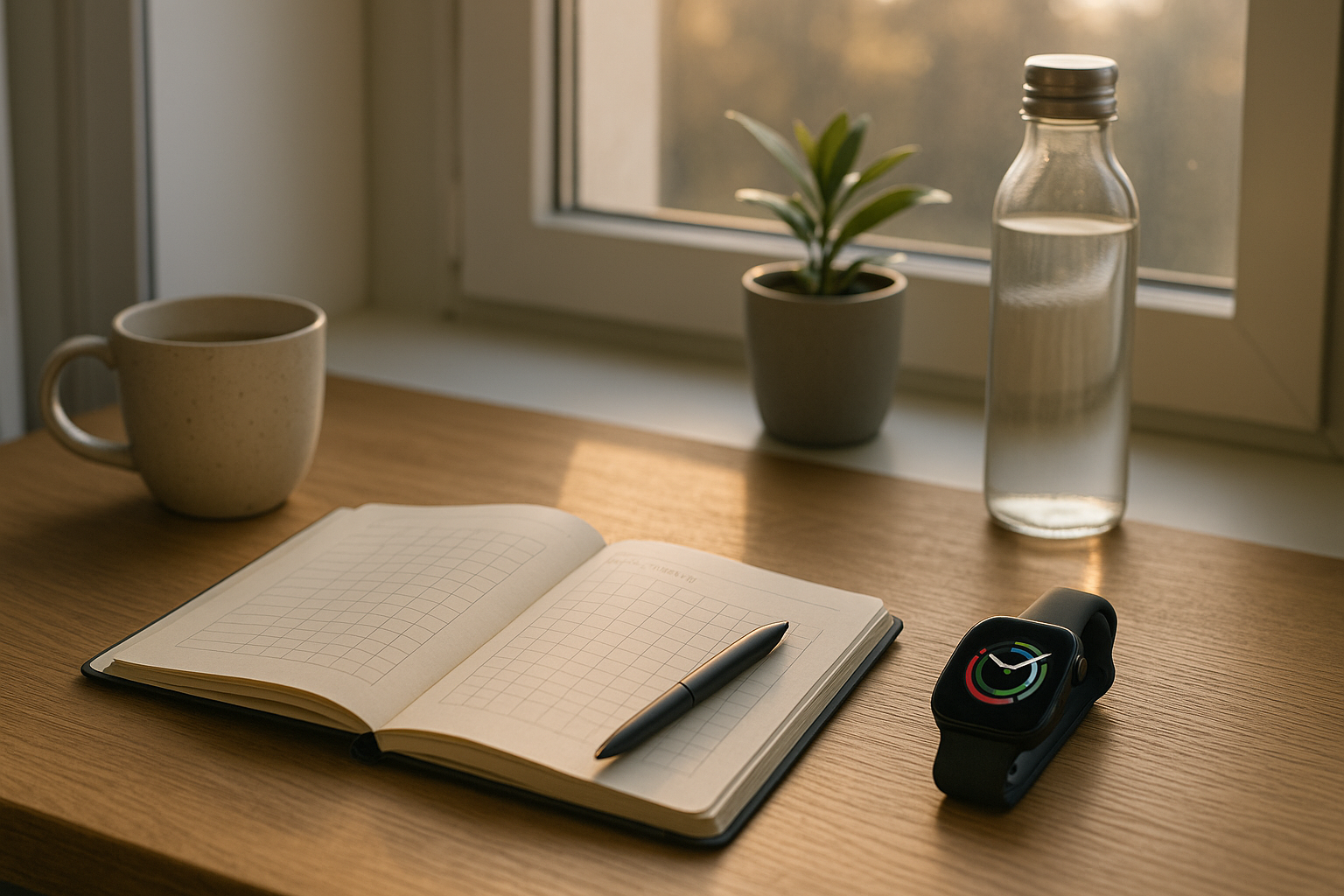



Learn How to Build Better Habits in 2026 with a simple 6-step system, environment design, AI nudges, and 30-day starter plans. Make routines that fit your life—and keep them.
Good habits aren’t about heroic willpower; they’re about smart design. In 2026, we have clearer behavioral science and better tools to make change feel natural. This guide shows you how to build better habits in 2026 using a practical framework, tech that supports (not nags), and weekly reviews that keep momentum going.
The 6-Step Habit Builder (2026 Edition)
Step 1: Clarify the “why” (value → metric)
Write one sentence: I value X, so I’ll practice Y to feel Z.
Then attach a metric you control (minutes walked, pages read, sessions practiced). Clarity beats intensity.
Step 2: Shrink the starting line (2-minute rule)
Make the first action so small it’s hard to skip: lace shoes, open the doc, start the timer. Tiny starts lower friction and dodge perfectionism.
Step 3: Stack on reliable cues (implementation intentions)
Tie the habit to a stable anchor:
- “After I make coffee at 7:15 a.m., I’ll stretch for 2 minutes.”
- “After lunch, I’ll review my to-do list for 3 minutes.”
Consistency > clock time; use the same anchor daily.
Step 4: Make it obvious, easy, attractive, satisfying
- Obvious: Put the book on your pillow; leave dumbbells next to the desk.
- Easy: Pre-load apps; one-tap timers; clothes prepped.
- Attractive: Pair with music/podcasts; join a friend.
- Satisfying: Immediate checkmark, tiny reward, progress bar.
Step 5: Track lightly (friction-free logs)
Use a simple method you’ll sustain: a wall calendar with X’s, a notes widget, or a one-tap app. Track done/not done plus a one-line note (energy, time of day). Don’t over-log.
Step 6: Review weekly; adjust, don’t quit
Every 7 days, ask:
- What worked?
- Where did friction show up?
- What 1 tweak makes next week easier?
Progress is an optimization loop, not a pass/fail test.
Habit Tools in 2026: Apps, Wearables, AI
Picking tech you’ll actually use
Choose tools that match your style:
- Minimalists: paper habit grid, phone reminders.
- Data lovers: wearable + dashboard to track sleep, HRV, steps.
- Busy pros: AI assistant that blocks calendar times and recaps in a message.
Using reminders, streaks, and gentle fail-safes
- Reminders: stack 1–2 well-timed prompts (morning anchor + evening check).
- Streaks: motivating, but fragile—focus on consistency rate (e.g., 5 of 7).
- Fail-safes: pack gym shoes at the door, keep a spare charger, set a “bedtime winds-down” scene on your phone.
Environment Design: Make Good Habits Inevitable
Visual cues, placement, and friction design
- Put fruit at eye level; hide snacks.
- Keep your water bottle on the desk and refill at each break.
- Place the guitar on a stand, not in a case.
- Move distracting apps off the home screen; schedule Focus Modes during deep work.
Social accountability: friends, groups, public logs
- Create a 3-person chat for daily check-ins.
- Join a 30-day challenge for your habit.
- Post a weekly summary (what you did + what you learned). The goal is support, not shame.
Break Bad Habits (Without Willpower Battles)
Invert the 4 laws: invisible, hard, unattractive, unsatisfying
- Make the cue invisible: remove triggers from sight.
- Make it hard: add login steps or blockers during certain hours.
- Make it unattractive: list true costs (sleep loss, mood dips).
- Make it unsatisfying: add a friction tax (donate $5 if you break your own rule).
Replacement routines that feed the same reward
Bad habits stick because they satisfy a need (comfort, novelty, break). Keep the reward, swap the routine:
- Stress → 60-second box breathing.
- Boredom → 5 pushups or a 5-minute walk.
- Craving novelty → read 2 pages or learn one chord.
Energy, Sleep, and Stress: The Hidden Habit Multipliers
Habits crumble when energy is low. Protect the basics:
- Sleep: Consistent bedtime, dark/cool room, no caffeine late.
- Movement: 6–8k steps daily + 2 short strength sessions per week.
- Nutrition: Protein at breakfast; water with every meal.
- Sunlight: Morning light for 5–10 minutes improves circadian rhythm.
- Breath breaks: 1–2 minutes of slow nasal breathing reduces stress spikes.
30-Day Starter Programs (Pick One)
Keep goals simple, measurable, and identity-based. Use the 2-minute start, then expand.
Focus & Deep Work
- Cue: After coffee, start a 25-minute timer.
- Routine: One “Most Important Task,” phone on Focus Mode.
- Reward: Quick stretch + checkmark.
- Progression: Week 1 (1 session/day), Week 2 (2), Week 3 (2 + 1 afternoon), Week 4 (3/day).
Fitness & Health
- Cue: Put shoes by the door at night.
- Routine: 10-minute walk after lunch, add 2 × 10 squats/pushups every other day.
- Reward: Playlist, sunlight, streak grid.
- Progression: Add 5 minutes walking each week; introduce one strength circuit by Week 3.
Money & Minimalism
- Cue: After dinner, 5-minute money check.
- Routine: Track one expense, move $5–$20 to savings, clear 5 items from a drawer.
- Reward: Progress bar toward a micro-goal (e.g., $250 buffer).
- Progression: By Week 4, run a 30-minute budget reset on Sundays.
Troubleshooting: Plateaus, Travel, Bad Weeks
If you miss 1 day… the “Never Miss Twice” rule
Missing once is normal; missing twice starts a new habit (skipping). Bounce back with the 2-minute version the next day.
Travel kits and portable cues
Pack a mini-kit (jump rope, resistance band, Kindle, earplugs). Keep the same cue (after breakfast / before bed) even if the location changes. Shrink the habit, keep the identity.
Quick Reference Table
| Habit Element | Do This | Avoid This |
|---|---|---|
| Goal | Identity + small metric | Vague wishes |
| Cue | Stack on daily anchor | Random times |
| Start | 2-minute version | “All or nothing” |
| Ease | Pre-set tools & layouts | High setup friction |
| Tracking | One-tap or simple grid | Complex spreadsheets |
| Review | Weekly tweak | Shame spiral |
FAQs: How to Build Better Habits in 2026
1) How long does it take to form a habit?
It varies by difficulty and context. Plan for 30–90 days. Focus on repetitions, not calendar days.
2) Are streaks helpful or harmful?
Helpful when flexible. Track a consistency rate (e.g., 20 of 28 days) so one miss doesn’t derail you.
3) Which habit app is “best”?
The best app is the one you’ll open. Choose the lowest-friction option for your style: paper grid, phone widget, or wearable tap.
4) What if I’m too busy?
Shrink the scope (2-minute start), keep the cue, and protect energy (sleep + sunlight). Small daily wins beat rare perfect days.
5) How do I stop doom-scrolling at night?
Set a bedtime scene: devices on a charger in another room, lamp + book by the bed, and a Focus Mode from 9 p.m. onward.
6) Can AI really help with habits?
Yes—AI can schedule blocks, summarize progress, and nudge you at the right moment. You still choose the goal and approve the plan.
7) What if I fall off for a week?
Restart with the 2-minute version. Do one win today, then stack tomorrow.
8) How many habits should I start at once?
One keystone habit is plenty. After 4 weeks of 70% consistency, add another.
Conclusion & Next Steps
Learning how to build better habits in 2026 is about designing loops that fit your real life. Start tiny, stack on dependable cues, make the action easy and satisfying, and review weekly. Use tech as scaffolding—not a crutch—and protect sleep and energy so momentum survives busy seasons. Pick one 30-day program, set your 2-minute start, and cast the first vote for the identity you want.
Helpful resource: For a research-first primer on behavior change, see the American Psychological Association’s habit overview: https://www.apa.org/topics/behavioral-research (great science-backed tips).
- Numbeo — Cost of Living Data
- Expatistan — COL Comparisons
- OECD Migration & Mobility
- Eurostat — European Statistics
- IEA Global Energy Review
- U.S. Travel Advisory & Safety Data
- Schengen Visa Info
- World Bank — Global Data
- United Nations — Global Issues
- IMF — Economic Data
All Rights Reserved © 2026