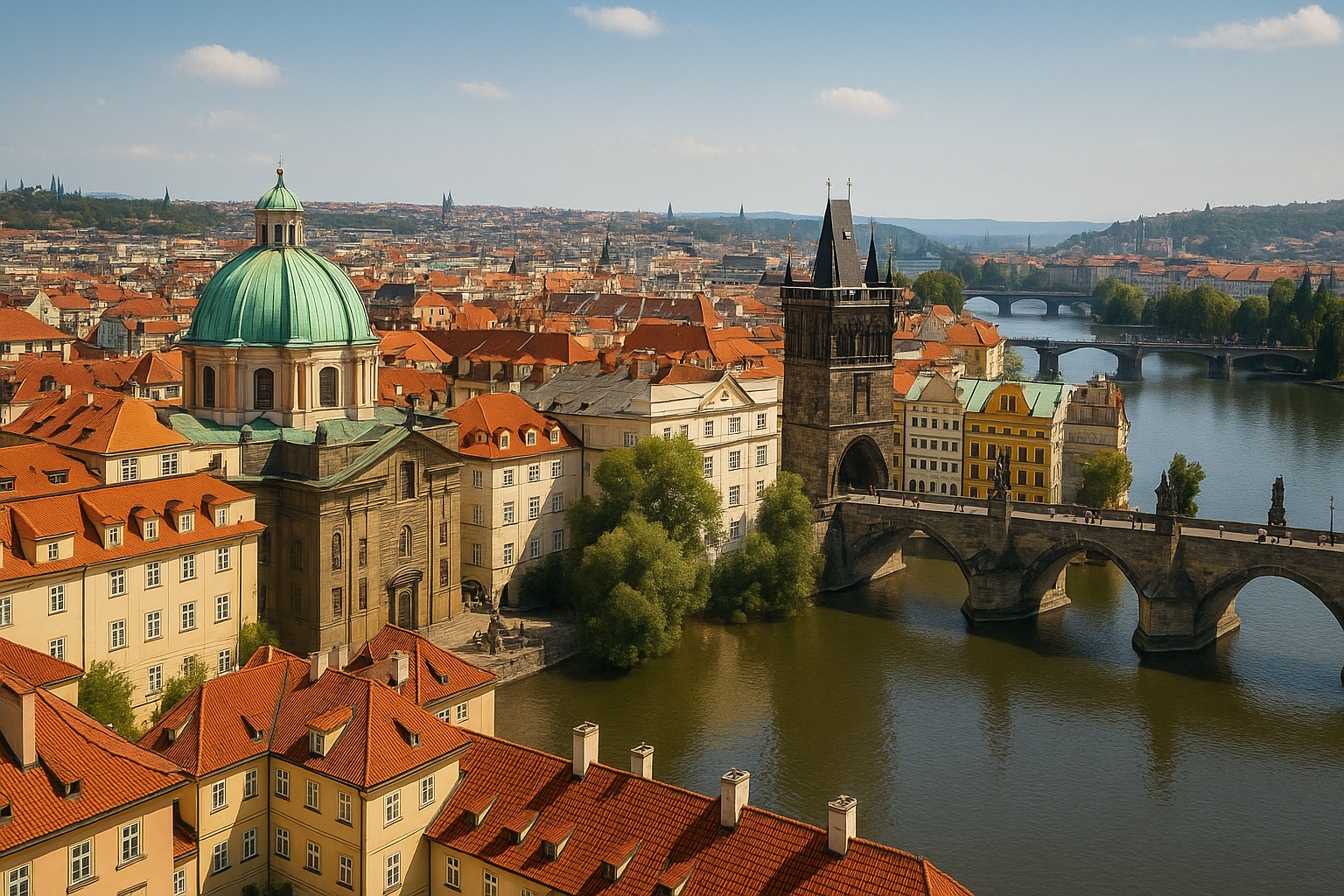



Cheapest Places to Live in Europe in 2026: Moving abroad doesn’t have to break the bank. Many Central, Eastern, and Southern European countries still offer low prices, good safety, and growing expat communities. Recent cost-of-living data shows that Romania, Bulgaria, Hungary, Poland, and the Baltic states are well below the EU price average, along with candidate countries like Albania, Serbia, and Bosnia and Herzegovina. euronews
In this guide, we’ll walk through the Cheapest Places to Live in Europe in 2026, share updated cost-of-living (COL) snapshots, and explain which visas might fit you as an expat, digital nomad, or early retiree.
If you are comparing affordable European cities for travel rather than long-term living, take a look at our guide to underrated European cities to visit on a budget in 2025.
How We Picked the Cheapest Places to Live in Europe in 2026
Data Sources: COL Indexes, Rents, and Local Prices
To keep things grounded, this overview combines:
- Cost-of-living indexes and rent comparisons from sites like Numbeo and Expatistan Numbeo+1
Articles listing the cheapest EU countries (Bulgaria, Poland, Romania, Portugal, Hungary, Croatia, Latvia, Lithuania, etc.) Laure Wanders
Updated pieces on cheap European countries and cities in 2025–2026 Accio+1
Country-specific cost breakdowns, such as Albania and Romania Zenith Travel Albania+1
Prices change fast, but patterns are clear: most of the cheapest places to live in Europe are in Central and Eastern Europe, plus some smaller cities in Portugal and the Balkans.
Europe’s affordability story is closely tied to changing mobility trends, and the rise of digital nomad visas in 2026 shows why more remote workers are looking for flexible long-term bases.
If you’re comparing Europe with global low-cost destinations, our roundup of the cheapest digital nomad-friendly countries in 2026 broadens the picture considerably.
Readers who want city-specific relocation ideas should also explore the best European cities to move to in 2026 for a more urban-focused shortlist.
If your goal is balancing low expenses with remote work practicality, our guide to the top digital nomad cities to live in 2026 can help you compare cost against convenience.
What “Cheap but Livable” Really Means in 2026
For this article, “cheap but livable” usually means:
- A single person can live modestly for €800–€1,200/month in smaller cities (excluding luxury travel).
- A comfortable single expat budget is €1,200–€1,800/month, including a one-bedroom apartment, eating out sometimes, and basic private health insurance.
- A couple can often live well on €1,600–€2,200/month in many of these cities.
Of course, exact numbers depend on your lifestyle and currency swings.
10 Cheapest Places to Live in Europe in 2026 (Country + City Examples)
1. Romania – Timișoara, Iași, Cluj-Napoca
Romania regularly ranks among the cheapest European countries for expats, with many sources quoting $500–$900 per month in basic expenses (excluding high-end housing). Global Citizen Solutions
- Why it’s cheap: Low food and transport prices; rents outside Bucharest are still reasonable.
- Who it suits: Remote workers and students who want lively university cities, decent internet, and lots of cafés.
- City notes:
- Timișoara – pretty historic center, strong IT scene.
- Iași – affordable, very student-friendly.
- Cluj-Napoca – pricier but buzzing and still cheaper than Western Europe.
2. Bulgaria – Plovdiv, Varna, Burgas
Bulgaria appears on almost every “cheapest EU countries” list, with prices well below the European average. Laure Wanders+1
- Why it’s cheap: Low rents outside central Sofia, very affordable groceries, cheap domestic travel.
- Highlights:
- Plovdiv – artsy, charming, and less crowded than Sofia.
- Varna & Burgas – Black Sea cities with mild climates and lower costs off-season.
For €1,000–€1,400/month, a single expat can usually live quite comfortably.
3. Hungary – Budapest, Debrecen
Articles on Europe’s most affordable expat destinations often put Hungary right near the top. Relocate.me
- Budapest is more expensive now but still relatively cheap compared to Western capitals.
- Debrecen and smaller cities are quieter and more affordable.
- Digital-nomad angle: Hungary is often cited among the cheapest digital nomad visas in Europe, thanks to moderate income requirements and costs. Nomads Embassy+1
4. Poland – Kraków, Łódź, Gdańsk
Poland’s big cities have risen in price but remain good value for what you get.
- Kraków – beautiful old town, huge tourist and student scene.
- Łódź – often cheaper, more industrial/creative vibe.
- Gdańsk – seaside charm with somewhat higher rents.
Recent rankings still show Poland below many Western countries in COL, and some lists place Warsaw and other Polish cities among Europe’s cheaper major hubs. Accio+1
5. Portugal – Braga, Coimbra, Portimão
Portugal isn’t as “dirt-cheap” as it once was, especially in Lisbon and Porto, but smaller cities like Braga and Coimbra remain relatively affordable. Laure Wanders+1
- Why expats love it: Mild climate, friendly culture, good food, strong public transport.
- Digital-nomad visas: Portugal has become famous for attractive residency options, from digital nomad permits to new golden-visa-style investment funds. Condé Nast Traveler+1
Expect a comfortable solo budget around €1,500–€2,000/month in these smaller cities in 2026.
6. Croatia – Zagreb, Split
Croatia is no longer ultra-cheap, but outside of peak summer, it’s still good value.
- Zagreb – more affordable year-round, strong café culture.
- Split – costs spike in summer but drop in winter.
- Visa edge: Croatia’s digital-nomad visa is popular because remote workers can often avoid local income tax during their stay, and many sources highlight it as both affordable and straightforward. Relocate.me+2Get Golden Visa+2
7. Albania – Tirana, Durrës
Recent guides note that Albania remains one of Europe’s most affordable countries, with comfortable living often possible on €1,000–€1,500/month for a single person. Zenith Travel Albania+2Wise+2
- Tirana – colorful, growing capital with lots of cafés and nightlife.
- Durrës – coastal city close to Tirana and the airport.
- Why it’s popular: Low rent, cheap local food, Mediterranean vibe without Mediterranean prices.
8. Serbia – Belgrade, Novi Sad
Serbia sits outside the EU but is popular with budget-minded expats and nomads.
- Belgrade – lively nightlife, low prices, big international community.
- Novi Sad – smaller, greener, and often cheaper than Belgrade.
Recent cost-of-living studies mention Serbia as a place where young expats can stretch their budget far compared to Western Europe. Job Squad+1
9. Bosnia & Herzegovina – Sarajevo, Mostar
Bosnia and Herzegovina is still under the radar but very affordable.
- Sarajevo – mountain-ringed capital with rich history and low COL.
- Mostar – famous old bridge, smaller expat community but lower rents.
EU statistics confirm that candidate countries like Bosnia and Herzegovina have significantly lower price levels than the EU average. euronews
10. Baltic States – Riga (Latvia) & Vilnius (Lithuania)
The Baltics have modern infrastructure with relatively low costs:
- Lists of cheapest EU countries frequently name Latvia and Lithuania. Laure Wanders+1
- A 2025 ranking of cheap cities shows Riga and Vilnius among Europe’s lowest cost-of-living urban centers. Accio
While not rock-bottom cheap anymore, they balance affordability, safety, and good digital infrastructure, making them strong choices for remote workers.
Updated Cost of Living Snapshots (2026 Estimates)
(All numbers are broad estimates for a single person in 2026, based on 2025 data plus mild inflation. They are meant as planning ranges, not exact quotes.)
Typical Monthly Budgets for a Single Expat
| Country & City (example) | Frugal (room in flatshare, cook at home) | Comfortable (1-bed, eating out sometimes) |
|---|---|---|
| Tirana, Albania | ~€800–€1,000 | ~€1,200–€1,500 Zenith Travel Albania+1 |
| Timișoara, Romania | ~€700–€900 | ~€1,100–€1,400 Global Citizen Solutions+1 |
| Plovdiv, Bulgaria | ~€700–€900 | ~€1,100–€1,400 Laure Wanders+1 |
| Budapest, Hungary | ~€900–€1,100 | ~€1,300–€1,700 Relocate.me |
| Kraków, Poland | ~€850–€1,050 | ~€1,300–€1,800 Laure Wanders+1 |
| Braga, Portugal | ~€1,000–€1,300 | ~€1,500–€2,000 Laure Wanders+1 |
These budgets include typical rent, local transport, groceries, basic healthcare or insurance, and occasional leisure—but not high-end travel or luxury shopping.
Housing and Rent Comparison
- Albania, Serbia, Bosnia: Often the cheapest rents in this whole list.
- Romania, Bulgaria, Poland, Hungary: EU members with much lower rents than Western Europe, especially outside capitals. Laure Wanders+1
- Portugal & Croatia: Higher rents in tourist hotspots, but manageable in smaller inland cities and in off-season.
Hidden Costs: Health Insurance, Transport, and Taxes
- Health insurance: Private international health insurance can cost €60–€150/month depending on age and coverage. Some national systems are accessible once you become a resident.
- Transport: Public transport in these countries is generally cheap; many cities offer monthly passes for €20–€40.
- Taxes: If you work remotely, check whether your chosen visa makes you a tax resident — some digital nomad visas (notably Croatia’s) reduce or delay local income tax, while others don’t. Get Golden Visa+1
Always speak to a local accountant or official source before making tax decisions.
Cheapest Places to Live in Europe in 2026 Visa & Residency Paths for Cheap European Countries
⚠️ Important: Visa rules change often. Use this section as a starting guide only and always confirm details with the consulate or immigration office of the country you’re interested in.
Digital Nomad Visas (Portugal, Croatia, Hungary, and More)
Several of the cheapest countries in this guide offer digital-nomad-style visas:
- Hungary, Malta, Portugal, Croatia are listed among Europe’s cheapest digital nomad visas, requiring under ~€3,000/month in income. Nomad Capitalist+3Nomads Embassy+3GigSky+3
- Croatia stands out because its nomad visa exempts many applicants from local income tax, at least for the visa period. Get Golden Visa
- Spain, Estonia, Greece, Latvia also run digital nomad or remote-worker visas, with varying income thresholds. Nomad Capitalist+1
These visas usually:
- Last 1–2 years (sometimes renewable)
- Require proof of remote income and health insurance
- Do not allow you to work for local employers without extra permits
Long-Term Residence for Non-EU Citizens
If you’re not from the EU/EEA, you may look at:
- Student visas (cheap in places like Poland, Romania, Hungary)
- Work visas (sponsorship from a local employer)
- Retirement or passive-income visas in Portugal, Spain, and others
- Investment or golden visas (e.g., updated Portuguese funds) Condé Nast Traveler
These often lead to multi-year residence permits and, after several years, potential permanent residency or citizenship.
EU/EEA Citizens: Freedom of Movement Advantages
If you hold an EU/EEA passport, you can usually:
- Move and live in other EU states with minimal paperwork
- Register your address and join local health systems after arrival
- Work for local employers without a separate work visa
For EU citizens, the hardest part is usually bureaucracy, not immigration.
How to Choose Your Best Cheap European Base in 2026
Matching Lifestyle: Beach, City, or Mountain?
- Beach vibes: Albania’s coast, Portugal’s Algarve, Croatia’s Dalmatian coast.
- City culture: Budapest, Kraków, Cluj, Belgrade, Riga.
- Nature & mountains: Romania (Transylvania), Bulgaria (Rila & Pirin), Bosnia (around Sarajevo).
Internet, Coworking, and Remote Work Readiness
- All the countries in this guide have solid broadband and 4G/5G coverage in major cities.
- Coworking spaces are common in Budapest, Kraków, Porto/Braga, Cluj, Belgrade, and Riga; smaller cities may rely more on cafés.
Safety, Language, and Culture Fit
- Most of these countries are considered safe for everyday life, though you should still follow normal city precautions.
- English is widely spoken in younger and urban populations, especially in the Baltics, Portugal, Croatia, and tech hubs like Budapest and Cluj.
- Learning basics of the local language will make your life cheaper (and more enjoyable).
Sample 2026 Budgets: Frugal vs. Comfortable Life
Under €1,000/Month (Tight but Possible)
Best suited to Tirana, Novi Sad, Iași, Plovdiv, or Sarajevo with a flatshare:
- Room in shared flat: €250–€350
- Groceries & home cooking: €200–€250
- Eating out & cafés: €100–€150
- Transport & phone: €60–€90
- Misc (gym, small trips, streaming): €80–€120
You’ll need to budget carefully, but it’s realistic for a lean digital nomad or student.
Around €1,500–€2,000/Month (Comfortable Solo)
Good for almost all cities in this guide, including Braga, Budapest, Kraków, or Riga:
- One-bedroom apartment: €500–€800 (more in prime neighborhoods)
- Groceries: €250–€300
- Eating out and social life: €200–€300
- Transport, phone, internet: €80–€120
- Health insurance: €60–€150
- Travel & extras: €200–€300
At this level, life feels comfortable but not ultra-luxury.
FAQs About the Cheapest Places to Live in Europe in 2026
1. What is the single cheapest country to live in Europe in 2026?
There’s no absolute winner, but Romania, Bulgaria, Hungary, and Albania consistently appear at the very bottom of European price tables, along with some Baltic states and Balkan candidates like Serbia and Bosnia. Global Citizen Solutions+3Laure Wanders+3euronews+3
2. Can I really live in Europe on €1,000 a month?
Yes, in smaller cities and towns in places like Albania, Serbia, Bosnia, Romania, and Bulgaria—especially if you share a flat and don’t travel constantly. In Western Europe or big capitals, €1,000/month would be very hard.
3. Which cheap European countries offer digital nomad visas?
As of 2025–2026, Croatia, Portugal, Spain, Greece, Estonia, Hungary, Malta, Latvia, and others offer versions of digital-nomad or remote-worker visas, with Hungary, Malta, Portugal, and Croatia often cited among the cheapest and easiest. Nomad Capitalist+3Nomads Embassy+3GigSky+3
4. Are these cheap countries still safe?
Yes, most countries in this list have moderate to high safety scores by European standards. Petty theft can happen in busy areas, but violent crime rates are generally low. Always check the latest travel advisories from your government.
5. How stable are prices? Could these places stop being cheap?
Prices across Europe have risen since 2022, and some “secret” cheap spots (like parts of Portugal and Croatia) are getting more expensive as they become popular with expats. But Central and Eastern European countries still sit below EU averages, so they’re likely to remain relatively affordable even if costs creep up. euronews+1
6. Do I have to pay tax in the country I move to?
Maybe. It depends on:
- Your visa type
- How many days per year you stay
- Your home country’s tax treaty
Some digital nomad visas (e.g., Croatia’s) reduce local income tax, while others do not. Always check with a qualified tax advisor or local authority. Get Golden Visa+1
7. Where should I start if I’m completely new to moving abroad?
Pick 2–3 countries from this guide that match your climate and lifestyle preferences. Then:
- Check current visa rules on the official government site.
- Use COL tools like Numbeo or Expatistan to compare cities. Numbeo+1
- Join expat or digital-nomad groups for those locations to ask real-world questions.
Conclusion: Picking Your 2026 European Home Base
The Cheapest Places to Live in Europe in 2026 are not just about saving money. They’re about finding good value — places where your budget stretches further and you enjoy a rewarding lifestyle.
From Romania’s university cities to Albania’s coastline, from Hungary and Poland’s lively hubs to the quiet charm of Croatia, Portugal, and the Baltics, you have many options. Combine updated COL research with visa planning, and you can design a life in Europe that’s affordable, flexible, and exciting.
For deeper cost comparisons, you can also explore tools like Numbeo and Expatistan, which let you plug in your own spending style and compare it across cities. Numbeo+1
- Numbeo Cost of Living Index
- Expatistan Cost of Living Comparison
- Schengen Visa Information (Official)
- World Bank Data (Economy & Prices)
- OECD Economic Outlook
- Statista — Europe Market & Price Data
- Euronews Travel
All Rights Reserved © 2026