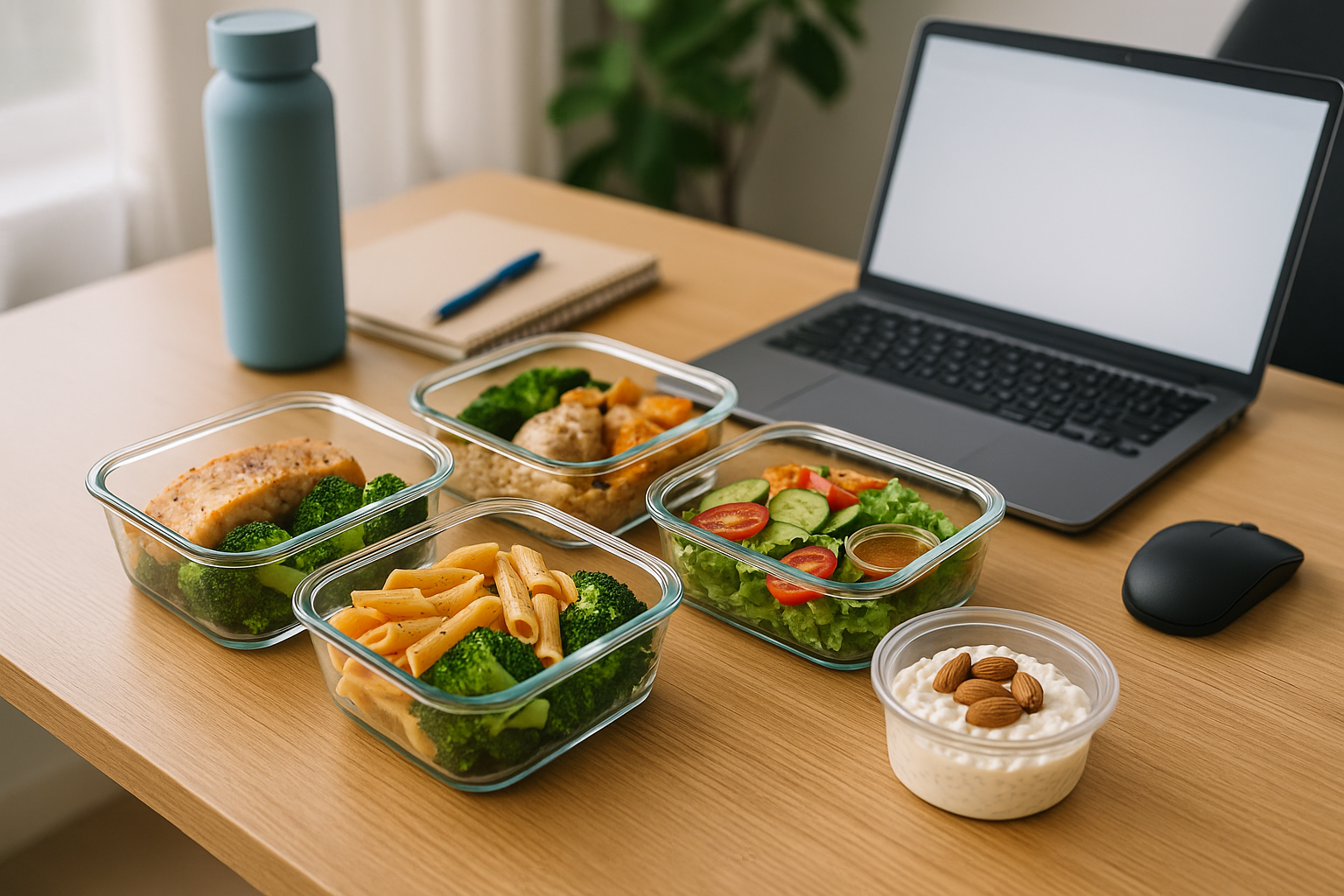



Healthy meal prep for remote workers is the simplest way to eat better, save time, and stay focused during long work blocks. In this guide, we’ll break down healthy meal prep for remote workers into easy steps you can repeat every week.
Why healthy meal prep for remote workers matters in 2025
Working from home saves commute time but can wreck routines. The fridge is near, meetings run long, and “I’ll cook after this call” turns into takeout. Healthy meal prep for remote workers fixes that with one decision window per week: plan once, shop once, batch-cook twice, and eat well all week. The results? Predictable energy, fewer decisions, and more time for deep work (and your life).
What is healthy meal prep for remote workers?
Healthy meal prep for remote workers means planning a weekly menu, batch-cooking proteins and vegetables, and portioning balanced meals into containers so lunch and dinner are ready in minutes. With healthy meal prep for remote workers, you reduce decisions, cut takeout, and keep steady energy for deep work.
The 5 pillars of remote-work nutrition
1) Balanced macros made simple
Aim for the “1-2-3 plate”: 1 part protein, 2 parts colorful veg, 3 halves of smart carbs & healthy fats (i.e., a fist of whole grains or tubers + a thumb of fats). This keeps blood sugar steady during long work blocks.
2) Smart calories & portion control
Use 8×6″ glass containers for lunches (about 450–650 kcal) and 10×7″ for dinners (600–800 kcal). A digital kitchen scale removes guesswork—portion once, reheat fast.
3) Fiber, color, and micronutrients
Choose at least 4 colors daily (greens, reds, oranges, purples). Think spinach, tomatoes, carrots, blueberries. Color = micronutrients + satiety.
4) Hydration & electrolytes
Keep a 1-liter bottle on your desk and finish 2–3 fills daily. Add a pinch of salt + lemon during heat waves or long focus sprints.
5) Timing meals for focus & energy
Front-load protein & fiber at breakfast; keep lunch light if you present in the afternoon; save bigger carbs for post-work training or dinner.
Pantry & freezer setup for speed (the 20 items you’ll use weekly)
Canned beans (black, chickpeas), tuna/salmon, diced tomatoes, coconut milk, oats, brown rice, whole-wheat pasta, quinoa, olive oil, tahini, soy sauce/tamari, salsa, frozen berries, frozen spinach, mixed veg medley, edamame, chicken thighs, extra-lean ground turkey, firm tofu/tempeh, and eggs. With these, you can build dozens of meals without emergency grocery runs.
For portion balance, see the Harvard Healthy Eating Plate. For storage times and reheating safety, check the FoodSafety.gov Cold Food Storage Chart.
Gear that makes meal prep effortless
Essentials
- Glass containers (airtight; 2 lunch size + 2 dinner size per person)
- Half-sheet pans + silicone mats
- 12″ nonstick skillet and 5–6 qt pot
- Digital kitchen scale + measuring cups
- Instant-read thermometer
Nice-to-have time savers
- Instant Pot or multi-cooker for rice, stews, and beans
- Air fryer for crispy veg & protein in minutes
- Blender for smoothies and sauces
Step-by-step system: from plan → shop → cook → store
Plan in 15 minutes (theme days + templates)
Assign simple themes: Mon bowls, Tue pasta, Wed sheet-pan, Thu stir-fry, Fri freezer-friendly. Use a rotating template so you change flavors, not the workflow.
Shop once, prep twice
Do a big shop on Saturday. Batch-cook Sunday for Mon–Wed, then a 10-minute midweek mini-prep (Thu–Fri toppings, fresh herbs, and a second protein).
Batch-cook workflow (90-minute weekend sprint)
- Oven to 425°F / 220°C; start sheet-pan veg + chicken thighs.
- Rice/quinoa in cooker; pasta water on.
- Skillet: turkey or tofu with taco seasoning.
- Blender: 2 sauces (lemon-tahini, cilantro-lime yogurt).
- Portion into containers, label, cool, and store.
Safe storage & reheating basics
- Cool cooked food within 2 hours; refrigerate at ≤ 40°F / 4°C.
- Most cooked dishes last 3–4 days in the fridge; freeze for longer.
- Reheat to 165°F / 74°C for safety.
(See official guidance from the USDA Food Safety site for time/temp details.)
Healthy meal prep for remote workers: 7-day sample plan
Breakfast rotation (choose one daily)
- Overnight protein oats (oats, chia, whey/plant protein, frozen berries).
- Greek yogurt parfait with granola & honey + fruit.
- Veggie egg muffins (spinach, peppers, feta).
- Smoothie (spinach, banana, peanut butter, milk of choice).
- Sourdough + avocado + boiled eggs (chile flakes, lemon).
Lunch rotation
- Mediterranean chicken bowls: brown rice, roasted zucchini, cherry tomatoes, olives, chicken thighs, lemon-tahini.
- Chickpea quinoa tabbouleh (vegan): parsley, mint, cucumber, tomato, olive oil, lemon.
- Turkey taco bowls: spiced turkey, black beans, corn, salsa, cilantro-lime yogurt.
- Soba tofu stir-fry: edamame, carrots, snap peas, sesame-ginger sauce.
- Tuna-white bean salad: capers, red onion, arugula, olive oil.
Dinners (sheet-pan & one-pot)
- Sheet-pan salmon with broccoli & sweet potato wedges.
- One-pot lentil coconut curry with spinach (serve over rice).
- Pesto chicken pasta with peas & cherry tomatoes.
- Vegetable fried rice (day-old rice, eggs or tofu).
- Turkey chili (freeze half for next week).
High-protein snacks that don’t crash you
Cottage cheese cups, jerky, edamame, hummus + carrots, apple + peanut butter, dark chocolate (70%+), and mixed nuts (portion into 1-oz bags).
Special diets (quick swaps)
Vegetarian/Vegan
Swap chicken/turkey with tofu, tempeh, seitan, or lentils; use fortified plant milks; add B12 foods/supplement as advised.
Gluten-free
Use rice, quinoa, GF pasta, corn tortillas; check sauces for hidden gluten (soy sauce → tamari).
Dairy-free
Choose olive-oil or tahini sauces; swap yogurt with coconut or soy versions; use nutritional yeast for cheesy flavor.
Budget math: $50–$70 weekly meal prep blueprint
- Proteins: chicken thighs, eggs, canned tuna/beans ($18–$22)
- Carbs: oats, rice, pasta, potatoes ($8–$12)
- Produce: onions, carrots, broccoli, spinach, bananas, berries ($18–$24)
- Extras: yogurt or plant milk, olive oil, spices ($8–$12)
Batch cooking + smart pantry buys can drop your per-meal cost to $2.00–$3.50, far below takeout.
Desk-friendly snacks & hydration strategy
- Keep a snack box (nuts, jerky, dark chocolate squares, fruit).
- Schedule water breaks like meetings: refill bottle at 10:30 & 3:00.
- Add tea/coffee windows (avoid late-day caffeine to protect sleep).
- Post-lunch 10-minute walk improves energy and digestion.
Tools & apps to organize your meal prep
- Paprika or AnyList for recipes & shared grocery lists.
- Cronometer or MyFitnessPal for macro/micronutrient tracking.
- Notion template: weekly menu + prep checklist.
- Google Calendar reminders: plan/shop/prep blocks.
Frequently Asked Questions (FAQs)
1) How many meals should I prep at once?
Start with 3 lunches + 2 dinners, then scale up as you learn what you actually eat.
2) Won’t I get bored eating the same thing?
Rotate sauces, herbs, and toppings—same base, different flavor (tahini vs. salsa vs. pesto).
3) How long do cooked meals last in the fridge?
Generally 3–4 days for most dishes; freeze portions you’ll eat later in the week (see USDA guidance).
4) Is freezing worth it?
Yes—soups, chilies, curries, and cooked grains freeze beautifully and reheat fast.
5) What’s a quick protein if I didn’t prep?
Canned tuna/salmon, eggs, rotisserie chicken, tofu stir-fry, or Greek yogurt + granola.
6) How do I keep salads from getting soggy?
Pack wet and dry components separately; add dressing right before eating.
7) Can meal prep help me lose weight?
It can—pre-portioned, high-protein, high-fiber meals reduce snacking and guesswork.
8) What’s a healthy plate model to follow?
Use the Healthy Eating Plate guideline (½ veg/fruit, ¼ protein, ¼ whole grains, healthy fats). See Harvard’s explainer.
Conclusion & next steps
Consistency beats complexity. When healthy meal prep for remote workers becomes a weekly habit, you get predictable energy, lower food costs, and more time for what matters. Start with two lunches and two dinners, refine your sauces, and scale up—this is healthy meal prep for remote workers you’ll actually keep.
Healthy meal prep for remote workers is the simplest way to reclaim time, fuel your brain, and stop decision fatigue. Stock a smart pantry, pick a 90-minute batch window, portion into grab-and-go containers, and rotate flavors with sauces and herbs. Do this for two weeks and you’ll feel the difference—in energy, focus, and your budget.
Quick action plan for this week:
- Choose two lunches + two dinners from the sample plan.
- Shop once; prep Sunday.
- Schedule a 10-minute midweek top-up (greens, fruit, snacks).
- Track what you actually eat—then iterate.
All Rights Reserved © 2026