


Introduction: Why eco-friendly travel essentials matter in 2025
Travel is booming again, and so is waste. The right eco-friendly travel essentials shrink plastic use, save water, and often save you money. Think durable reusables, solid toiletries, smart fabrics, and a small kit that keeps you ready in airports, trains, hostels, and national parks. You’ll pack lighter, spend less, and leave places a little better than you found them.
What counts as “eco-friendly” when you travel?
- Reusable beats disposable: one bottle, one mug, one utensil set.
- Repairable & durable: made to last, not to toss.
- Low-tox & reef-safe: simple formulas, fewer microplastics.
- Right-sized: small, multi-use items that replace many single-purpose ones.
- Ethical sourcing: certifications (e.g., organic cotton, bluesign® textiles) when possible.
Core eco-friendly travel essentials (the “Big 10”)
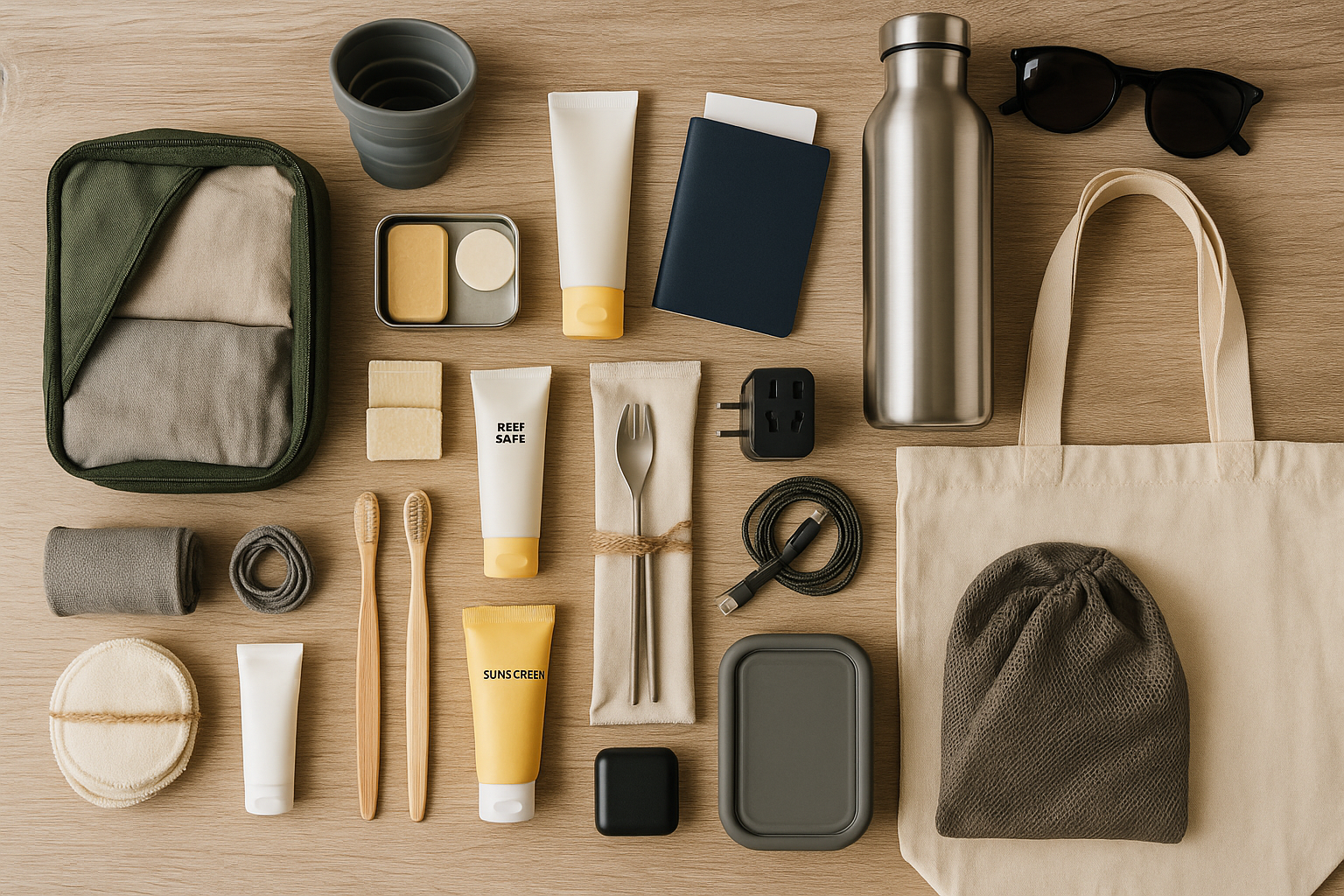
Hydration & food kit
- Insulated stainless bottle (keeps water cold; many airports have refill stations).
- Collapsible cup or travel mug for coffee/tea.
- Compact utensil set (spork + chopsticks) and fold-flat silicone container for leftovers.
- Light tote or mesh produce bag to skip plastic at markets.
Toiletries & personal care
- Solid shampoo/conditioner/soap bars in a vented tin (no spills, no liquids).
- Refillable silicone travel bottles if you prefer liquids.
- Reef-safe mineral sunscreen (zinc oxide), reusable makeup rounds, bamboo toothbrush.
- Deodorant cream or stick, safety razor (handle in checked bag if rules require).
Laundry & cleaning
- Travel clothesline + concentrated, biodegradable soap.
- Quick-dry towel (microfiber or waffle weave).
- Stain stick for emergencies.
Power & electronics
- Universal adapter with replaceable fuse, small power strip, power bank.
- Cable set with 3-in-1 tips to reduce extra cords.
- eSIM and offline maps to avoid paper printouts.
Bags & organizers
- Packing cubes (recycled fabric if possible), dry bag for wet gear,
- Zip pouches for documents so you don’t reprint.
Bonus: Add a mini first-aid kit in refillable tins and a compact headlamp (safer than phone flashlight at night).
Materials that actually help (and why)
- Merino wool: odor-resistant, temperature-regulating; fewer washes = less water.
- Hemp & organic cotton: durable, breathable; good for hot climates.
- TENCEL™/modal: soft, quick-drying, drapes well for dressier looks.
- Recycled nylon/poly (bluesign®/OEKO-TEX®): tough shells and packs that last for years.
Destination playbook: tropics, mountains, cities, deserts
- Tropics & islands: add reef-safe sunscreen, rash guard, and a light long-sleeve sun shirt.
- Mountains & cold: pack a recycled-fill puffy, merino base layers, and a wind/rain shell.
- Big cities: a fold-flat tote, compact umbrella, and a sleek bottle that fits small café tables.
- Deserts: wide-brim hat, electrolytes, high-capacity bottle (1L+), and a neck gaiter for dust.
Carry-on capsule: clothing essentials that do more with less
- 2 quick-dry tees (one dark, one light)
- 1 merino long-sleeve
- 1 button-down/linen shirt (sun cover + “polish” layer)
- 2 bottoms (tech chinos/jeans + activity short/legging)
- 1 packable shell, 1 light mid-layer
- 3–4 pairs underwear, 3 socks (merino if possible)
- 2 shoes: walkers + activity/dressy, plus flip-flops if needed
This small list, paired with your eco-friendly travel essentials, keeps laundry simple and waste low.
Budget builds vs premium picks (how to choose)
- Start with what you own; upgrade high-impact items first (water bottle, sunscreen, toiletries kit).
- Choose lifetime-warranty or repairable brands for bags and shells.
- For toiletries, DIY refills in silicone bottles cut costs fast.
- Thrift stores are fantastic for linen shirts, scarves, and belt bags.
Waste-smart habits on the road (daily routine)
- Fill your bottle before leaving the hotel.
- Order “for here” or hand over your cup/container.
- Scan recycling bins at stations and parks; pack out tricky waste.
- Do sink laundry every 2–3 days to avoid buying extras you won’t wear.
- Turn off A/C & lights when you leave; hang the “no daily linen change” card.
Helpful reading: Leave No Trace principles: https://lnt.org/
Booking, transport & stays: greener choices that don’t cost extra
- Pick central stays so you can walk or use transit.
- Night trains or coaches replace short flights on many routes.
- Choose accommodations that list refill stations, bulk toiletries, and linen-reuse programs.
- Pack light—less weight = lower transport emissions and easier mobility.
Learn more about sustainable travel standards at the Global Sustainable Tourism Council (GSTC): https://www.gstcouncil.org/
Safety & compliance (what TSA/airlines allow)
- Solids breeze through liquid limits; razors must follow airline rules.
- Powders may be screened; keep them labeled.
- Batteries/power banks go in carry-on, not checked.
- Reusable cutlery: plastic/titanium is safest for security.
Always check your airline’s latest policy before flying.
Quick comparison tables
Essentials by category
| Need | Eco option | Why it helps |
|---|---|---|
| Water | Stainless/insulated bottle | Ends single-use plastics |
| Coffee/tea | Collapsible cup | Cuts café waste |
| Food | Silicone container + spork | Saves leftovers & money |
| Toiletries | Solid bars + reusable rounds | Fewer liquids & plastics |
| Laundry | Biodegradable soap + line | Less water & dryer use |
| Power | Universal adapter + small strip | One plug for all devices |
| Bags | Recycled-fabric cubes/tote | Organization without plastic bags |
FAQs (eco-friendly travel essentials)
1) Do eco-friendly travel essentials cost more?
Not over time. Reusables pay for themselves quickly when you stop buying bottled water and throwaway items.
2) Are solid toiletries as effective as liquids?
Yes—many lather well, last longer, and skip plastic bottles entirely.
3) How do I find refill stations abroad?
Check hotel lobbies, coworking spaces, museums, and cafés. Many airports now have hydration points.
4) Is mineral sunscreen really necessary?
Reef-safe mineral formulas (zinc oxide) protect skin and reduce harm to coral ecosystems.
5) What’s the lightest setup for a weekend trip?
Bottle, collapsible cup, spork, one solid soap/shampoo bar, quick-dry towel, mini laundry kit, and a tote.
6) How do I handle trash in places without recycling?
Reduce first; pack out specialty waste like batteries and soft plastics when possible.
7) Can I still pack stylishly?
Absolutely—choose a neutral palette and add a scarf or shirt with texture. Minimal gear doesn’t mean boring outfits.
Conclusion & next steps
Start small: pick three eco-friendly travel essentials to add this week—an insulated bottle, solid toiletries, and a compact utensil + container kit. Then refine your clothing capsule and laundry rhythm. The payoff is immediate: less waste, lighter bags, and lower costs—without giving up comfort or style.
All Rights Reserved © 2026