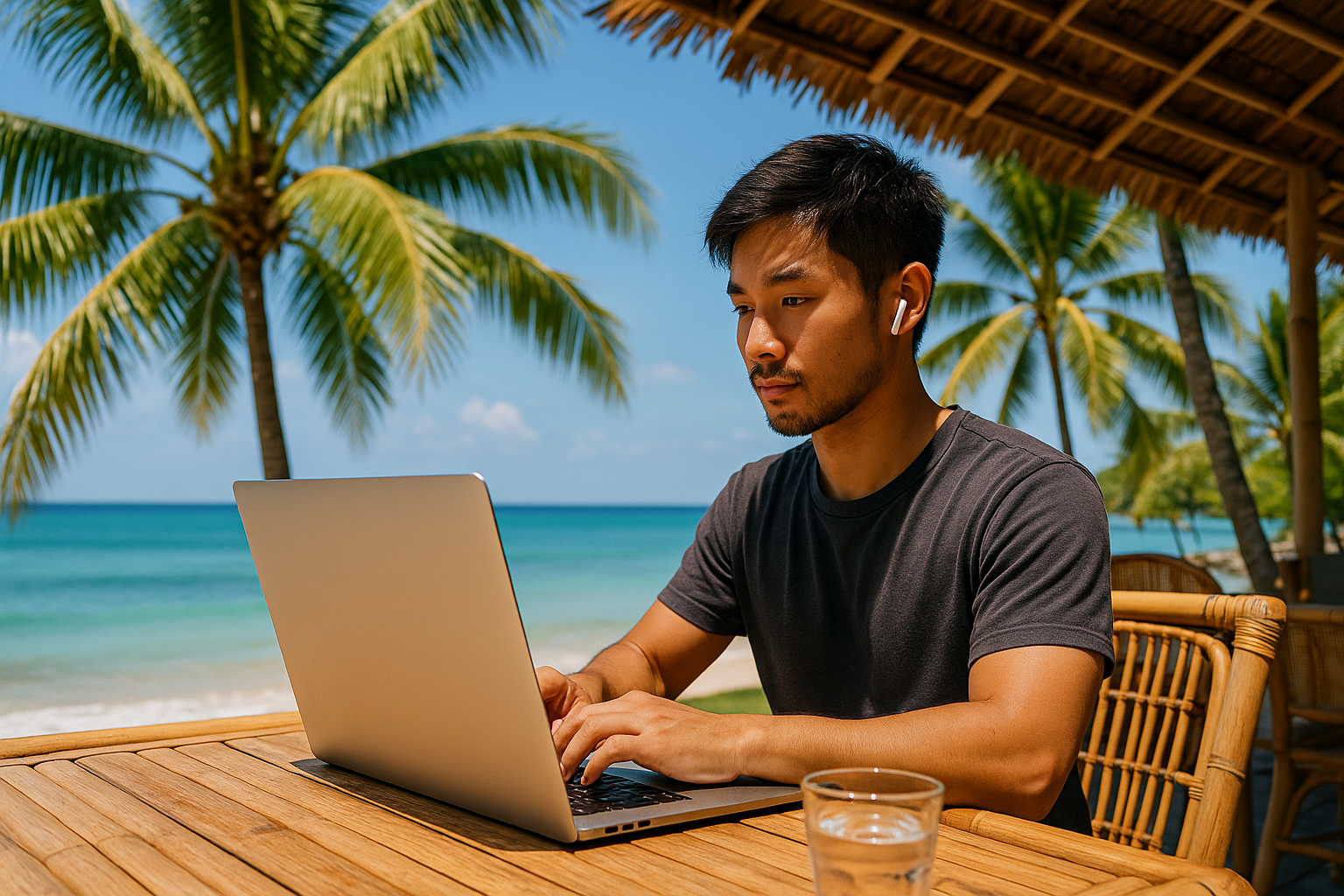



Introduction: Why Remote Work in Southeast Asia Is Booming
In 2025, Southeast Asia continues to attract digital nomads, freelancers, and remote workers from around the globe. With its low cost of living, stunning landscapes, and thriving coworking culture, the region has become the perfect destination for anyone seeking to balance productivity with adventure.
The demand for remote work Southeast Asia 2025 is higher than ever as companies embrace permanent hybrid and remote-first policies. Nomads now seek affordable housing, reliable internet, and communities where they can thrive — without draining their savings.
This guide explores everything you need to know to work remotely from Southeast Asia in 2025 without breaking the bank. From visa hacks to budgeting tips, we’ll cover how to live well, stay productive, and enjoy the journey.
🌏 Why Choose Southeast Asia for Remote Work?
1. Low Cost of Living
Compared to Europe or the U.S., Southeast Asia offers significantly cheaper accommodation, food, and transport. You can live comfortably on $800–$1,200/month in many destinations.
2. Strong Digital Nomad Infrastructure
Cities like Bali, Chiang Mai, and Ho Chi Minh City now boast coworking spaces, coliving hubs, and cafes designed specifically for remote professionals.
3. High Quality of Life
The region offers beaches, mountains, temples, and rich cultural diversity. It’s not just affordable — it’s inspiring.
4. Global Nomad Community
Southeast Asia is one of the most connected nomad hubs in the world, with meetups, networking groups, and skill-sharing events.
📌 Best Countries for Remote Work Southeast Asia 2025
Thailand
- Digital Nomad Hotspots: Chiang Mai, Bangkok, Phuket, Koh Phangan
- Living Costs: $900–$1,400/month
- Why Thailand? Affordable apartments, world-class street food, and a well-established expat community.
Vietnam
- Hotspots: Da Nang, Ho Chi Minh City, Hanoi
- Living Costs: $800–$1,200/month
- Why Vietnam? Fast internet, vibrant culture, and growing coworking scenes.
Indonesia (Bali & Beyond)
- Hotspots: Bali (Canggu, Ubud), Lombok, Jakarta
- Living Costs: $1,000–$1,500/month
- Why Indonesia? Bali remains a magnet for nomads with its eco-conscious coliving hubs and creative community.
Malaysia
- Hotspots: Kuala Lumpur, Penang, Langkawi
- Living Costs: $900–$1,300/month
- Why Malaysia? Excellent infrastructure, English-friendly, and great for regional travel.
Philippines
- Hotspots: Cebu, Manila, Siargao
- Living Costs: $900–$1,200/month
- Why Philippines? English-speaking population and tropical island vibes.
💻 Visa Options for Remote Work Southeast Asia 2025
Many Southeast Asian countries now offer digital nomad visas or flexible long-stay permits:
- Thailand: Long-Term Resident Visa (LTR) for digital professionals.
- Indonesia: Bali Digital Nomad Visa (up to 5 years).
- Malaysia: DE Rantau Nomad Pass for remote workers.
- Vietnam: Business visa extensions are common for freelancers.
- Philippines: Long-stay tourist visas and extensions available.
💡 Tip: Always check embassy websites for updated visa requirements.
🏡 Affordable Housing Tips for Digital Nomads
1. Coliving Spaces
Popular in Bali, Chiang Mai, and Da Nang, these combine housing + coworking, often with strong WiFi and community events.
2. Monthly Rentals
Search on Facebook Groups, Airbnb monthly stays, and local agents to find cheaper long-term deals.
3. Shared Housing
Splitting rent with fellow nomads can cut costs in half.
💡 Example: In Chiang Mai, you can rent a modern apartment for as low as $350/month.
📶 Internet & Tech Essentials
Remote work thrives on strong connectivity. Fortunately, remote work Southeast Asia 2025 means better infrastructure than ever.
- Thailand & Vietnam: Average speeds 100–200 Mbps in major cities.
- Indonesia: Bali now has stable fiber internet in coworking hubs.
- Philippines: Slower speeds in remote areas, but mobile data is affordable.
💡 Always carry a local SIM card and portable WiFi backup device.
☕ Best Coworking Hubs in Southeast Asia
- Dojo Bali (Canggu, Indonesia) – Iconic beachside coworking hub.
- Punspace (Chiang Mai, Thailand) – Affordable memberships with strong community vibes.
- The Hive (Ho Chi Minh City, Vietnam) – Sleek spaces ideal for professionals.
- Impact Hub (Kuala Lumpur, Malaysia) – Eco-friendly workspaces with networking events.
Coworking passes typically cost $100–$200/month.
💡 Budget-Friendly Travel Hacks
To keep costs down:
- Fly budget airlines (AirAsia, Scoot, VietJet) for cheap regional flights.
- Use trains and buses instead of frequent flights.
- Eat local — street food meals cost just $2–$3.
- Negotiate rentals — monthly rates are always cheaper than daily.
- Avoid tourist traps — stay in up-and-coming neighborhoods.
🍲 Affordable Food Culture
Street food is not just affordable, it’s also one of the best parts of remote work in Southeast Asia.
- Thailand: Pad Thai & mango sticky rice for under $3.
- Vietnam: Pho or banh mi for $2.
- Indonesia: Nasi goreng & satay skewers for $2–$4.
- Malaysia: Hawker stalls offer multi-ethnic meals for $3–$5.
Eating like a local keeps your budget low while giving you authentic experiences.
⚡ Sustainable Remote Work Practices
Working abroad also means being mindful of the environment and culture.
- Choose eco-friendly coliving hubs.
- Carry a reusable water bottle & cutlery.
- Support local markets instead of big chains.
- Opt for slow travel instead of frequent short-haul flights.
🌐 Building a Remote Work Community
The best part of nomad life in Southeast Asia is the community.
- Join Facebook Nomad Groups for each city.
- Attend weekly meetups hosted by coworking hubs.
- Engage in skill-sharing workshops to network and grow.
Strong communities reduce loneliness and help nomads thrive.
Many countries now offer special visas for remote workers — you can explore options at Nomad List’s visa database
💰 Estimated Monthly Budget (2025)
| Expense | Thailand | Vietnam | Indonesia (Bali) | Malaysia | Philippines |
|---|---|---|---|---|---|
| Housing | $350–600 | $300–500 | $400–700 | $400–650 | $350–550 |
| Food | $200–350 | $180–300 | $220–350 | $250–400 | $250–400 |
| Transport | $50–100 | $40–80 | $60–100 | $70–120 | $50–100 |
| Coworking | $100–200 | $80–150 | $120–200 | $120–200 | $100–180 |
| Other | $150–250 | $150–250 | $200–300 | $200–300 | $200–300 |
| Total | $850–1,500 | $800–1,300 | $1,000–1,650 | $900–1,600 | $950–1,500 |
❓ FAQs: Remote Work Southeast Asia 2025
1. What’s the cheapest country in Southeast Asia for remote workers?
Vietnam and Thailand are generally the most budget-friendly while offering great infrastructure.
2. Do I need a special visa to work remotely in Southeast Asia?
Some countries (like Indonesia and Malaysia) now offer digital nomad visas, while others allow long tourist visas.
3. Is remote work Southeast Asia 2025 realistic for beginners?
Absolutely. With affordable living, plenty of coworking spaces, and a supportive nomad community, it’s beginner-friendly.
4. What are the biggest challenges?
Visa renewals, internet reliability in rural areas, and cultural adaptation.
5. How can I save the most money?
Stay longer in one city, rent monthly apartments, and eat local food instead of Western restaurants.
🌟 Final Thoughts
The dream of working remotely from a tropical paradise is no longer a fantasy — it’s the reality of remote work Southeast Asia 2025. With affordable living costs, welcoming nomad communities, and an ever-expanding coworking scene, Southeast Asia remains the top global hub for location-independent professionals.
By following the strategies in this guide — from visa planning and budgeting to sustainable travel practices — you can live your dream without breaking the bank.
2025 is the year to take the leap, pack your laptop, and join the movement of remote workers thriving in Southeast Asia. 🌴💻
All Rights Reserved © 2026